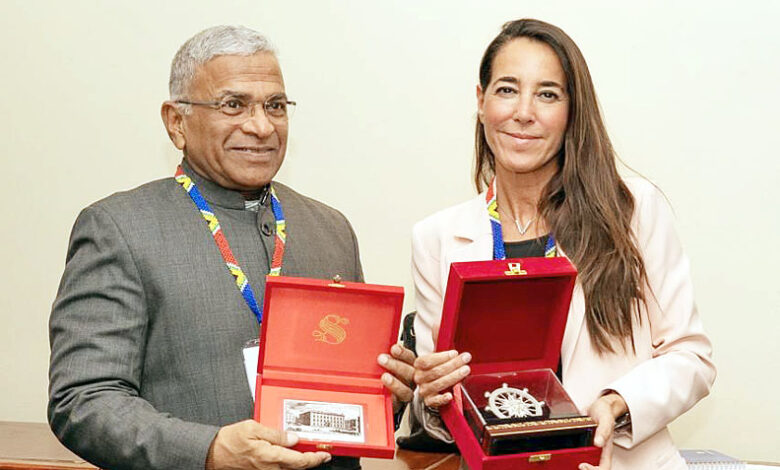
New Delhi – Rajya Sabha Deputy Chairman Harivansh held a series of bilateral meetings on the sidelines of the 11th G20 Parliamentary Speakers’ Summit (P20) in Kleinmond, South Africa, engaging with presiding officers of parliaments from Russia, Germany, Italy, and the host nation South Africa.
The discussions focused on strengthening parliamentary cooperation, trade partnerships, technology exchange, and sustainable development, while also highlighting India’s positions on global challenges. Harivansh recalled recent visits by Indian parliamentary delegations to foreign countries, where they presented India’s stance on cross-border terrorism in the wake of the Pahalgam terror attack and Operation Sindoor.
In his meeting with Konstantin Kosachev, Deputy Speaker of Russia’s Federation Council, the Deputy Chairman emphasized the long-standing and multi-dimensional ties between the two nations, underlining areas of strategic and long-term partnership.
During talks with Omid Nouripour, Vice President of the German Bundestag, Harivansh stressed the need for greater collaboration among democracies in advancing trade and sustainable development partnerships. He also sought Germany’s cooperation in finalizing negotiations on the India–EU Free Trade Agreement (FTA). Bilateral trade between India and Germany has already crossed USD 50 billion. He further noted Germany’s “Skilled Labour Strategy,” which could open smoother pathways for Indian professionals to work in Germany.

The Deputy Chairman also met Nosiviwe Thoko Didiza, Speaker of South Africa’s National Assembly, where both leaders reaffirmed the deep-rooted historical ties and convergence of views between India and South Africa on global equity, justice, and the defense of the collective interests of developing nations. India is currently among South Africa’s top three trading partners.
Earlier, Harivansh held talks with Licia Ronzulli, Vice President of the Italian Senate, leading the Italian delegation. The discussions centered on progress in trade and investment, education, defense, culture, and people-to-people exchanges, with both sides agreeing to explore new avenues of cooperation.
The series of bilateral meetings reflected India’s active parliamentary diplomacy and its commitment to fostering deeper international cooperation through dialogue, trade, and shared democratic values.