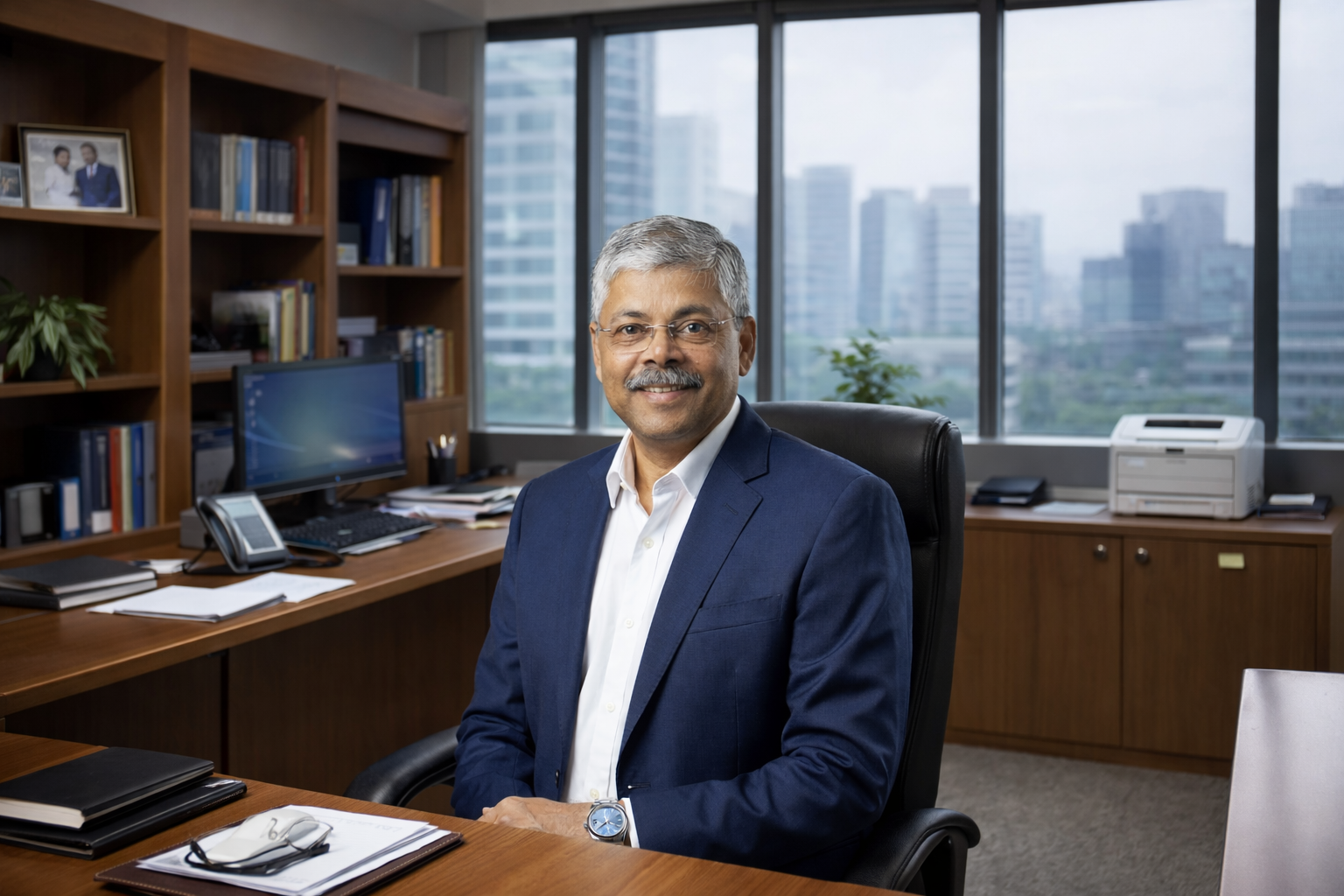
Lucknow: R. K. Sharan, President, Executive Director and Board Member, Indian Investors Federation, Uttar Pradesh State Council and Punjab Chamber of Commerce And Industry is a seasoned corporate leader and institutional builder with over 35 years of distinguished experience spanning strategic leadership, policy advocacy, industry representation, and enterprise development. Over the course of his career, he has served as President, Chief Executive Officer, Executive Director, and Director, contributing significantly to the growth of corporate institutions, national chambers, and policy-driven industry platforms across India.
With extensive exposure to the corporate, print, and electronic media sectors, RK Sharan has demonstrated a rare ability to align business objectives with public policy, stakeholder interests, and national development priorities. A strong advocate of industry–government collaboration, he has played active roles in key advisory bodies, including Udyog Bandhu, Government of Uttar Pradesh, the Uttar Pradesh Felicitation Council, and as a two-term Member of the Airport Authority of India (AAI). Widely respected for his integrity and institution-first approach, RK. Sharan continues to be a leading voice in MSME empowerment, infrastructure-linked growth, and collaborative governance.
In this conversation, he shares insights from his journey, perspectives on MSMEs, policy reforms, and India’s evolving economic landscape.
Q1. With over three decades of leadership experience, how do you reflect on your professional journey so far?
R. K. Sharan: My journey has been deeply fulfilling because it has allowed me to work at the intersection of industry, institutions, and public policy. I have always believed that leadership is not about individual success but about building systems that outlast individuals. Whether working with corporate organizations, chambers of commerce, or policy platforms, my focus has remained on strengthening institutions, creating trust, and enabling sustainable growth.
Q2. You have worked across corporate, print, and electronic media sectors. How has this diverse exposure shaped your leadership style?
R. K. Sharan: Media teaches you clarity, accountability, and responsibility. When you work in print and electronic media, you learn how narratives shape perception and policy. This exposure helped me communicate complex industry issues in a way that policymakers and the public could understand. It also reinforced the importance of transparency and credibility—qualities that are essential in both corporate leadership and public engagement.
Q3. Your association with Udyog Bandhu, Government of Uttar Pradesh, has been significant. What were your key contributions there?
R. K. Sharan: Udyog Bandhu is a crucial platform for addressing industry challenges and improving the ease of doing business. My role involved facilitating dialogue between industry and government, especially on issues faced by MSMEs. We worked on resolving operational bottlenecks, encouraging investment, and strengthening confidence among entrepreneurs. The goal was to ensure that policies translate into real, on-ground benefits.
Q4. MSME empowerment has been a recurring theme in your work. Why is this sector so close to your heart?
R. K. Sharan: MSMEs are the backbone of India’s economy. They generate employment, foster innovation, and support inclusive growth. However, they often struggle with access to finance, technology, and markets. I have consistently advocated for reforms that simplify compliance, improve credit flow, promote skill development, and enable technology adoption. When MSMEs grow, the economy grows from the grassroots.
Q5. You served two terms as a Member of the Airport Authority of India. What did this role add to your perspective on national development?

R. K. Sharan: My tenure with AAI gave me valuable insights into infrastructure planning, aviation-linked economic growth, and large-scale public sector operations. Airports are not just transport hubs; they are engines of regional development. Connectivity drives trade, tourism, and investment. This experience broadened my understanding of how infrastructure acts as a catalyst for economic expansion.
Q6. How do you view the importance of industry–government collaboration in today’s economic environment?
R. K. Sharan: No economy can grow in silos. Industry provides innovation and execution, while government ensures policy direction and stability. Effective collaboration helps align national priorities with business realities. Platforms that encourage dialogue, trust, and joint problem-solving are essential. I strongly believe collaborative governance is the key to sustainable and inclusive growth.
Q7. You have been associated with the Uttar Pradesh Felicitation Council. Why is recognizing excellence important?
R. K. Sharan: Recognition creates role models. When we celebrate innovation, ethical leadership, and social contribution, we inspire others to aim higher. The Felicitation Council helps build a culture where achievement is acknowledged, and values are reinforced. Such recognition motivates entrepreneurs and professionals to contribute meaningfully to society.
Q8. What challenges do you see for Indian industry, particularly MSMEs, in the coming decade?
R. K. Sharan: The biggest challenges will be technological disruption, global competition, and skill readiness. MSMEs must adapt to digitalization, automation, and sustainability norms. At the same time, policy support must remain consistent and responsive. If we invest in skills, innovation, and access to finance, Indian MSMEs can become globally competitive.
Q9. What advice would you give to young professionals aspiring to leadership roles in industry and policy spaces?
R. K. Sharan: Build credibility, not just credentials. Focus on learning, ethics, and long-term thinking. Leadership is about listening, building consensus, and serving a larger purpose. Young professionals should engage with institutions, understand policy frameworks, and remain committed to nation-building alongside personal growth.
Q10. How do you define success at this stage of your career?
R. K. Sharan: Success, for me, is seeing institutions function effectively, MSMEs empowered, and policies making a real difference. If my work has helped create stronger systems, inspired collaboration, and contributed even modestly to India’s growth story, I consider that meaningful success.