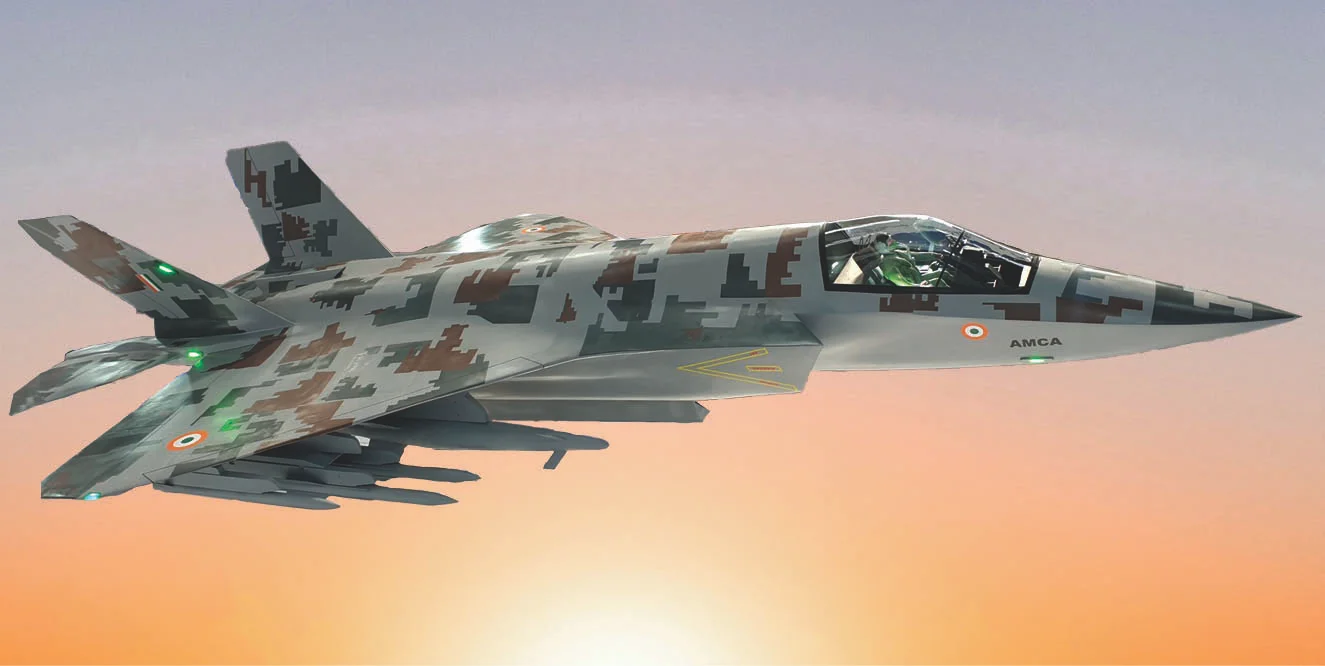
New Delhi: India’s ambitious Advanced Medium Combat Aircraft (AMCA) programme has entered a new phase, with private sector consortia moving ahead while state-run Hindustan Aeronautics Limited (HAL) has been excluded from the prototype development race, according to officials familiar with the matter.
The decision marks the first instance in which HAL will not participate in one of India’s most critical indigenous combat aircraft projects. The move signals a significant shift in defence manufacturing policy, with greater reliance on private industry for complex aerospace programmes.
Sources indicated that the Defence Research and Development Organisation’s (DRDO) Aeronautical Development Agency (ADA) had invited expressions of interest (EoI) last year to identify partners capable of building five AMCA prototypes and one structural test article. Seven consortia—comprising a mix of public and private entities—submitted bids.
After detailed evaluation, only three consortia met the mandatory technical and financial criteria and have been shortlisted for the next stage, which includes submission of commercial bids. HAL’s consortium, despite partnering with smaller firms, did not meet essential requirements and was eliminated during the screening process. The identities of the shortlisted bidders have not yet been officially disclosed.
Industry participants in the competition included Tata Advanced Systems Limited, Adani Defence and Aerospace, Larsen & Toubro in partnership with Bharat Electronics Limited, Bharat Forge with BEML and Data Patterns, Axiscades Technologies with BrahMos Aerospace Thiruvananthapuram Ltd, and Goodluck India. The EoI aimed to identify firms capable of end-to-end execution, including prototyping, flight testing, certification, and preparation for series production.
The evaluation was carried out by a committee of senior DRDO officials, with final recommendations reviewed by a high-level panel chaired by Defence Secretary Rajesh Kumar Singh. Officials said the winning consortium will be required to establish dedicated manufacturing facilities, with the complete development cycle capped at eight years. The contract is expected to be awarded to the lowest qualified bidder within the next three months.

The AMCA timeline remains ambitious. The first prototype is expected to fly by 2029, full development is targeted by 2034, and production is planned to begin around 2035. The urgency reflects regional security developments, including the induction of China’s J-20 stealth fighter, progress on the J-35 platform, and reported testing of next-generation combat aircraft.
In 2024, the Cabinet Committee on Security approved the AMCA’s design and prototype development with an estimated outlay of ₹15,000 crore. The Indian Air Force plans to induct approximately 120 AMCA aircraft—equivalent to six squadrons—to form the backbone of its future air combat capability.
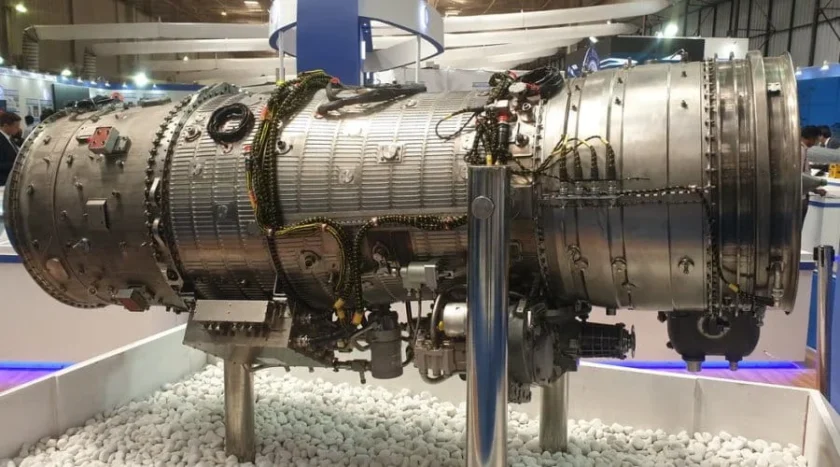
The initial MK-1 variant will be powered by GE F-414 engines sourced from the United States. Later MK-2 versions are planned to feature a 120-kilonewton thrust-class engine being developed jointly by France’s Safran and DRDO’s Gas Turbine Research Establishment. Approval for the engine collaboration, including full technology transfer and intellectual property rights for India, is expected shortly.
HAL’s exclusion had been anticipated in some quarters. The company’s leadership previously indicated that certain EoI qualification criteria—such as penalties for large order backlogs—placed it at a disadvantage. Despite this, HAL proceeded with its bid but was ultimately unsuccessful.
The development reflects a broader policy push to diversify India’s defence industrial ecosystem and reduce dependence on a single public sector manufacturer. By encouraging competition and private participation, the government aims to accelerate delivery timelines, improve efficiency, and strengthen India’s strategic deterrence in an evolving regional security environment.