Pondichrry: Pondicherry, officially known as Puducherry, is India’s quiet corner of French elegance gently infused with a deeply rooted Tamil soul. Located along the Coromandel Coast, about 160 kilometres south of Chennai, this small Union Territory feels like a graceful time warp. Pastel-hued colonial villas, tree-lined boulevards, mustard-yellow walls draped in bougainvillea, and the constant presence of the sea breeze together create an atmosphere that is at once European and unmistakably South Indian.
In mid-January 2026, under clear blue skies and pleasantly cool coastal weather, Pondicherry revealed itself as a destination that resists hurry. This is not a place meant for ticking off attractions. Instead, it invites visitors to slow down, wander without purpose, reflect, and rediscover the joy of simple living. Pondy, as it is fondly called, doesn’t demand attention—it gently earns it.
White Town: A Walk Through French India
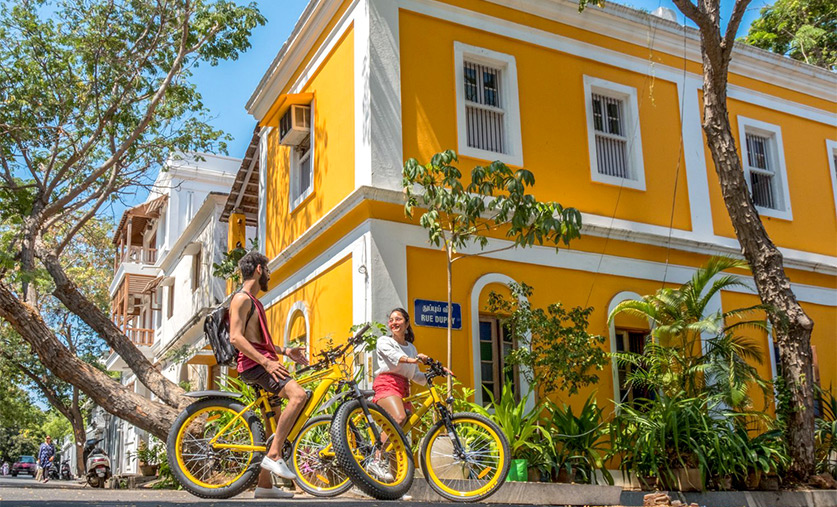
At the heart of Pondicherry lies White Town, also known as the French Quarter. This meticulously planned grid of streets is where the city’s colonial past lives on with remarkable elegance. Whitewashed villas with ochre or mustard trims, arched doorways, shuttered windows, and wrought-iron balconies transport visitors straight into a postcard from southern France.
The streets here are wide and calm, shaded by old trees that soften the tropical sun. Bougainvillea spills freely over compound walls, adding splashes of pink, purple, and red to the muted architecture. Cobblestone lanes lead to hidden courtyards, heritage homes turned boutique hotels, and quiet cafés tucked behind leafy facades.
Walking through White Town without an agenda is the best way to experience it. Every turn offers a surprise—handmade soap stores, art studios, concept boutiques, or walls adorned with contemporary murals that blend seamlessly with colonial heritage. It is a neighbourhood that celebrates preservation without becoming frozen in time, allowing modern creativity to coexist gracefully with history.
Cafés, Croissants and Conversations
Pondicherry’s café culture is one of its most defining pleasures. The French legacy lives on through bakeries and cafés that serve flaky croissants, pain au chocolat, quiches, and freshly brewed coffee—often paired with South Indian influences.
Sidewalk cafés are an integral part of daily life here. Sitting at a small table, watching bicycles glide past and locals converse in a mix of Tamil, English, and French, feels effortlessly charming. Mornings begin slowly, with people reading books, sketching, or simply observing the unhurried rhythm of the streets.
Many cafés double as art spaces or bookstores, displaying paintings, ceramics, or photography by local and international artists. These creative intersections reflect Pondicherry’s identity as a cultural melting pot—quietly intellectual, artistic, and welcoming.
Promenade Beach: Where the City Meets the Sea
One of Pondicherry’s most iconic experiences is a walk along Promenade Beach, also known as Rock Beach. Stretching about 1.5 kilometres along the Bay of Bengal, this rocky shoreline offers expansive sea views without the chaos often associated with popular beaches.
Unlike sandy beaches meant for sunbathing, the promenade is designed for strolling, reflection, and people-watching. Early mornings bring joggers, yoga practitioners, and photographers capturing the sun rising dramatically over the sea. Evenings are equally magical, as the sky transitions through shades of orange, gold, and lavender.
Landmarks such as the Gandhi statue, the French War Memorial, and old colonial buildings line the promenade, adding layers of history to the sound of crashing waves. Families, couples, and solo travelers gather here as street vendors sell roasted corn, cotton candy, and simple snacks. The atmosphere is lively yet never overwhelming—a gentle social hum that mirrors the city’s temperament.
The Spiritual Core: Sri Aurobindo Ashram
Beyond its aesthetic charm, Pondicherry holds a deep spiritual pulse, centered around the Sri Aurobindo Ashram. Founded in 1926 by philosopher and yogi Sri Aurobindo and his spiritual collaborator, The Mother, the ashram remains a place of quiet reflection and disciplined inner life.
Located near the French Quarter, the ashram maintains a profound silence, especially around the Samadhi—the marble tomb where Sri Aurobindo and The Mother are laid to rest. Surrounded by flowers and shaded trees, the courtyard exudes an atmosphere of calm that immediately slows the mind.

Visitors from across the world come not as tourists, but as seekers. Some stay only for a few minutes of silence; others return daily to meditate or simply sit. The ashram’s presence has deeply influenced Pondicherry’s character, lending it a contemplative undertone that permeates daily life.
Auroville: The City of Dawn
Just north of Pondicherry lies Auroville, an experimental township founded in 1968 with the vision of human unity beyond nationality, religion, or politics. Home to residents from dozens of countries, Auroville feels like a world unto itself—international, eco-conscious, and idealistic.
At its centre stands the Matrimandir, a striking golden spherical structure set amid lush gardens. Designed as a meditation space rather than a religious monument, the Matrimandir symbolizes the spiritual focus of Auroville. Visitors can view it from designated points, taking in its ethereal presence rising above the forest canopy.
The surrounding areas feature organic farms, sustainable architecture, alternative education centres, and community kitchens. Even a brief visit offers insight into a different way of living—one rooted in mindfulness, sustainability, and collective well-being.
Paradise Beach: Coastal Calm Away from Crowds
For those seeking untouched coastal beauty, Paradise Beach offers a refreshing escape. Reached by a short boat ride through the Chunnambar backwaters, this beach feels blissfully removed from the city.
Soft white sand, clear blue waters, and gently swaying palm trees create an idyllic setting. Compared to mainland beaches, Paradise Beach is far less crowded, making it ideal for quiet walks, relaxed swims, or simply sitting by the shore listening to the waves. It is Pondicherry at its most elemental—sun, sea, and silence.
Evenings of Ease and Elegance
As dusk descends, Pondicherry softens even further. Street lamps cast a warm glow on colonial facades, rooftop bars offer sea-facing views with soft music, and heritage homes come alive with intimate cultural gatherings. The nightlife here is understated—more about conversation than crowds, ambience than volume.
Cycling through the French Quarter at night, with minimal traffic and cool air, is a uniquely calming experience. The city seems to exhale, encouraging everyone within it to do the same.
A City That Teaches You to Pause
Pondicherry is not loud, flashy, or demanding. Its charm lies in subtlety—in the way history and modernity coexist, in the seamless blend of French aesthetics and Tamil traditions, and in the quiet spaces it creates for reflection.
Whether you are cycling through colonial streets, sipping coffee in a shaded courtyard, meditating at the ashram, or watching the waves along the promenade, Pondicherry gently reminds you of a forgotten luxury: time.
In a world driven by speed and urgency, Pondy offers the rare gift of timelessness. It whispers rather than shouts, heals rather than excites, and stays with you long after you leave. If your soul seeks calm wrapped in culture and beauty, Pondicherry is waiting—unassuming, elegant, and endlessly soothing.