
Paris: France rang in the New Year amid large-scale celebrations and heightened security, but New Year’s Eve festivities were also marred by incidents of violence and vandalism across the country. According to France’s Interior Ministry, more than 1,100 vehicles were set on fire and over 500 people were arrested during the celebrations marking the start of 2026.
In an official statement, the Interior Ministry said law enforcement agencies acted swiftly in line with strict directives issued by the Interior Minister, mandating a high level of responsiveness and mobility. As a result, 505 arrests were made this year, up from 420 arrests in 2024, while 403 individuals were placed in custody, compared to 310 last year. The ministry also reported the use of 1,262 collective defense measures, highlighting what it described as a “methodical and coordinated response” by internal security forces.
Despite these efforts, the number of vehicles set on fire rose significantly. “The number of cars that were set on fire, whether as a primary target or due to the spread of flames, has increased to 1,173, compared to 984 during the previous New Year’s Eve,” the ministry noted.
Millions of people across France gathered to welcome the New Year. Authorities said extensive security arrangements were put in place nationwide, with prefects and internal security forces operating under the direct supervision of the Interior Minister. The aim, the ministry said, was to ensure that celebrations unfolded “in a spirit of conviviality and peace” while guaranteeing public safety.
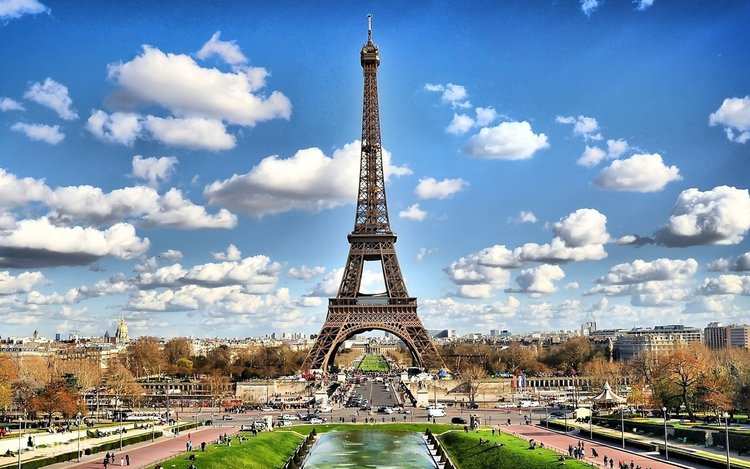
In Paris alone, more than one million people assembled on the Champs-Élysées to watch fireworks and celebrate the New Year. Other popular locations, including the Trocadéro and the Champ de Mars, were also densely crowded. Officials said that, overall, the massive gatherings in public spaces remained calm, reflecting a generally peaceful atmosphere similar to that seen in many city centers across the country.
The Interior Ministry further stated that regional prefects reported a decrease in urban violence and disorder compared to the previous year. Notably, there were fewer attacks on law enforcement personnel. The prefect of the western defense zone said that cities which had experienced major incidents last year—such as Brest, Évreux, Orléans, and Tours—saw almost no significant disturbances this time.

Similarly, the prefect of the northern zone credited the rapid response of internal security forces for quickly neutralizing hostile acts against police, particularly in areas including the Lille metropolitan region, Amiens, Lille, and Calais. However, authorities acknowledged more challenging situations in certain neighborhoods, including Bourtwiller, Drouot, and Coteaux in Mulhouse, as well as Meinau, Koenigschoffen, and Neuhof districts in Strasbourg, where a large-scale police presence was required.
In the lead-up to New Year’s Eve, police and gendarmerie units seized 96,000 mortars in an effort to curb their illegal use during celebrations or as improvised weapons against law enforcement. Despite these preventive measures, officials reported several serious injuries linked to the misuse of fireworks and explosive devices, including facial injuries and the loss of hands or fingers.
The prefect of the eastern region detailed multiple cases: nine injured individuals aged 18 to 44 in the Bas-Rhin department; five injured people aged 13 to 46, including one child, in Moselle; and eight injured individuals, including two children aged 12 and 13, in Haut-Rhin.
While authorities highlighted improved crowd behavior and reduced urban unrest in many areas, the Interior Ministry acknowledged that the rise in arson and injuries underscored ongoing challenges in ensuring safety during large-scale New Year celebrations across France.