
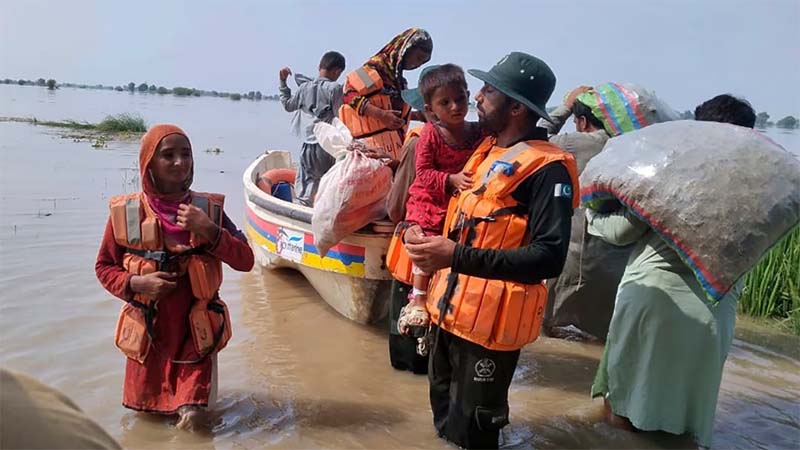
Chandigarh – Punjab, often hailed as the “food bowl of India,” is once again reeling under devastating floods. Fields are submerged, villages displaced, and infrastructure in ruins. But is this merely a natural calamity? Experts argue that while unusual rainfall, river swelling, and climate change play their part, the real culprit lies in human negligence, unplanned construction, reckless mining, and water-intensive farming practices.
“Nature gives warnings, it does not rage. If we respect river pathways, manage water judiciously, and adopt crop diversification, the severity of floods can be reduced,” said experts stressing the urgent need for a balanced approach to development.

Rivers and Rainfall: Natural Causes Meet Mismanagement
Punjab, the land of five rivers – Sutlej, Beas, Ravi, Chenab, and Jhelum – has always been flood-prone during the monsoon. Himalayan glaciers melt, rainfall intensifies, and water levels surge. Large dams like Bhakra, Pong, and Ranjit Sagar regulate flows, but sudden water releases often inundate villages, pointing to gaps in flood management.
In recent years, the monsoon pattern has shifted dramatically. Instead of steady rainfall, short bursts of heavy downpours trigger flash floods. Climate change, scientists warn, is accelerating glacier melt and destabilizing river systems, pushing Punjab into recurring cycles of disaster.
Human Errors That Amplify Disaster
However, it is human interference that transforms floods into widespread devastation. Encroachment on floodplains, construction over old riverbeds, and rampant sand and gravel mining alter river depths and flows. When natural water pathways are blocked, settlements become the first victims.
Punjab’s drainage and canal networks, though extensive, suffer from neglect. Lack of regular desilting means rainwater often backflows into villages. The state’s paddy-dominated farming model has also worsened the crisis. Paddy demands massive groundwater extraction, reducing soil’s ability to absorb excess rainfall, while deforestation has stripped riversides of their natural buffers.
Socio-Economic Fallout
The floods are more than a natural disaster—they are a social and economic crisis. Thousands of hectares of crops are destroyed, leaving farmers in crippling debt. Roads, bridges, and power systems collapse under strain. Villagers face displacement, disease outbreaks such as diarrhea, malaria, and dengue, and lasting psychological trauma.
The Way Forward
Solutions are neither unknown nor unattainable:
-
Strict enforcement of no-construction zones along river floodplains.

-
Regular cleaning and widening of drains to prevent urban flooding.
-
Ban on illegal mining, allowing rivers to retain their natural flow.
-
Crop diversification away from water-intensive paddy toward maize, pulses, and vegetables.
-
Climate-adaptation strategies developed jointly by state and central governments.
-
Community-level flood preparedness training for local populations.
Lessons for the Future
Punjab’s floods are not simply acts of nature—they are the result of flawed development choices. Unless urgent corrective steps are taken, the frequency and intensity of such disasters will only grow.
“Nature does not get angry,” Dr. Saurabh concludes. “It only seeks balance. Floods, droughts, and disasters are warnings, not punishments. Punjab must learn that fighting nature is futile; coexisting with it is the only sustainable path forward.”