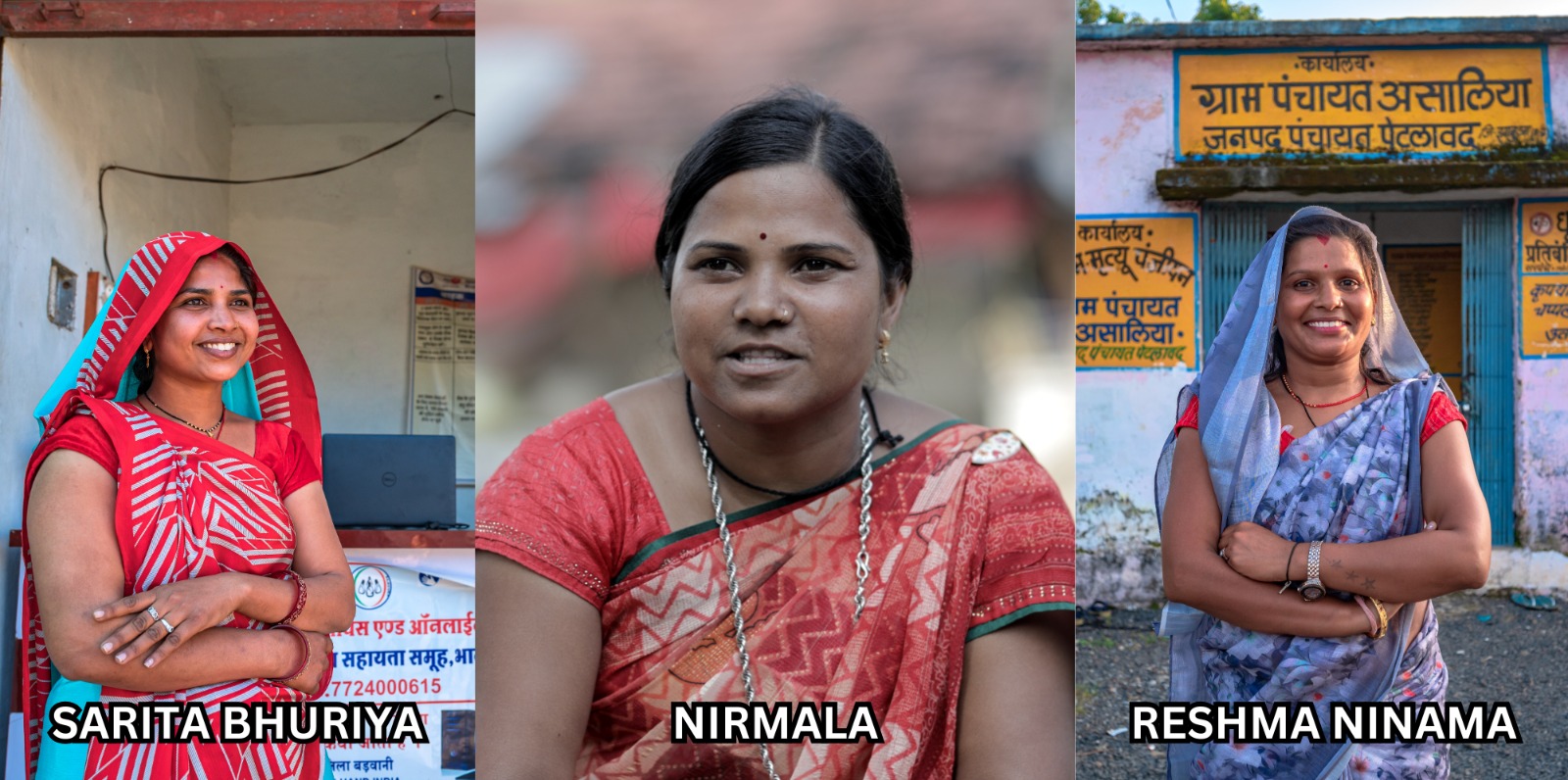
Access to skills, increased awareness, and local leadership has changed the lives of Sarita Bhuriya, Nirmala and Reshma Ninama
New Delhi: India has an estimated 378 million young people, nearly two-thirds of whom live in rural areas. Yet despite accounting for about 70 per cent of this population, rural India contributes only around 46 per cent to the national GDP. Nearly 80 per cent of the rural workforce remains dependent on agriculture and allied activities. According to the State of Rural Youth Employment 2024 report by Transform Rural India (TRI), large sections of rural youth continue to remain on the margins of the country’s economic growth, with women facing even deeper structural barriers.
Even within these constraints, a positive shift is happening. With support from development design organisations such as TRI, access to skills, rights awareness, and local leadership opportunities is opening new possibilities for rural youth, especially women. On National Youth Day, discover three such stories that reflect this shift, from gender justice and village-level decision-making to self-reliance rooted in rural life.
An Overview:
1. Sarita Bhuriya
Sarita Bhuriya grew up in Bhagsur village in Madhya Pradesh, where her days once revolved around house work and farming. At 23, leadership was a distant dream but this began to change when she joined a Self Help Group (SHG) to understand village processes and government schemes. Through visioning exercises supported by TRI, which works on transforming India’s bottom 1,00,000 villages into flourishing localities, Sarita began to see her role differently.
She trained as a Change Vector, working on education and local governance, and later became a Business Correspondent Sakhi, bringing banking services closer to her community. During the COVID-19 period, she supported vaccination awareness and household surveys. Today, Sarita runs a Common Service Centre and travels independently for work. Her annual income of around Rs 1.5 lakh has helped improve her family’s education and living conditions. More importantly, her visible success has encouraged other women to take their own first steps towards financial independence and agency.

2. Nirmala
For 30-year-old Nirmala from Bardiya village, leadership was shaped by necessity. Married before she turned 18, she spent years coping with violence at home while raising three children. When her husband left, she became solely responsible for her family, taking up domestic work and hospital support jobs to survive. Joining the SHG became a turning point in her life. Through the group, she connected with TRI, and gender training helped her recognise that what she faced was rooted in inequality, not personal failure. Today, Nirmala serves as the Coordinator of the Lok Adhikar Kendra under NRLM and plays a central role in TRI’s gender work in Jhabua. She supports survivors of domestic violence, helps stop child marriages, and speaks out against alcohol abuse and dowry. While securing stability for her children, she also stands beside other women as they rebuild confidence in their own lives.
3. Reshma Ninama
In Asaliya village in Petlawad Block, Reshma Ninama first became known through her quiet, comforting presence. She walked mothers to health centres, spoke about nutrition, and checked on children who were often unwell. In 2021, she joined visioning exercises facilitated by TRI, which led her to become a Health Change Vector, a trained volunteer working on health and hygiene in the village.
Reshma worked closely with families, focusing on sanitation, maternal care, and child nutrition. She guided pregnant women through vaccinations and linked malnourished children to Nutrition Rehabilitation Centres. Over time, women began to trust her with concerns beyond health. Through Self Help Groups and TRI’s gender initiatives, she took up issues related to dignity and rights. Encouraged by other women, she contested the Panchayat elections in 2022 and was elected Sarpanch.
Today, 28-year-old Reshma leads Asaliya with attention to health services, women’s rights, and inclusive village planning, including efforts to build a Sub Health Centre and guide local development plans.