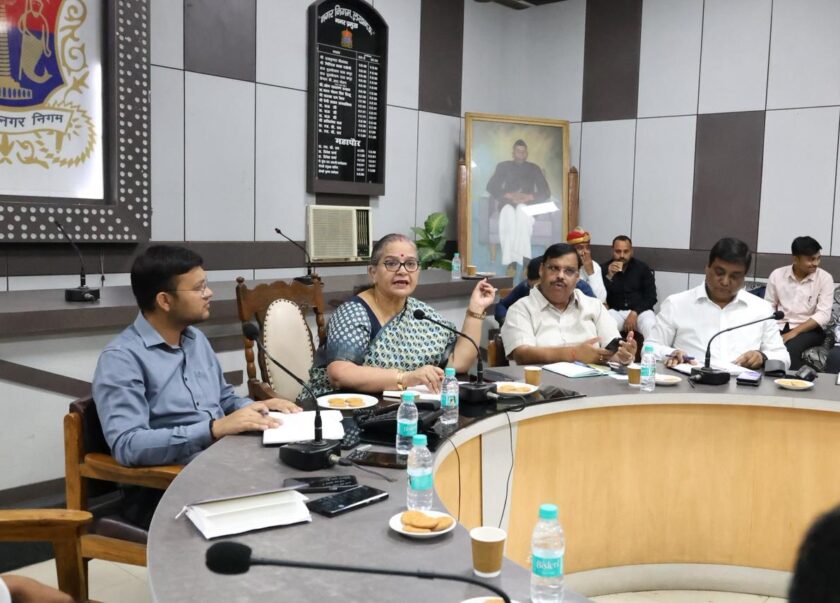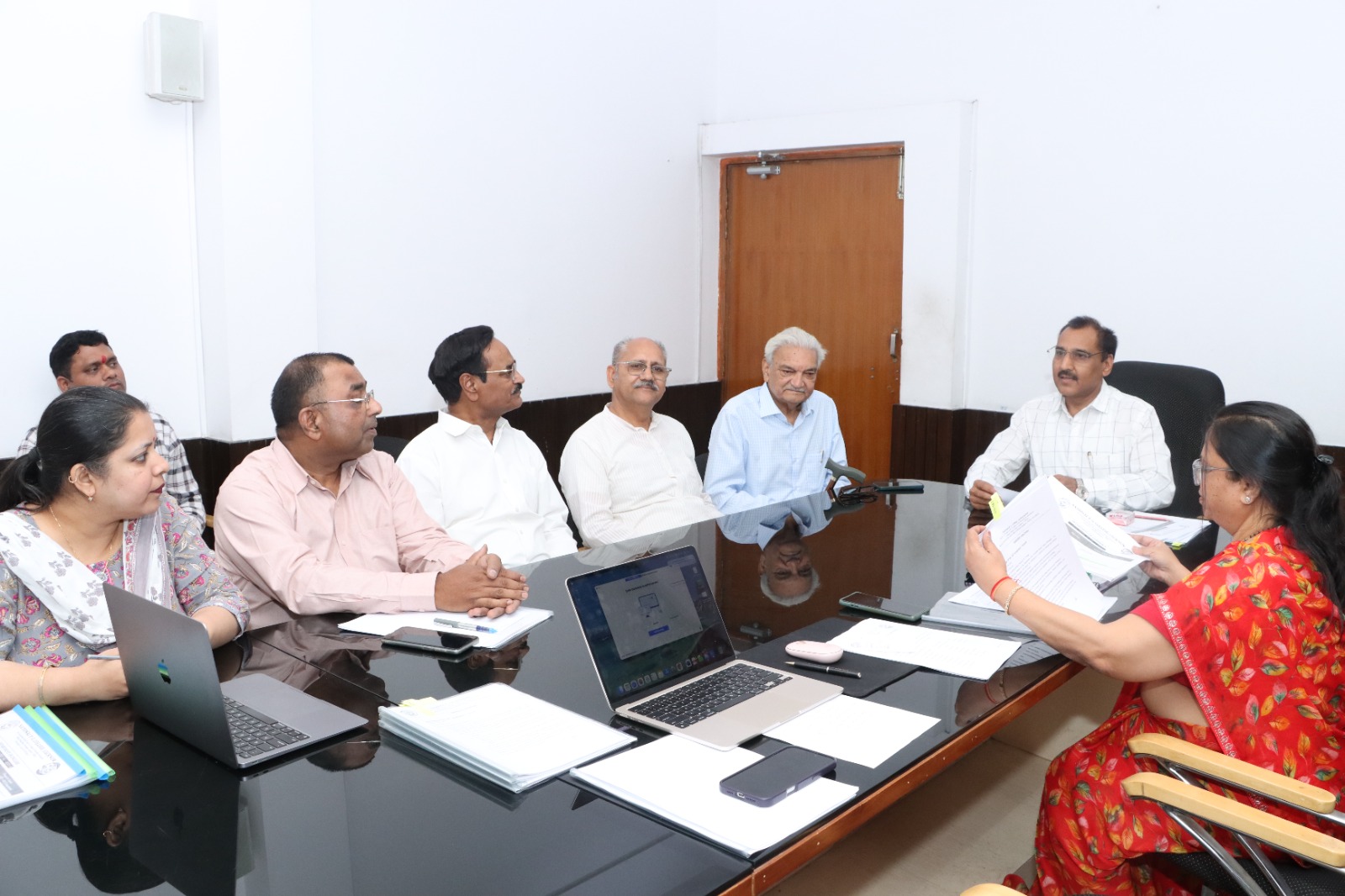
Lucknow | The 34th Academic Council meeting of National P.G. College was successfully held on Monday, marking a significant step toward academic expansion and institutional strengthening. The meeting was chaired by Principal Prof Devendra Kumar Singh and witnessed participation from eminent academicians and experts from across the country.
Among the distinguished attendees were Vice-Chancellor nominee Prof C B Sharma, Prof Vignesh Kumar, noted theatre personality Prof Anil Rastogi, Prof Usha Kiran Rai, and Prof Umesh Singh.
Key Academic Decisions
The council approved several forward-looking academic and administrative measures aimed at enhancing employability and aligning with contemporary education trends. Two new Apprenticeship Embedded Degree Programmes (AEDP)—BBA in Logistics and B.Sc. in Digital Electronics—were proposed. Additionally, Indian Knowledge Systems (IKS) and Sustainable Development Goals (SDG) components have been integrated into the curriculum.
To promote flexible learning, SWAYAM and SWAYAM+ courses will now be part of all programmes. The institution also announced the extension of admission consultancy services to other colleges and universities.
In a major boost to research, a grant of ₹15 lakh has been sanctioned for major and minor research projects for the academic session 2025–26. The Internal Quality Assurance Cell (IQAC) has also been restructured in line with the updated NAAC framework.
New Courses and Institutional Collaborations
The council approved the introduction of B.Com. (CFA) and B.Com. (ACCA) programmes from the academic session 2026–27. Postgraduate teaching in History will also begin from the same session, alongside the proposal for launching an M.A. in History programme.
To strengthen apprenticeship-based learning, a BOAT-NR Extension Centre will be established. The college has also signed a Memorandum of Understanding with LBS National Sanskrit University for conducting MMTTC programmes.
The institution has actively engaged in academic capacity building, including a one-week online NEP sensitization programme conducted in January 2026, along with research methodology workshops and international conferences. Furthermore, CO-PO mapping for all courses has been completed in accordance with Bloom’s Taxonomy.
Future-Focused Academic Vision
During the meeting, Prof. C.B. Sharma proposed the introduction of new-age programmes such as BA LL.B., B.Com. LL.B., M.Sc. in Data Science, and Data Analytics, highlighting the need to align academic offerings with evolving industry demands. Experts, however, emphasized that such programmes should be introduced after careful feasibility assessment.

In his address, Principal Prof. Singh stressed the importance of digital transformation in education. He encouraged faculty members to develop more digital content and video lectures, while also advocating the integration of Artificial Intelligence (AI) across academic programmes.
M.A. History Programme Approved
In a significant development, the Department of History announced the approval of a two-year postgraduate M.A. History programme. The proposal was initially cleared during the Board of Studies meeting on February 16, 2026, and later ratified by the Academic Council.
The programme has been designed with a strong interdisciplinary and skill-oriented approach, incorporating modern tools and methodologies. Key features include training in GIS and remote sensing for historical research, courses in archival management, museology, and heritage tourism, and hands-on experience in digital and visual archiving.
The curriculum also emphasizes environmental history, subaltern and folk traditions, global economic perspectives, gender studies, and public history, ensuring a holistic and inclusive understanding of the discipline.
Industry Linkages and Practical Exposure
To enhance employability, the department is working toward establishing internship and apprenticeship opportunities through collaborations with reputed institutions such as INTACH Lucknow Chapter, State Archives Lucknow, Uttar Pradesh Tourism, and Ambedkar University Delhi.
These initiatives aim to provide students with practical exposure and industry-relevant skills, bridging the gap between academic learning and professional requirements.
Strengthening Academic Excellence
Concluding the meeting, Principal Prof. Singh expressed confidence that the newly introduced initiatives would significantly enhance the academic quality of the institution and create greater opportunities for the holistic development of students.
The meeting underscored the college’s commitment to innovation, research, and future-ready education, positioning it as a progressive institution in the higher education landscape.