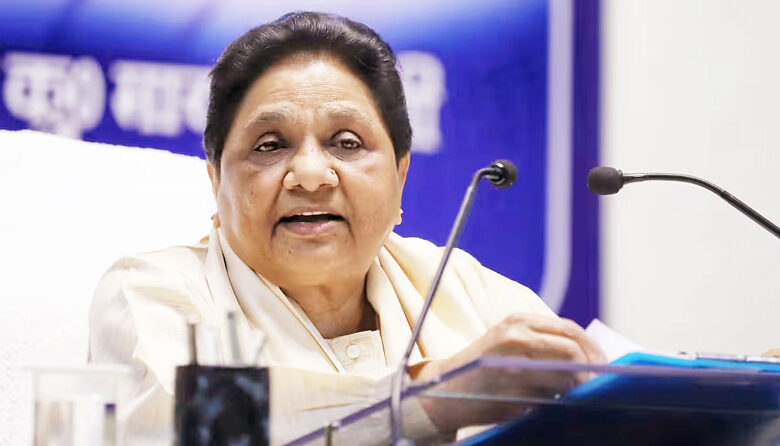
Lucknow: In a calculated political move, Mayawati, national president of the Bahujan Samaj Party, has once again brought the demand for a separate Western Uttar Pradesh and a dedicated High Court bench to the forefront. Using the inauguration of the first phase of the Noida International Airport as a backdrop, her renewed push signals more than emotional rhetoric—it reflects a long-term political strategy aimed at reshaping the party’s relevance in the region.
Mayawati asserted that the conceptual groundwork and initial development of the Jewar airport project began during her tenure, positioning the BSP as a development-oriented party. By doing so, she seeks to counter the perception of the BSP as solely focused on caste-based politics, instead projecting it as a party capable of envisioning and executing large-scale infrastructure initiatives. At the same time, she has criticized rival parties—including the Bharatiya Janata Party, Samajwadi Party, and Indian National Congress—for alleged delays and obstacles in development projects.
Central to her renewed campaign is the argument that Western Uttar Pradesh, despite being home to industrial corridors, fertile agricultural zones, and rapidly urbanizing hubs like Noida and Gurugram, continues to suffer from administrative delays and judicial inaccessibility. By advocating for a separate High Court bench and even a distinct state, Mayawati is attempting to channel local discontent into political support for the BSP.
Her strategy also aims to broaden the BSP’s voter base. Western UP is socially diverse, comprising Dalits, OBCs, Jats, Gujjars, Rajputs, and other communities often aligned with different political camps. By focusing on regional development and governance issues rather than purely caste-based mobilization, the BSP hopes to unite these groups under a common agenda, potentially attracting voters who have traditionally leaned toward other parties.

Moreover, the demand for statehood allows the BSP to position itself as a serious opposition force in Uttar Pradesh. In a state governed by the BJP, raising questions about administrative efficiency and equitable development helps the party craft a narrative that goes beyond social justice, extending into governance reforms and regional balance.
Finally, the issue ensures continued visibility for the BSP in political and media discourse. Debates around state reorganization, judicial accessibility, and industrial growth keep the party relevant, even when electoral outcomes may not favor it. This sustained engagement could help the BSP nurture new leadership, connect with younger voters, and strengthen its organizational base in Western Uttar Pradesh.
In essence, Mayawati’s renewed focus on Western UP blends legacy claims with forward-looking political strategy—an effort to reassert the BSP’s place in the evolving political landscape of India’s most populous state.