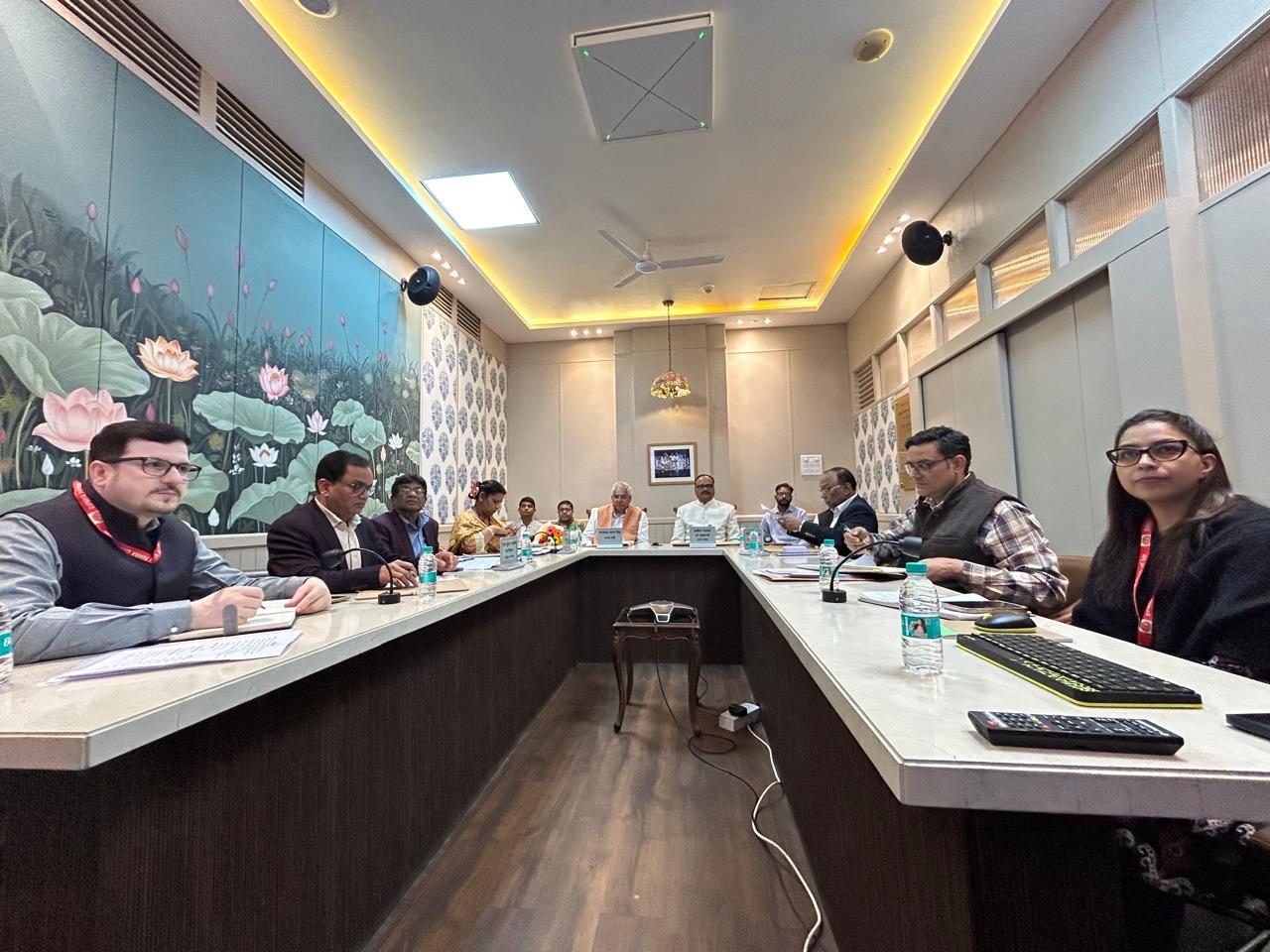
Lucknow: A decisive phase in the fight against filariasis began with the launch of the Mass Drug Administration (MDA) campaign across 21 districts of Uttar Pradesh. Union Health Minister J.P. Nadda inaugurated the campaign virtually, reaffirming the government’s commitment to eliminating the mosquito-borne disease as a public health threat.
The virtual launch was attended by Deputy Chief Minister Brajesh Pathak, Minister of State for Health Mayankeshwar Sharan Singh, Additional Chief Secretary (Health) Amit Ghosh, National Health Mission Director Dr. Pinky Jowel, and District Magistrates from 21 districts. This year, the MDA campaign will be conducted in 64 blocks across the state.

Nationwide Push Across 12 States
Addressing the gathering, Union Health Minister J.P. Nadda described filariasis as a serious public health challenge in India. He noted that the disease not only causes long-term physical disability but also imposes significant social and economic burdens on affected families. He emphasized that elimination is possible only when every eligible individual consumes the prescribed medication.
The campaign will be conducted in 124 districts across 12 states, including Uttar Pradesh. The Minister directed that booths should be set up in all government and private hospitals to maximize outreach.
Targeting 1.4 Crore People in UP
Speaking at the event in Lucknow’s Vidhan Bhavan, Deputy Chief Minister Brajesh Pathak said the Uttar Pradesh government is fully committed to achieving the goal of a filariasis-free state. The campaign, which will run until February 28, aims to administer anti-filarial medicines to approximately 1.4 crore people through door-to-door outreach by ASHA workers and other health personnel.
The objective is to ensure that more than 90 percent of the eligible population consumes the medication under direct supervision, thereby breaking the chain of transmission. The campaign carries the message: “Our Resolve – Freedom from Filariasis.”
Filariasis is transmitted by mosquitoes, and symptoms often appear 10–15 years after infection. Many infected individuals remain asymptomatic carriers, unknowingly spreading the disease. Officials stressed that timely consumption of the medicines can completely prevent the disease.
Citizens have been urged to take the medication in the presence of health workers, avoid consuming it on an empty stomach, and not fall prey to misinformation.

WHO-Recommended Three-Drug Regimen
Under the campaign, all eligible individuals above one year of age will receive WHO-recommended medicines—Ivermectin, Diethylcarbamazine (DEC), and Albendazole—based on age-specific dosage. Pregnant women, children under one year, and severely ill individuals will be excluded.
Health authorities clarified that the medicines are generally safe. In rare cases, mild and temporary side effects such as nausea or fatigue may occur, but these subside quickly. Rapid Response Teams have been deployed to handle any emergencies.
Five-Pillar Strategy
State Filariasis Officer Dr. A.K. Chaudhary said Uttar Pradesh has adopted a five-pillar strategy for elimination: Mass Drug Administration, disease management and disability prevention, mosquito control, high-level inter-departmental coordination, and innovative interventions.
Departments including Panchayati Raj, Education, Urban and Rural Development, and Women and Child Development are collaborating to turn the campaign into a people’s movement. Officials emphasized that active public participation is crucial to protect future generations from the disease.
Districts Covered
The campaign will be conducted in 13 blocks of Shahjahanpur, 12 in Ballia, seven in Barabanki, and four each in Unnao and Chitrakoot. Three blocks in Pratapgarh will also participate. Two blocks each in Hardoi, Prayagraj, Sonbhadra, Kaushambi, Ayodhya and Bhadohi are included.
Additionally, one block each in Lucknow (Mal block), Raebareli, Ambedkar Nagar, Lakhimpur Kheri, Pilibhit, Auraiya, Banda, Fatehpur and Bahraich will carry out the MDA drive.
With coordinated efforts at the central and state levels, Uttar Pradesh aims to make significant progress toward eliminating filariasis and securing a healthier future for its population.