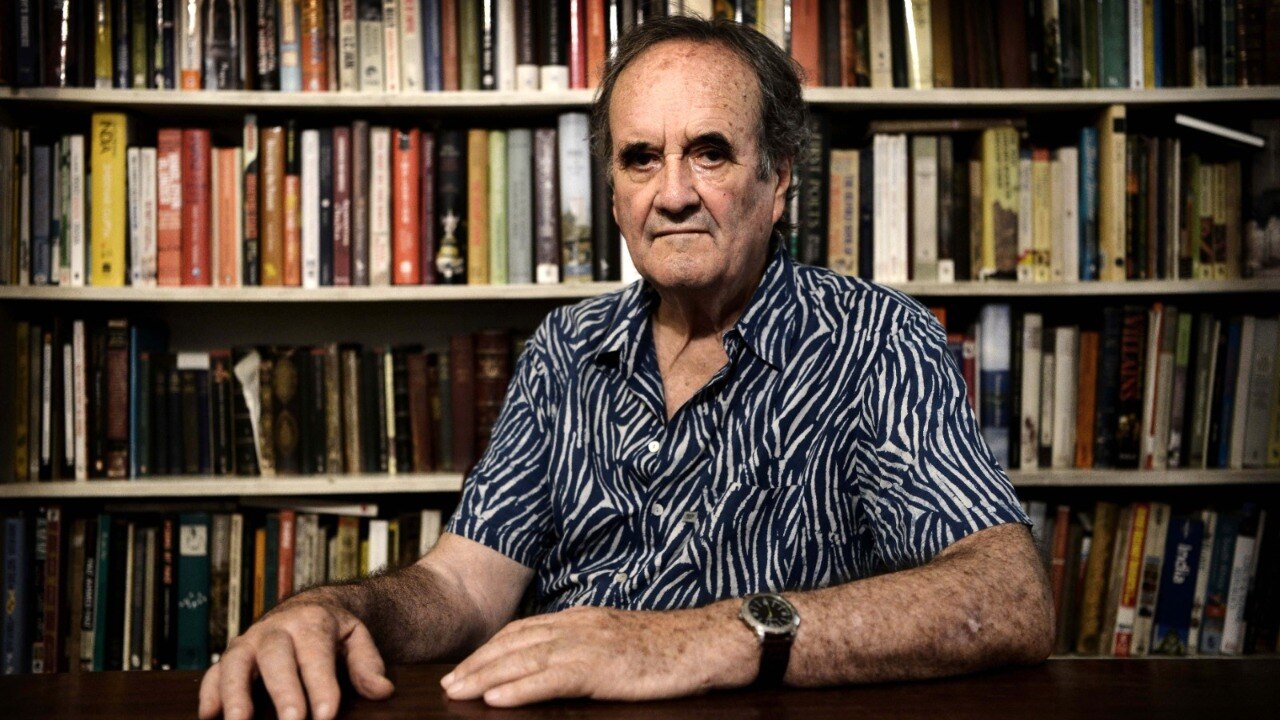
New Delhi: Sir William Mark Tully, KBE (24 October 1935 – 25 January 2026), the legendary British journalist and broadcaster who came to be known, affectionately and enduringly, as the “voice of India,” passed away today in New Delhi at the age of 90. With his death ends an era of journalism defined not by speed or spectacle, but by patience, empathy, and moral clarity.
Born in Tollygunge, Calcutta (now Kolkata), during the twilight years of the British Raj, Mark Tully’s life was shaped by India almost from the start. The son of British parents, he spent his early childhood amid the sights and sounds of colonial India before being sent to England for schooling. He studied at Twyford School, Marlborough College, and later Trinity Hall, Cambridge, where he read Theology. For a brief period, he even trained for ordination in the Church of England. But the pulpit could not hold him. His true calling lay elsewhere—in listening, observing, and telling the stories of people and nations.
That calling found its expression when Tully joined the BBC in 1964. A year later, in 1965, he was posted to India as the BBC’s India Correspondent. What began as a professional assignment soon became a lifelong bond. From 1972 to 1994, Tully served as the BBC’s Bureau Chief in New Delhi, a role in which he emerged as one of the most respected and influential foreign correspondents of his generation.
Through the distinctive cadence of his calm, measured voice on the BBC World Service, Tully introduced millions across the globe to India in all its contradictions and complexities. He reported on some of the most defining and traumatic events of modern South Asian history: the 1971 Bangladesh Liberation War; the Emergency imposed by Indira Gandhi; Operation Blue Star at the Golden Temple; the assassination of Indira Gandhi and the horrific anti-Sikh riots of 1984; the Bhopal gas tragedy; the demolition of the Babri Masjid in 1992; and countless elections, droughts, famines, and political upheavals. At moments when passions ran high and facts were contested, Tully’s reporting stood out for its restraint, depth, and humanity.
That integrity came at a cost. During the Emergency (1975–1977), Tully was expelled from India along with several other foreign journalists for his refusal to toe the official line. Yet exile did not diminish his attachment to the country. When the Emergency ended, he returned, rebuilt his life and career, and ultimately chose to make India his permanent home. He became an Overseas Citizen of India and lived in New Delhi for most of his adult life—a choice that reflected not convenience, but conviction and affection.

After leaving the BBC in 1994, Tully did not retreat from public life. Instead, he reinvented himself as an author, commentator, and public intellectual, continuing to engage deeply with the moral, political, and social questions facing India. His books—No Full Stops in India (1988), The Heart of India (1995), India in Slow Motion (co-authored with Gillian Wright, 2002), India’s Unending Journey (2007), and Upcountry Tales: Once Upon A Time In The Heart Of India (2017)—remain essential reading. Written with warmth, humility, and sharp insight, they chronicled not just power and politics, but the rhythms of rural life, the dilemmas of faith, and the quiet resilience of ordinary people.
Recognition followed, though Tully wore honours lightly. He was appointed Knight Commander of the Order of the British Empire (KBE) in 2002 for services to broadcasting, and in 2005 India awarded him the Padma Shri, its fourth-highest civilian honour—an acknowledgment of the rare trust he commanded in a country often wary of foreign observers. On both sides of the India–UK divide, he was admired for his fairness, intellectual honesty, and refusal to reduce India to easy headlines or ideological caricatures.
Above all, Mark Tully believed that journalism was an act of listening before it was an act of speaking. In an age increasingly dominated by instant news, outrage cycles, and polarized commentary, he stood for something quietly radical: the idea that understanding a country as vast and layered as India requires time, humility, and empathy.
He is survived by his partner Gillian Wright, his children, and an immeasurable legacy of listeners and readers who came to understand modern India through his voice and his words. Mark Tully did not merely report on India—he bore witness to it, with patience and principle. That, perhaps, is his greatest gift, and his most enduring one.