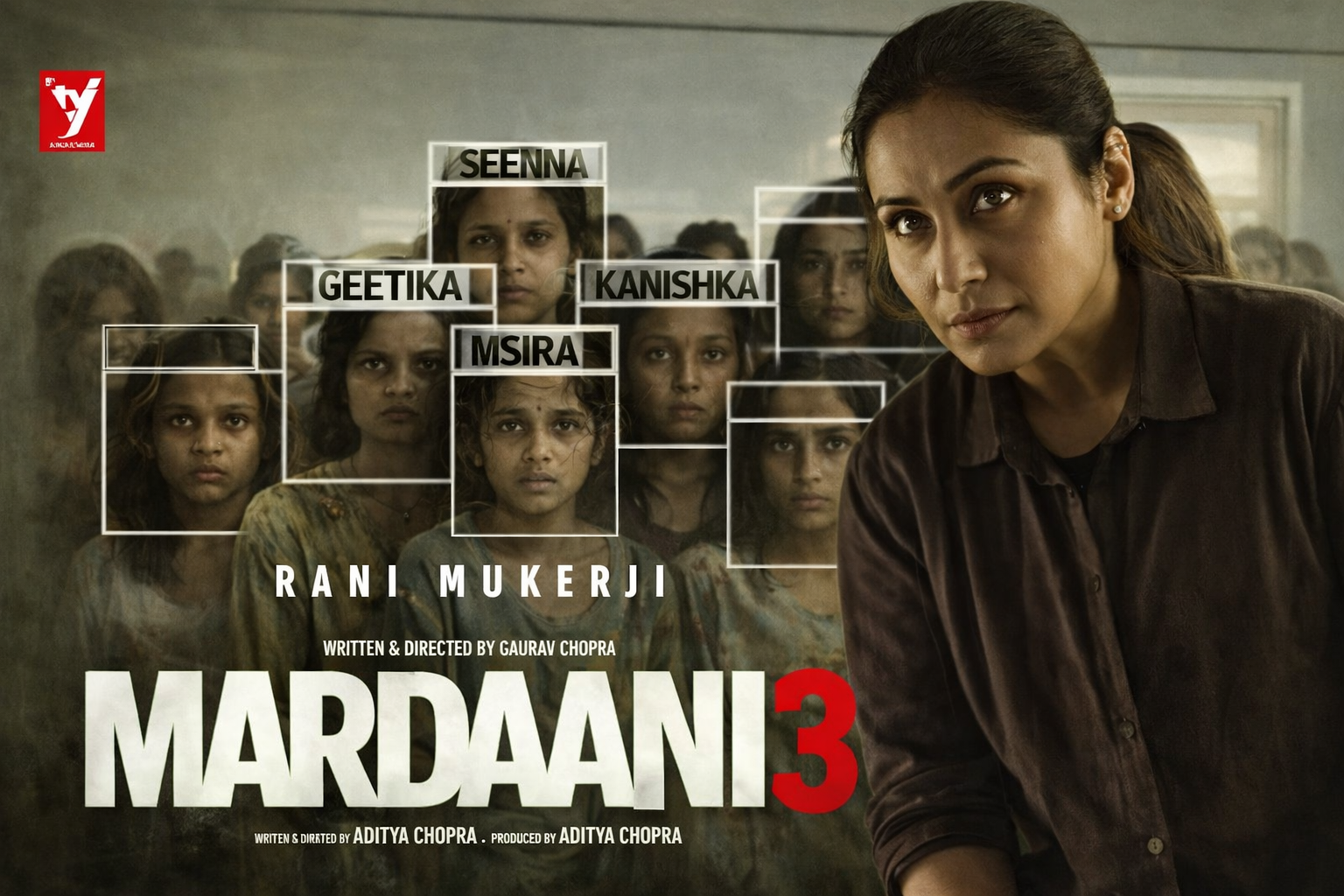
Mumbai: Released on January 30, 2026, Mardaani 3 marks the third—and most harrowing—installment in Yash Raj Films’ acclaimed female-led crime-thriller franchise. Directed by Abhiraj Minawala, taking over the reins from Pradeep Sarkar and Gopi Puthran, and produced by Aditya Chopra, the film reunites audiences with Rani Mukerji as the indomitable ACP/DCP Shivani Shivaji Roy.
Arriving in a landmark year that coincides with Mukerji’s 30th year in cinema, Mardaani 3 feels both celebratory and uncompromising. Clocking in at a tight two hours, it blends high-stakes action, unflinching social commentary, and relentless tension—delivering what is widely regarded as the darkest and most brutal entry in the series.
Franchise Background: The Evolution of Shivani Shivaji Roy
The Mardaani franchise occupies a rare space in Hindi cinema: a successful, issue-driven, solo female-led action series that has consistently refused glamour in favor of grit.
Mardaani (2014), directed by Pradeep Sarkar, introduced Shivani as a Mumbai Crime Branch officer investigating the abduction of a teenage girl. What began as a personal case spiraled into the exposure of a vast child trafficking and sex racket. Rani Mukerji’s grounded, ferocious performance was widely praised, earning critical acclaim (averaging 3.5/5 from major outlets), Filmfare recognition for sound design, and a reputation for raw realism that revitalized her career.
Mardaani 2 (2019), written and directed by Gopi Puthran, escalated both scale and psychological intensity. Set in Kota, Rajasthan, the film pitted Shivani—now a Superintendent of Police—against a young, deeply disturbing serial rapist and murderer, memorably played by Vishal Jethwa. The film explored misogyny, entitlement, and systemic failure through a chilling cat-and-mouse narrative. Though some critics noted pacing issues, Mukerji’s authority and Jethwa’s menacing debut cemented the franchise’s credibility. The film’s moderate box-office success (₹67 crore worldwide) reinforced Mardaani as a serious, message-driven thriller series.
Across both films, Shivani’s moral clarity, physical authenticity (Mukerji trained extensively in Krav Maga), and refusal to compromise established her as one of Bollywood’s most enduring female action heroes.
Plot Overview (Spoiler-Light)
In Mardaani 3, Shivani is now aligned with the National Investigation Agency (NIA) when she is pulled into a chilling national crisis: the disappearance of 93 young girls in just three months. What initially appears as a series of isolated abductions soon reveals a sprawling, highly organized child trafficking and beggar mafia network operating with ruthless efficiency.
As Shivani races against time to rescue the victims, she comes face-to-face with a formidable new adversary—“Amma,” an enigmatic mafia queen played with terrifying restraint by Mallika Prasad. This marks a franchise first: a woman-versus-woman face-off, adding psychological complexity and a disturbing maternal cruelty to the conflict.

The supporting cast includes Janki Bodiwala in a pivotal emotional role, Mikhail Yawalkar as Inspector Balwinder Singh Sodhi, and Jisshu Sengupta returning as Dr. Bikram Roy. The narrative unfolds as a relentless pursuit—packed with brutal interrogations, covert operations, and visceral confrontations—never letting the audience forget the horrifying human cost at its core.
Performances
Rani Mukerji remains the soul and spine of Mardaani 3. Her Shivani is older, more experienced, and visibly angrier—yet unmistakably human. Mukerji delivers a performance built on controlled rage, emotional gravity, and physical conviction. After more than a decade with the character, she inhabits Shivani effortlessly, reminding viewers why this role stands among the most iconic in her career.
Mallika Prasad is a revelation as Amma. Cold, calculating, and terrifyingly maternal, she crafts one of the franchise’s strongest antagonists. Her quiet cruelty and ideological rigidity elevate the conflict beyond physical combat into something deeply unsettling. Janki Bodiwala brings emotional resonance to her role, while the supporting ensemble provides dependable, grounded support without overshadowing the central conflict.
Direction, Craft, and Style
Abhiraj Minawala brings a fresh but faithful vision to the franchise. The film adopts a grittier visual language, tighter pacing, and an unflinching approach to violence. The cinematography captures urban decay, shadowy safe houses, and claustrophobic interiors with stark realism, while the editing maintains a constant sense of urgency.
The background score pulses with restrained intensity, heightening tension without undercutting realism. Action sequences remain raw and grounded—eschewing cinematic heroics in favor of physical struggle and consequence. Torture and violence are deliberately uncomfortable, reinforcing the horror of the crimes rather than sensationalizing them.