Lucknow— The 17th edition of the Mahindra Sanatkada Lucknow Festival (MSLF) 2026 opened on Friday with a rich tapestry of craft, performance, food, literature, and dialogue, spread across some of Lucknow’s most iconic heritage spaces in Qaiser Bagh. This year’s festival is themed “Raabta Lucknow Calcutta Ka”, exploring the deep historical, artistic, and emotional connections between the two culturally resonant cities.
The first day unfolded across Safed Baradari, Raja Ram Pal Singh Park, Amir-ud-Daula Library, and adjoining heritage precincts, drawing visitors into a multi-sensory celebration of shared histories and living traditions.
Festival Spaces Come Alive
Safed Baradari functioned as the central hub of the festival, housing the Weaves and Crafts Bazaar, the Sanatkada Craft Shop, live craft demonstrations, and essential visitor services including registration, information, and medical help desks.
Raja Ram Pal Singh Park was transformed through sustainably curated décor using bamboo, cloth masking, and handcrafted installations. The park hosted Bawarchi Tola, a vibrant food court featuring stalls by Red Dragon, Tunday Kababi, Cinnamon, Brio Art Café, Naimatkhana, and Mark Burgers. It also accommodated the main performance stage, exhibitions, the Kids’ Corner, and the Ram Advani Book Corner.
The historic Amir-ud-Daula Library was introduced as the festival’s literary centre and is set to host the Saleem Kidwai Lucknow Lectern along with several literary conversations over the remaining days.
Weaves and Crafts Bazaar Draws National Participation
The Crafts Bazaar, which opened at 11 am, featured over 117 stalls showcasing crafts and artisanal products from across India. A major highlight was the Baro Market, curated by Srila Chatterjee, which brings together ethically sourced, story-driven crafts designed for contemporary living.
Among the standout participants was 145 East, a Kolkata-based collective presenting gamcha sarees, dhoti pants, kurtas, kaftans, and accessories rooted in Bengal’s visual culture. Lata Sita, founded by Meghna Nayak, showcased upcycled, zero-waste garments made from reclaimed sarees and textiles, emphasising inclusivity and fair labour practices. Love for the Loom, led by Sonali Bhattacharya, displayed handloom cotton sarees and fabrics developed in collaboration with weavers from Bengal, Kutch, and other regions, blending traditional techniques with modern aesthetics.
Craft Demonstrations and Community Engagement
Daily craft demonstrations began at 3:30 pm, with crochet by Fio Crafts marking the opening day. Visitors were introduced to the global journey of crochet and its growing relevance in India as a creative practice and livelihood option, particularly among young women.
Inauguration Reflects Personal and Cultural Raabta
The festival was formally inaugurated with a thematic introduction by Naghma Parveen and Tasveer Hasan. Speaking on the occasion, Anuja Sharma, sister of Anand Mahindra, said the festival holds special meaning for her as it commemorates Indira Mahindra and reflects the personal connection her parents shared with Lucknow and Kolkata.

The release of the festival souvenir followed, led by Jay Shah, Supriya Sharma, Hussain Sahab, and Charu Sharma.
Addressing the gathering, Charu Sharma reflected on Lucknow’s historic influence on Calcutta, recalling early cricketing milestones and women’s cricket matches held at KD Singh Babu Stadium. He noted the city’s recent progress, particularly the emergence of the Ekana Stadium, as a sign of Lucknow’s evolving sporting and urban identity.
Performances and Awards
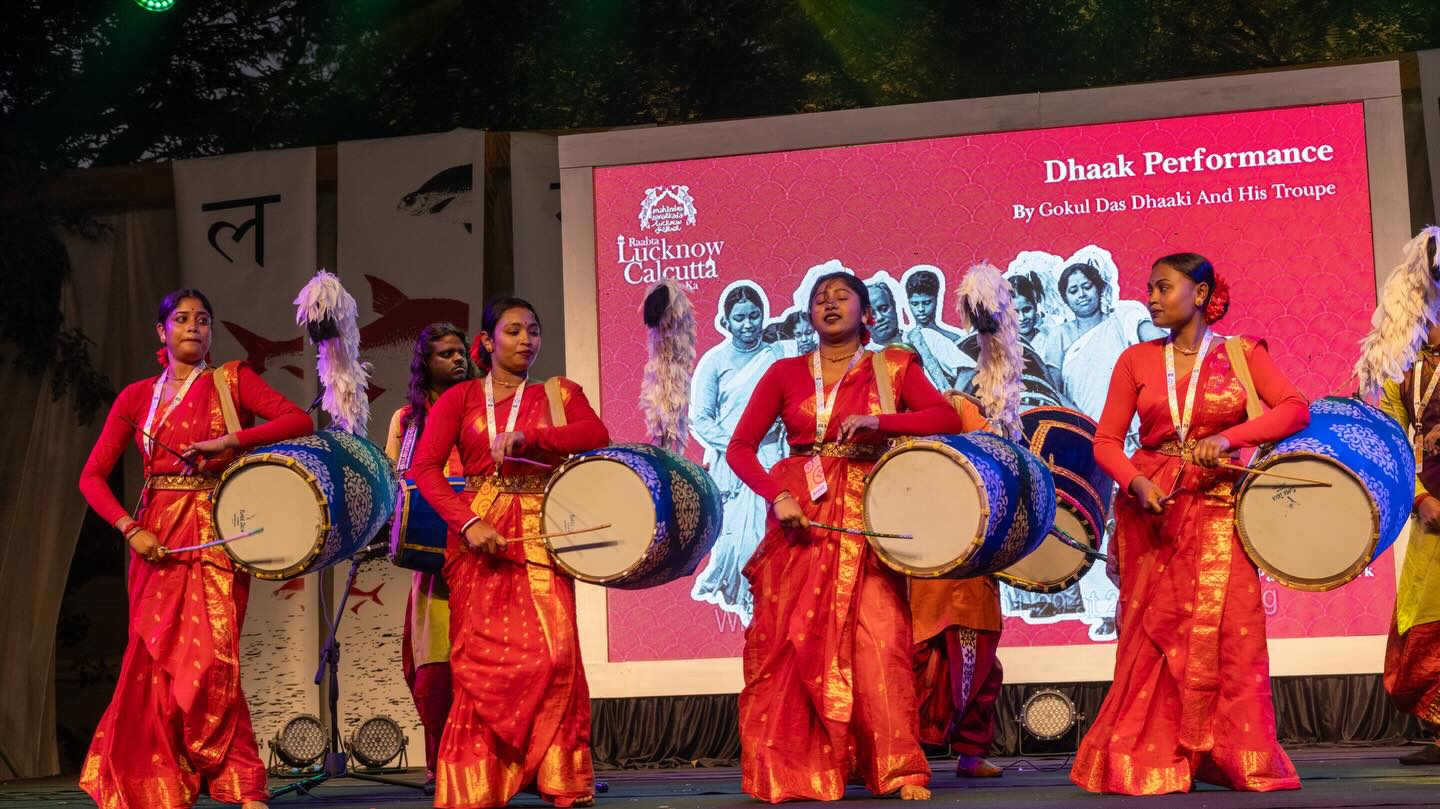
A traditional dhaak performance by Gokul Das and his all-women troupe set a powerful tone for the evening. A Padma Shri awardee, Gokul Das has been instrumental in bringing dhaak beyond ritual spaces and opening the form to women performers.
The Meera and Satti Kuckreja Husn-e-Karigari Lifetime Achievement Award was presented to Mahesh Kumar and Sunita Devi for their exceptional contribution to the craft of miniature murti making.
The evening also featured a narrative Kathak solo, “Where Is My Friend’s House?”, by Kolkata-based dancer and theatre practitioner Shruti Ghosh. Drawing from her research on the journey of Kathak to Calcutta during the reign of Wajid Ali Shah, the performance explored themes of exile, memory, and the enduring Nawabi influence on the city.
Musical Finale
Day 1 concluded with “Saat Maqaam Ishq Ke: A Musical Daastaan” by The Murshidabadi Project, featuring Soumya Murshidabadi, Naynesh Pimpale, and Tathagata Mishra. The performance traced the seven stages of Sufi love through Indian folk, classical, and Sufi traditions, drawing on the poetry of mystics such as Kabir, Amir Khusro, and Mansur Al Hallaj.
About the Mahindra Group
Founded in 1945, the Mahindra Group is one of India’s largest multinational federations, employing over 3,24,000 people across more than 100 countries. With leadership positions in farm equipment, utility vehicles, IT, and financial services, Mahindra also has a strong presence in renewable energy, agriculture, logistics, hospitality, and real estate. The group remains committed to ESG leadership, rural prosperity, and enhancing urban living under its philosophy of enabling communities to Rise.