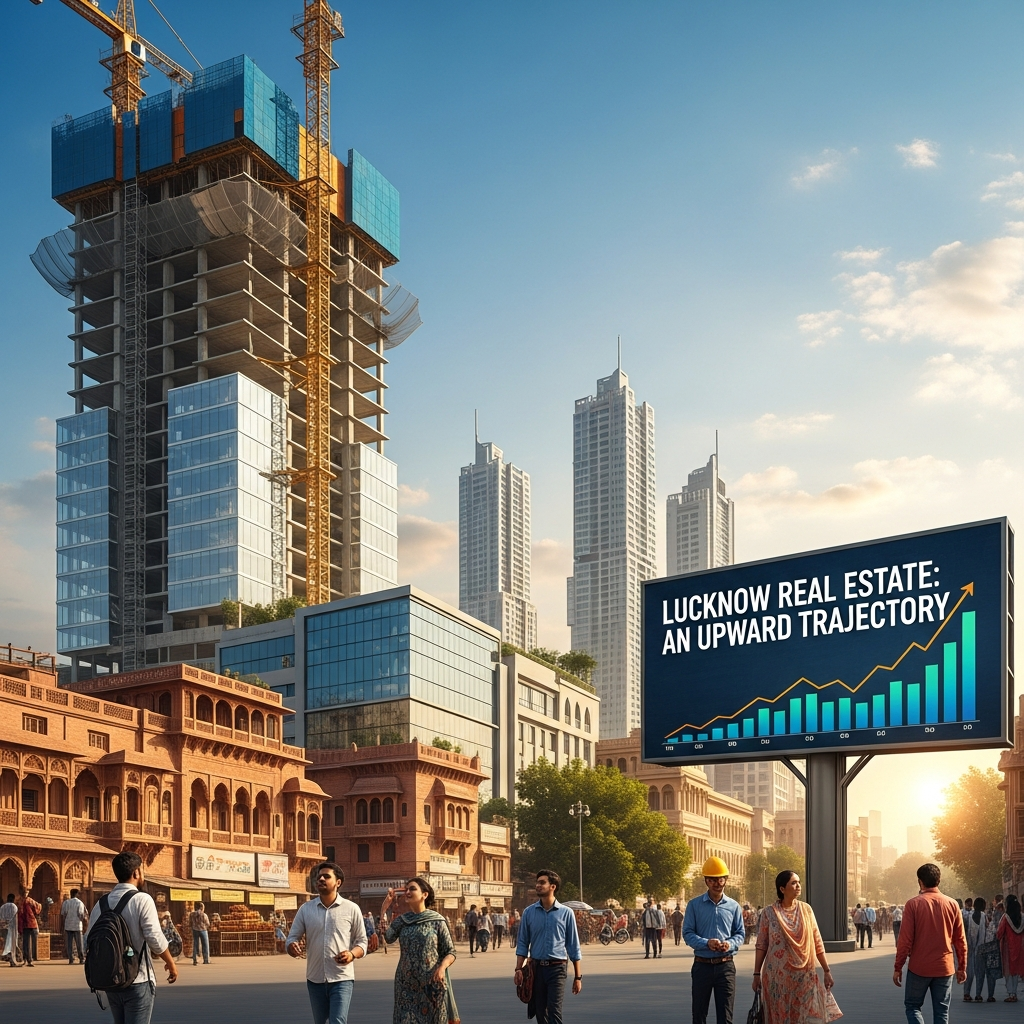
Lucknow | Nestled in the cultural cradle of Uttar Pradesh, Lucknow—the City of Nawabs—has long been celebrated for its Awadhi elegance, architectural grandeur and refined lifestyle. From the narrow, timeworn lanes of Chowk to the colonial charm of Hazratganj and the glass-and-steel skyline of Gomti Nagar, the city has always balanced heritage with quiet evolution. In 2025, however, that evolution has accelerated into a full-fledged real estate renaissance, placing Lucknow firmly among North India’s most promising Tier-2 investment destinations.
Industry estimates now project annual growth of 12–15 per cent in Lucknow’s real estate sector through 2030, outpacing several comparable cities. This surge is being driven by a rare convergence of policy reform, infrastructure expansion, economic diversification and demographic momentum.
Circle Rates, Confidence and Capital
A defining trigger came in August 2025, when the state government revised circle rates for the first time in nearly a decade. The 15–25 per cent hike—especially pronounced for non-agricultural land—immediately recalibrated market sentiment. Property prices rose by as much as 25 per cent in high-demand corridors such as Gomti Nagar Extension, Sultanpur Road and Shaheed Path, signalling renewed confidence among both end-users and investors.
Unlike speculative spikes of the past, this upswing has been supported by regulatory stability. Uttar Pradesh RERA data up to August shows Lucknow leading the state in new project registrations, surpassing even Noida. UP-RERA’s recovery of ₹1,410 crore through over 5,700 recovery certificates has further strengthened buyer trust, making the city one of the more transparent real estate markets in the region.
Infrastructure as the Growth Engine
Infrastructure remains the backbone of Lucknow’s property boom. Metro Phase II extensions, the near-completion of the Awadh Expressway, and upgrades to the Purvanchal Expressway have significantly improved east–west and inter-city connectivity. These projects have effectively redrawn the city’s real estate map, opening up peripheral zones while shrinking commute times to the Chaudhary Charan Singh International Airport and emerging IT and defence corridors.
Planned flyovers, transport hubs and e-mobility infrastructure—especially along Sitapur Road and Sultanpur Road—have catalysed development in once-overlooked micro-markets. Sitapur Road, in particular, has emerged as a hospitality and mixed-use hotspot with the inauguration of branded hotels, new malls and the ambitious 2,800-acre LDA Naimish Nagar township.
Economy Meets Housing Demand
Lucknow’s economic profile has also undergone a marked transformation. The expansion of IT and ITeS operations by companies such as HCL and TCS, the growth of defence manufacturing clusters linked to BrahMos and EV manufacturing, and the steady rise of MSMEs have drawn a growing pool of young professionals. Coupled with tourism inflows—estimated at around five million annually—this has created sustained demand across housing segments.
Reflecting this momentum, Q1 2025 residential sales recorded a 25 per cent rise in unit volumes to 1,301 units, while transaction values jumped by 48 per cent, driven largely by premium and mid-premium housing. This performance stood out even as many Tier-2 markets elsewhere reported moderation.
New Projects, New Aspirations
The year has seen a wave of high-profile launches. Projects such as Shalimar Mannat on Faizabad Road and Rishita Mulberry Heights in Sushant Golf City have attracted buyers with lifestyle-led offerings—large green spaces, resort-style clubhouses and ready-to-move inventory. Simultaneously, the Lucknow Development Authority (LDA) has approved new affordable and mid-income housing schemes in Gomti Nagar, Aishbagh and Basant Kunj, focusing on ventilation-friendly design, sustainable materials and below-market pricing.

On the commercial front, developments like Joy Street in Vibhuti Khand are reshaping the city’s high-street and office landscape, catering to retail brands, co-working spaces and premium corporate tenants.
Where Investors Are Looking
Gomti Nagar Extension continues to lead appreciation charts with nearly 17.5 per cent year-on-year growth, commanding ₹8,000–12,000 per sq ft for premium apartments and villas. Shaheed Path and Sushant Golf City follow closely, offering 15–20 per cent appreciation through plotted developments and eco-conscious housing.
Affordable segments are gaining traction along New Jail Road and Sultanpur Road, where entry prices remain accessible and rental yields of 8–12 per cent are projected. Commercial real estate in Hazratganj, meanwhile, remains resilient, buoyed by retail footfall and office demand, while land parcels along Deva Road are being touted for long-term capital appreciation.
Social and Environmental Dimensions
Beyond numbers, the boom carries social implications. Women now account for an estimated 40 per cent of the micro-workforce in real estate-linked activities—from sales and design to project management. Inclusivity measures, such as RERA-mandated accessibility features and Braille signage, are gradually becoming standard in new developments.
Environmental considerations are also gaining prominence. Solar installations, rainwater harvesting and green building norms—especially in LDA projects—aim to offset the pressures of rapid urbanisation and rising heat stress.
Challenges Ahead
Challenges persist. Instances of counterfeit land deals in older localities, rising construction costs and overall price inflation pose risks. Yet government-backed schemes such as Housing for All, improved enforcement, and a steady supply of mid-income housing are helping maintain balance.
A City Reimagined
In 2026, Lucknow stands transformed—no longer just a custodian of nawabi heritage, but a city confidently scripting its future. From heritage precincts to smart townships, from political power centres to sporting and cultural hubs, the city’s real estate story mirrors its broader journey: rooted in tradition, yet reaching decisively upward.
For investors and homebuyers alike, Lucknow’s rising skyline sends a clear message—the throne of the Nawabs is fast becoming a seat of opportunity in India’s urban future.