Lucknow — As Lucknow prepares to immerse itself in the vibrant celebrations of Holi from March 2 to March 4, the Lucknow Police Commissionerate has unveiled one of its most comprehensive security blueprints in recent years. With Holika Dahan scheduled for March 2 and Rangwali Holi to follow on March 3 and 4 — with festivities traditionally spilling into subsequent days in several neighbourhoods — authorities have activated a multi-tiered law enforcement strategy aimed at ensuring safety, communal harmony, and seamless traffic movement across the city.
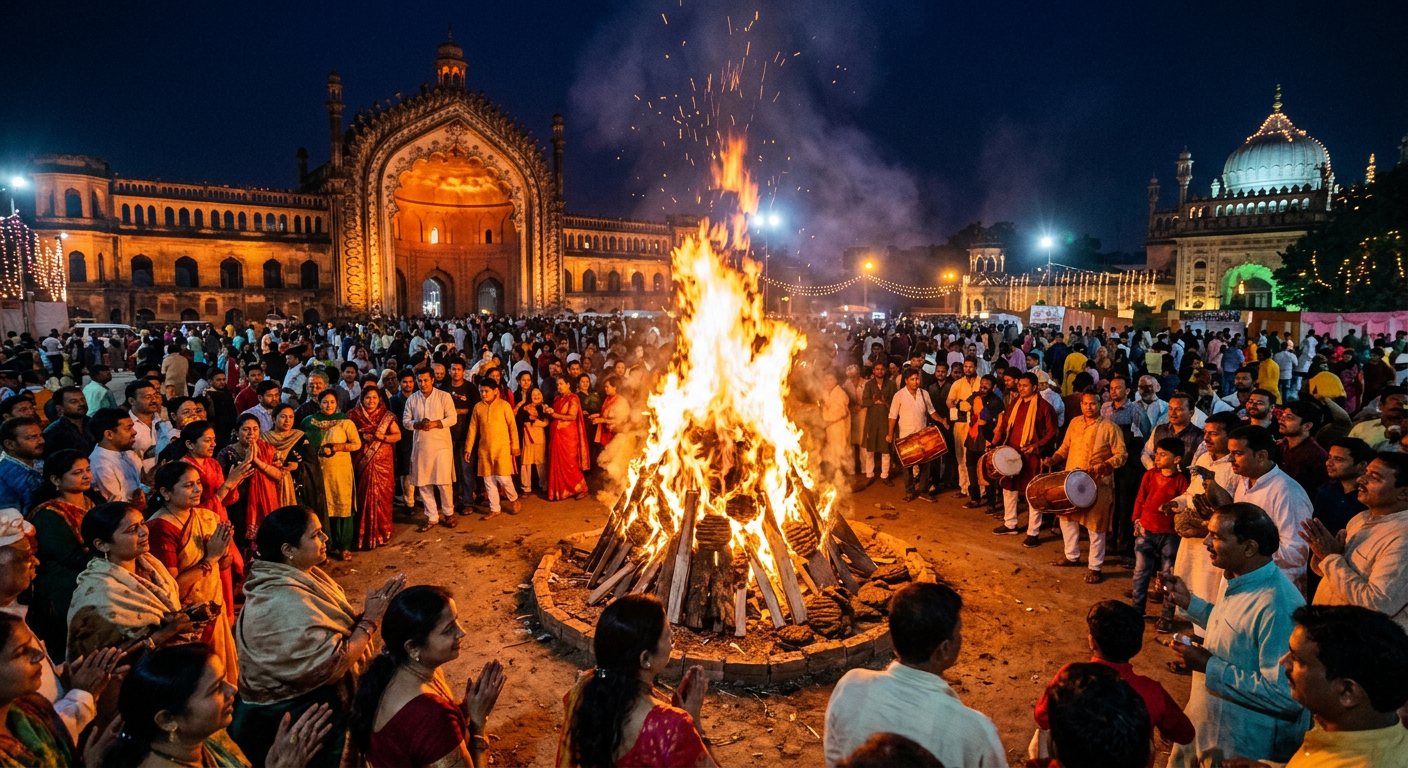
The scale of preparation reflects the magnitude of the festival in the state capital. Police have identified an extensive 3,729 Holika Dahan sites across the city, ranging from residential colonies and public parks to open grounds and community-organised bonfire venues. The detailed mapping exercise underscores the widespread enthusiasm with which Holi is observed in the City of Nawabs.
A senior police official described the plan as “preventive, technology-driven, and community-oriented.” He stated, “We have a comprehensive strategy in place to ensure Holi remains safe and enjoyable for everyone. Our focus is on prevention, rapid response, and zero tolerance for any disruption to public order.”
Massive Deployment Across the City
At the heart of the security grid lies an unprecedented on-ground deployment. Four additional Deputy Commissioners of Police (ADCPs) and 12 Assistant Commissioners of Police (ACPs) have been assigned supervisory roles across sensitive zones. Supporting them are 19 inspectors, 72 Sub-Inspectors (SIs), and 400 constables specifically deployed to oversee Holika Dahan sites and high-density celebration areas.
The traffic wing has been reinforced with equal intensity. Twenty-two inspectors, 75 SIs, 660 constables, and 80 home guards have been tasked with managing vehicular movement, diversion routes, and congestion points near major celebration hubs. In total, at least 1,344 police and traffic personnel will be stationed on the ground, excluding specialised units and reserve forces.
To strengthen rapid-response capabilities, 14 companies of the Provincial Armed Constabulary (PAC) have been mobilised. Wireless communication teams will maintain uninterrupted connectivity among field officers, while operatives from the Local Intelligence Unit (LIU) will conduct real-time monitoring and threat assessments throughout the festivities.
Technology-Driven Surveillance
In a move reflecting the increasing reliance on smart policing, the entire city will remain under round-the-clock CCTV surveillance. Live feeds from hundreds of cameras will be monitored at a centralised control room to ensure swift identification of crowd surges, suspicious activity, or potential law-and-order concerns.
Police officials confirmed that drones may also be deployed in select high-footfall areas, particularly markets and major intersections. Sensitive locations such as Aminabad, Chowk, and Hazratganj will witness intensified patrolling, given their popularity during festival shopping and celebrations.
Peace committee meetings have been held in advance with religious leaders, community representatives, and resident welfare associations. Officials emphasised coordination and mutual respect, especially as Holi coincides with other ongoing observances in certain communities.
Chief Minister’s Directives and Zero Tolerance Policy
The preparations follow a high-level review chaired by Yogi Adityanath, who directed law enforcement agencies to adopt a strict approach toward any attempts to disturb the festive atmosphere. He instructed officials to review incidents from the past five years to strengthen preventive measures and ensure lessons learned are incorporated into this year’s framework.
“Festivals are symbols of joy, not a medium to hurt anyone,” the Chief Minister remarked during the review meeting, calling for heightened vigilance, enhanced patrolling, and swift, exemplary action against offenders. He also emphasised cleanliness and sanitation at Holika Dahan sites and public celebration zones.
Traffic Regulation and Public Advisory
Traffic management forms a critical pillar of the operational plan. Dedicated diversion schemes have been designed for routes leading to major Holika Dahan sites and high-density neighbourhood gatherings. Signages and barricades will be placed strategically to guide commuters.

Authorities have urged motorists to follow traffic advisories, avoid unnecessary travel in congested areas, and cooperate with personnel deployed at checkpoints. Strict enforcement measures are in place against rash driving, drunken driving, triple riding on two-wheelers, and blocking roads for dancing or DJ installations.
Loud music systems and DJs on public roads without permission have been prohibited. Police teams equipped with breath analysers will conduct random checks to deter intoxicated driving. In coordination with the state transport department, additional buses have been arranged to manage increased passenger movement during peak hours.
Citizens have also been advised to celebrate responsibly — refraining from forcibly applying colours, particularly on women or unwilling participants, and respecting personal boundaries. Emergency helpline numbers have been widely circulated for immediate assistance.
Preventive Measures and Social Media Monitoring
Beyond visible deployment, authorities have taken preventive legal steps. Individuals identified as potential troublemakers have been bound down under relevant provisions to pre-empt disturbances. The LIU and cyber monitoring units are closely tracking social media platforms to prevent the spread of misinformation or provocative content.
Officials stressed that proactive intelligence gathering remains central to the strategy. “Our approach is to anticipate and prevent issues before they arise,” a police spokesperson said. “This is a coordinated effort combining manpower, surveillance technology, and community cooperation.”
Community Engagement and Public Confidence
Recognising that security is as much about trust as enforcement, police have intensified outreach efforts. Awareness drives encouraging eco-friendly celebrations and water conservation have been conducted in schools and residential colonies. Resident Welfare Associations have been encouraged to inform local police stations about the timing and location of Holika Dahan events to facilitate smooth coordination.
Police control rooms will function with enhanced staffing to handle emergency calls promptly. Medical teams and fire services have also been placed on alert, given the large number of bonfires planned across the city.
A City Ready for Celebration
The elaborate arrangements underscore the administration’s commitment to ensuring that Holi 2026 unfolds peacefully in the heart of Uttar Pradesh. With thousands of bonfires to be lit and lakhs of residents expected to participate in colour-filled revelry, the challenge is formidable — but officials express confidence in the preparedness.
As Lucknow’s streets prepare to echo with laughter, dhol beats, and vibrant splashes of colour, the security apparatus stands firmly in place. Authorities have reiterated that public cooperation remains vital. Residents and visitors are encouraged to report suspicious activity, adhere to advisories, and embrace the festival in its true spirit of harmony and goodwill.
With meticulous planning, advanced surveillance, and widespread deployment, the Lucknow Police aim to ensure that Holi 2026 reinforces its timeless message — unity in diversity, joy in togetherness, and renewal through celebration — under a safe and watchful civic framework.