Lucknow: Motorists on the Agra–Lucknow Expressway are raising concerns after multiple e-challans were issued for alleged overspeeding, highlighting issues with enforcement accuracy and public awareness. Local businessman Ankur Chaturvedi received two separate e-challans in December 2025, each carrying a fine of ₹2,000, despite discrepancies in the recorded speeds versus posted limits.
Challan Details
Challan 1
• Date: 30-12-2025
• Vehicle No: UP32 PY 7657
• Offense: Driving at 91 km/h in a 100 km/h zone
• Place of Incident: Km 169-000 (LHS)
• Fine: ₹2,000
• Legal Basis: Section 183(3), Motor Vehicles Act, 1988
• Document Impounded: None
Challan 2
• Date: 27-12-2025
• Vehicle No: UP32PY7657
• Offense: Driving at 105 km/h in a 100 km/h zone
• Place of Incident: Km 169-000 (RHS)
• Fine: ₹2,000
• Legal Basis: Section 183(3), Motor Vehicles Act, 1988
• Document Impounded: None
Both challans allow online payment through the Parivahan E-Challan portal and require the driver to appear at the designated date and location; failure to do so results in automatic payment of the fine to the State Government.
Expressway Speed Limits and Commuter Confusion
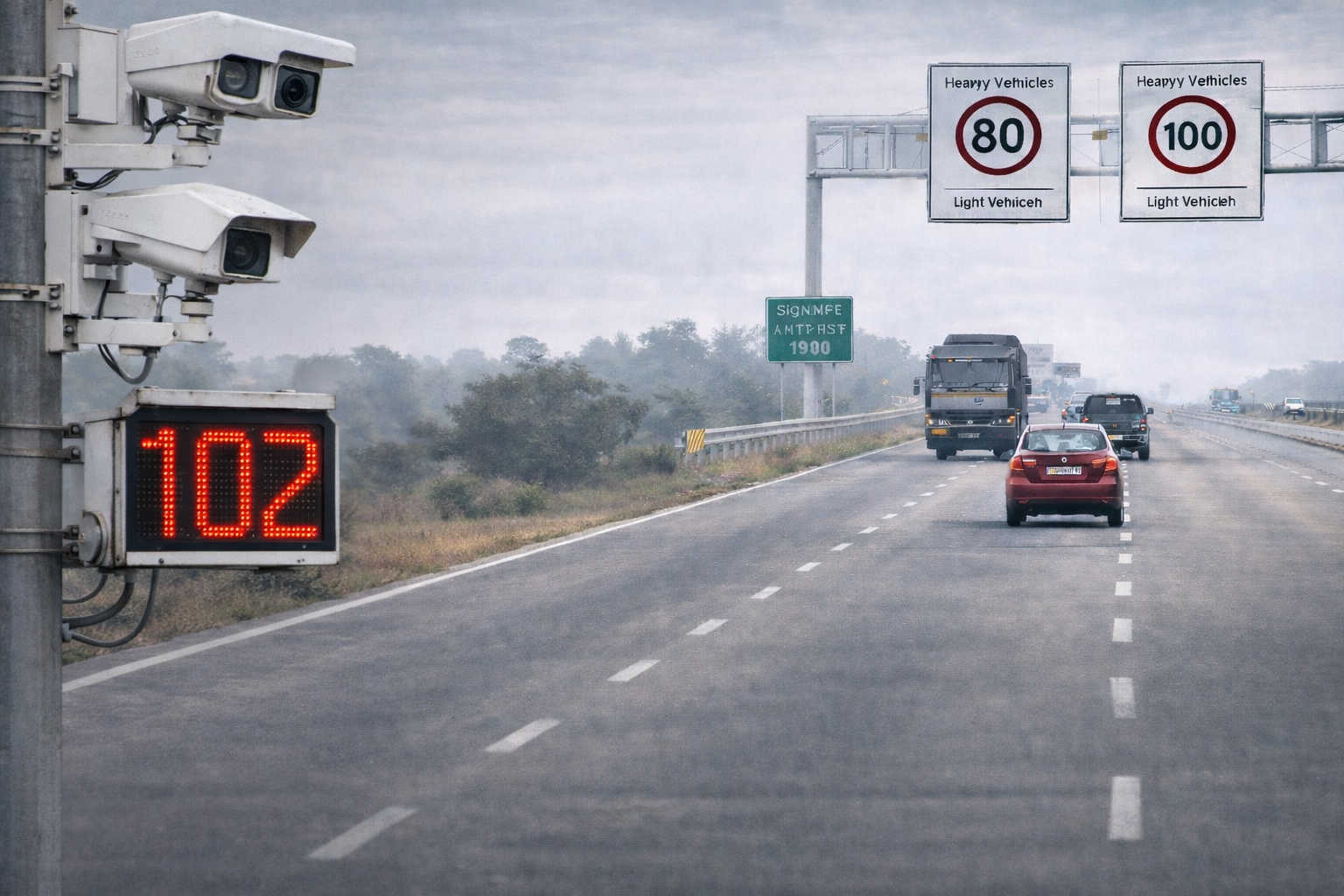
The Agra–Lucknow Expressway officially mandates:
• Heavy vehicles: 80 km/h
• Light vehicles: 100 km/h
Despite clear limits, commuters report receiving challans that appear inconsistent with actual speeds. Traffic analyst Rajeshwar Singh told a mainstream daily, “Automated systems are useful for enforcement, but frequent changes in speed restrictions due to weather or safety advisories can confuse drivers. Clear signage and public awareness campaigns are essential.”
Even seasoned motorists express uncertainty. A Reddit user from Lucknow noted: “I was driving at 91 km/h and got an e-challan… the limit is officially 100 km/h mentioned in it ..but in some sections, enforcement seems inconsistent. We need clearer alerts.”

Calls for Accuracy and Awareness
While Intelligent Traffic Management Systems (ITMS) form the basis for e-challans, experts highlight the need for:
• Regular audits of speed detection systems
• Calibration to prevent false positives
• Visible signage indicating speed limits and temporary changes
• Public education campaigns on expressway regulations
Traffic safety specialist Dr. Anil Mishra told a mainstream daily, “Enforcement alone is not enough. Motorists must know exactly what the speed limits are, especially on high-speed expressways. Unclear communication can undermine trust in automated enforcement.”
Guidance for Motorists
• Monitor vehicle speed against posted limits
• Verify e-challan details online immediately
• Contact the Transport Department to resolve discrepancies
• Use navigation apps providing real-time speed alerts
Broader Implications
This case underscores a wider debate on road safety, automated enforcement accuracy, and commuter awareness. While expressways like Agra–Lucknow facilitate fast travel, ensuring clear communication of speed regulations is critical to prevent disputes and maintain public confidence in enforcement mechanisms.
Balancing technology with effective, consistent communication is emerging as a priority for Uttar Pradesh authorities as automated traffic monitoring becomes increasingly widespread.