Lucknow | The cultural space Lucknow Bioscope marked a significant milestone as it hosted the opening day of its 6th exhibition with a powerful and evocative showcase titled “Salaam to Feminists of Awadh: Tracing the City Through Its Women.”
Curated by Alisha Asif, the exhibition presents a compelling narrative of Lucknow through the lived experiences, struggles, and achievements of its women. “We are presenting the city through its women,” Asif noted, dedicating the exhibition to those who carved out spaces for themselves against societal constraints, paving the way for future generations.
Designed as an immersive walkthrough, the exhibition takes visitors through multiple thematic sections, including intimate zenana spaces and a unique Feminist Map of Lucknow that highlights key locations tied to education, healthcare, and women’s participation in public life. A standout feature is the archival section, where detailed records of nearly 40 women who defied social barriers have been carefully preserved.
The exhibition showcases a rich collection of archival photographs, rare books, personal histories, and artifacts—many displayed publicly for the first time. Among the highlights is the doctor’s coat of Captain Lakshmi Sahgal, a prominent figure associated with the Azad Hind Fauj.
An engaging interactive installation titled “Leave Your Mark” invites women and girls to map spaces in the city where they feel safe or vulnerable, fostering dialogue around urban inclusivity and gendered experiences. The exhibition will remain open to the public for three months.
Film Screening Adds Depth to Narratives
The day also featured a screening of the documentary “Salaam to Feminists of Awadh,” co-directed by Ayesha Khatun and Apoorva Shah. Reflecting on the project, Khatun shared that the film took over a year and a half to complete, emphasizing the importance of amplifying diverse voices.

The documentary captures Lucknow’s socio-cultural fabric through the lens of influential women such as Rashid Jahan, Savitri Sahni, and Begum Akhtar, while also spotlighting institutions like Isabella Thoburn College that have shaped women’s education and empowerment.
Panel Discussion Explores Feminist Voices
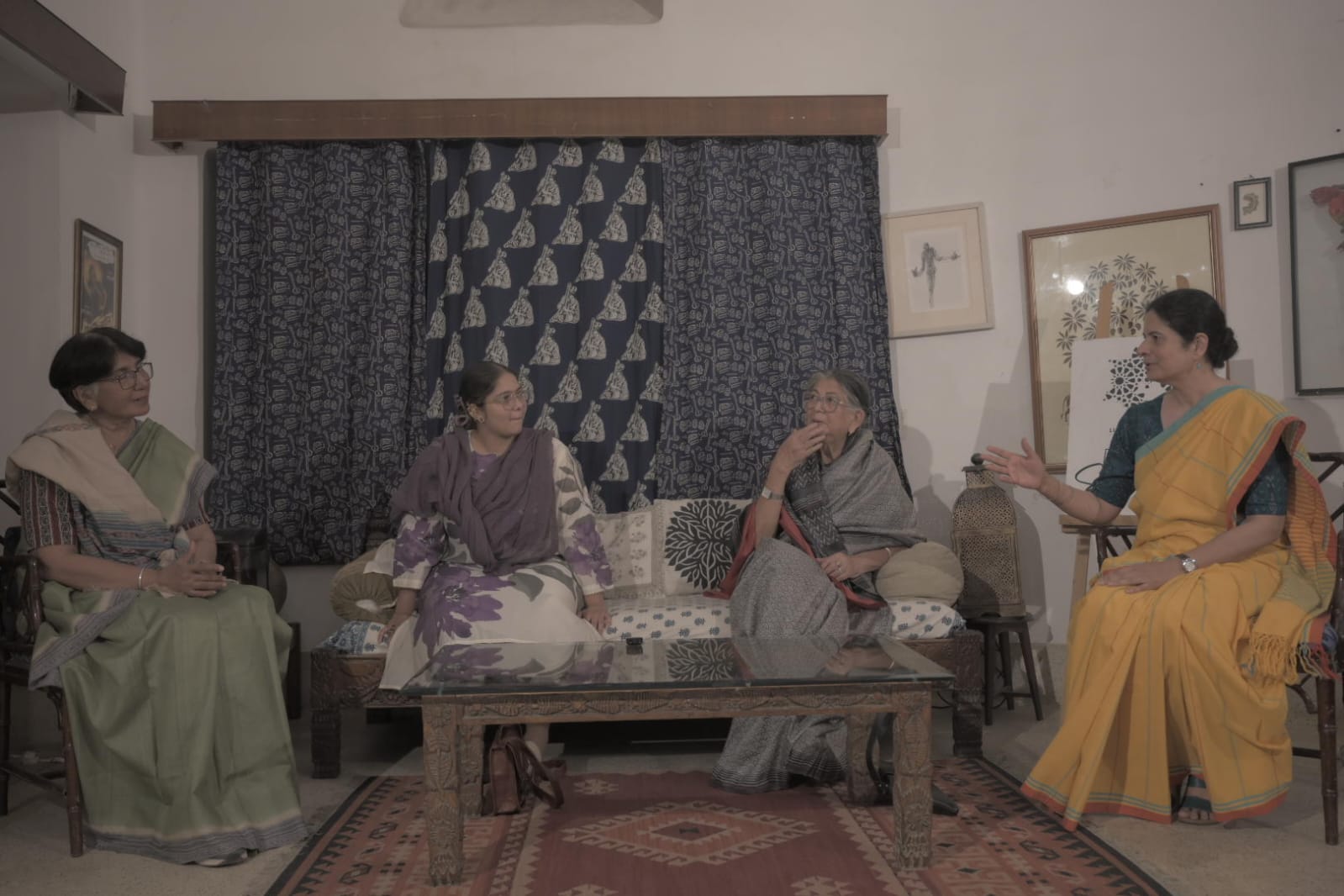
The inaugural day concluded with a thought-provoking panel discussion titled “Zubaan, Zameen, Zananaa: Feminist Voices of Lucknow.” The session featured speakers including Sabiha Anwar, Ruth Chakravarti, and Sabika Abbas, moderated by Saman Habib.
Reflecting on past societal norms, Anwar remarked that women were once discouraged from reading and strictly forbidden from writing, fearing they might express personal thoughts. Chakravarti recalled a time when girls traveled in palanquins to attend IT College, highlighting the transformation in women’s access to education.
Adding a contemporary perspective, Abbas emphasized the need to view feminism through diverse lived realities, stating that it must encompass not only elite voices but also those of working and marginalized women.
With its powerful blend of history, art, and dialogue, the exhibition sets a compelling tone for ongoing conversations around gender, identity, and the evolving narrative of Lucknow.