
Delhi: In a significant milestone for urban sanitation in India, Karad—a small city in Maharashtra’s Satara district—has emerged as a shining example of effective sanitary waste management. By ensuring 100% segregation, collection, and processing of sanitary and biomedical waste, Karad has set a new benchmark in sustainable waste management practices that prioritize health, hygiene, and environmental well-being.
Every day, Karad handles approximately 300 to 350 kilograms of sanitary waste, including used sanitary napkins, diapers, and other hygiene products, collected from households, hospitals, clinics, and public facilities. The city’s success lies not only in its infrastructure but in its people-centric approach, which includes widespread community engagement, awareness campaigns, and inclusive partnerships.
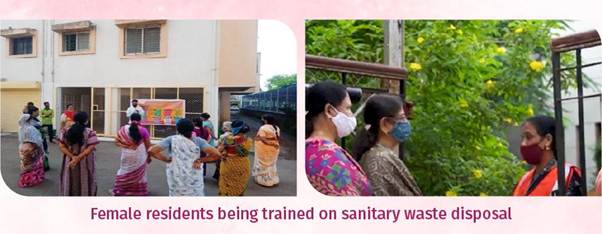
One of the key breakthroughs in Karad has been its campaign to break the silence and stigma around sanitary waste. Through community outreach, workshops, and educational programs, the Karad Municipal Council (KMC) successfully promoted awareness about the need for proper sanitary waste disposal. These efforts have played a critical role in encouraging residents to adopt responsible habits and eliminate unsafe practices.
A notable initiative has been the involvement of local women’s groups in raising awareness and driving behavioural change. With their support, the KMC installed red bins in public toilets across the city to ensure the hygienic and respectful disposal of sanitary waste by women. Schools, too, have been encouraged to install sanitary pad vending machines, disposal systems, and even incinerators—empowering students to manage menstrual hygiene with dignity and care.
The city’s door-to-door garbage collection vehicles are equipped with separate bins specifically for sanitary waste. Sanitation workers, trained in hygienic handling procedures, collect this waste separately and deliver it to a high-temperature incinerator operated by the Karad Hospital Association. Here, the waste is incinerated at temperatures of up to 1200°C, effectively destroying pathogens and reducing the waste to safe levels. The entire process is monitored in real-time and linked to the State Pollution Control Board’s (SPCB) monitoring system to ensure compliance with air quality norms.

The facility, a result of a robust Public-Private Partnership (PPP), was established through a collaboration between the Karad Municipal Council and the Karad Hospital Association. Under the agreement, the municipal council provided land for the biomedical waste treatment plant, while the hospital association took charge of building and operating the facility. With a daily processing capacity of 600 kilograms, this ‘Common Biomedical Waste Treatment Facility’ (CBWTF) now serves as the backbone of the city’s sanitary waste management system.
By implementing this high-temperature incineration method, Karad has significantly reduced the risk of contamination and disease transmission, particularly for sanitation workers. The approach has also eliminated the practice of open dumping, a major source of environmental degradation in many urban areas. Moreover, the financial burden on the municipal council has been eased, as the cost is limited to collection and transportation, while treatment is handled efficiently by the private partner.
Karad’s model of sanitary waste management has not only transformed the city’s cleanliness but also uplifted public health standards—especially for women, who are often the most affected by poor waste disposal systems. It demonstrates that with the right mix of awareness, community involvement, infrastructure, and governance, even small cities can lead the way in solving some of India’s most pressing sanitation challenges.
As India continues to battle the broader issues of waste mismanagement and environmental health, Karad’s success story stands as a replicable model for other urban local bodies seeking to create cleaner, safer, and more inclusive cities.