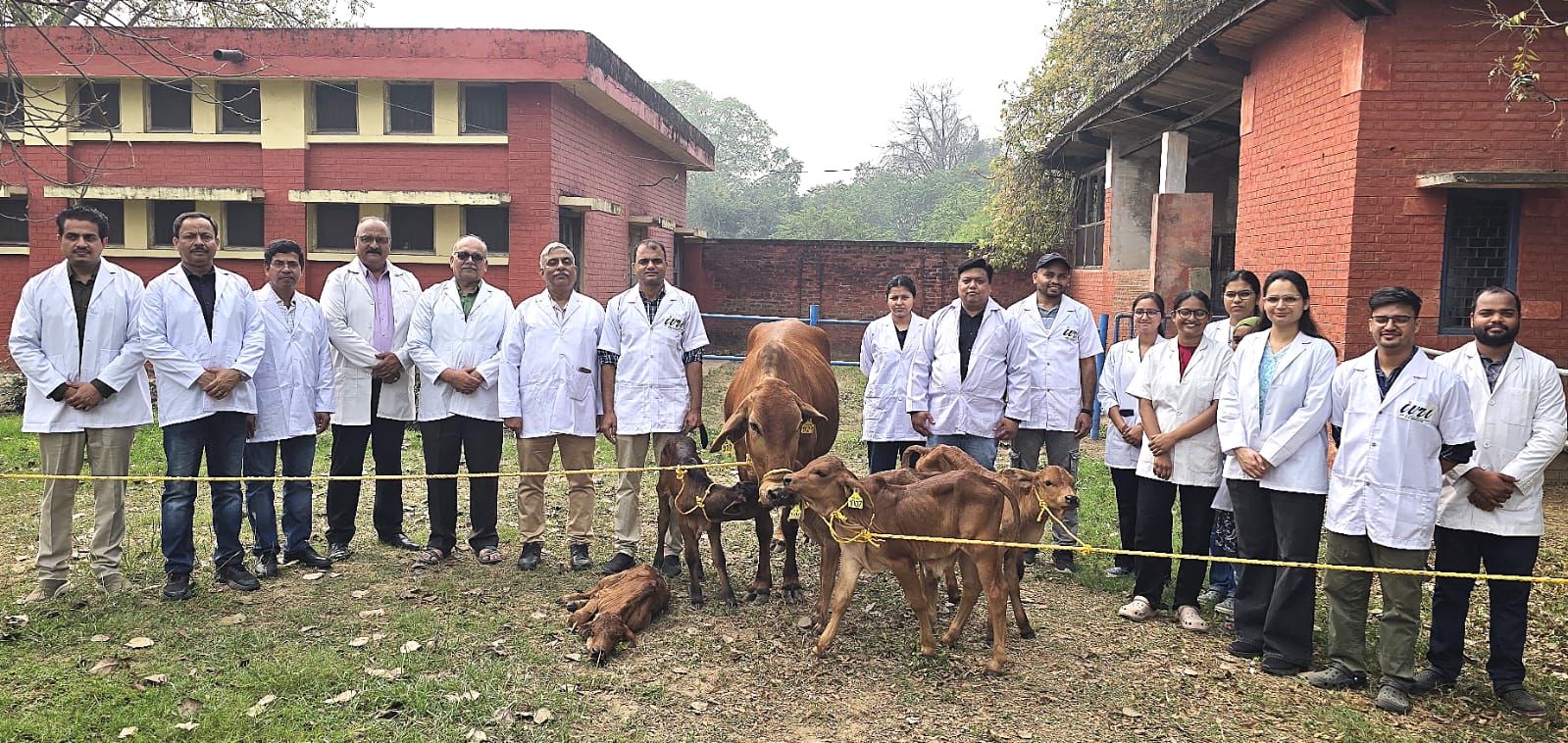
Bareilly: In a significant scientific advancement in indigenous cattle breeding, the ICAR-Indian Veterinary Research Institute has successfully produced five elite Sahiwal calves using advanced assisted reproductive technologies. The calves include four males and one female, marking a major milestone in the application of modern biotechnology to native breeds.
The breakthrough was achieved through ultrasound-guided transvaginal oocyte aspiration, in-vitro embryo production, and embryo transfer techniques. The first calf, a female named ‘Gauri’, was born on February 28, 2026, followed by the birth of four healthy male calves over the next four days.
The research was led by Dr. Brijesh Kumar from the Animal Reproduction Division, with key contributions from Dr. Vikrant Singh Chauhan, Dr. Vikas Chandra, and Dr. M. K. Patra. Over the past two and a half years, the team has successfully standardized OPU-IVF techniques in Sahiwal, Tharparkar cattle, and Murrah buffalo.
The achievement was realized under the guidance of Dr. S. K. Singh, with support from several scientists and research scholars.
Expressing his appreciation, Dr. Raghavendra Bhatta, who also serves as Deputy Director General (Animal Science), ICAR, termed the development a major step forward in assisted reproductive technologies. He said it would accelerate genetic improvement programs in livestock.
Meanwhile, Dr. M. L. Jat, Secretary of the Department of Agricultural Research and Education, described the achievement as transformative for India’s livestock sector. He emphasized that the wider adoption of such technologies would enhance farmers’ income and promote sustainable agricultural development.

The calves were produced using high genetic merit germplasm. The donor Sahiwal cow was capable of producing over 12 liters of milk daily, while the semen used was sourced from a proven bull whose dam recorded approximately 3,320 kilograms of milk per lactation.
IVRI had initiated its indigenous cattle breeding program in 2018 using embryo transfer techniques, producing around 30 calves through in-vivo methods. However, due to high hormonal costs and operational challenges, the institute adopted the more efficient OPU-IVF technology in 2022–23.
The institute aims to further expand the use of these advanced technologies to produce superior indigenous cattle and buffaloes, while also focusing on developing skilled human resources. This initiative is expected to significantly boost livestock productivity, strengthen the rural economy, and elevate India’s dairy sector to new heights.
Report by Akhilesh Chandra Saxena, Bareilly.