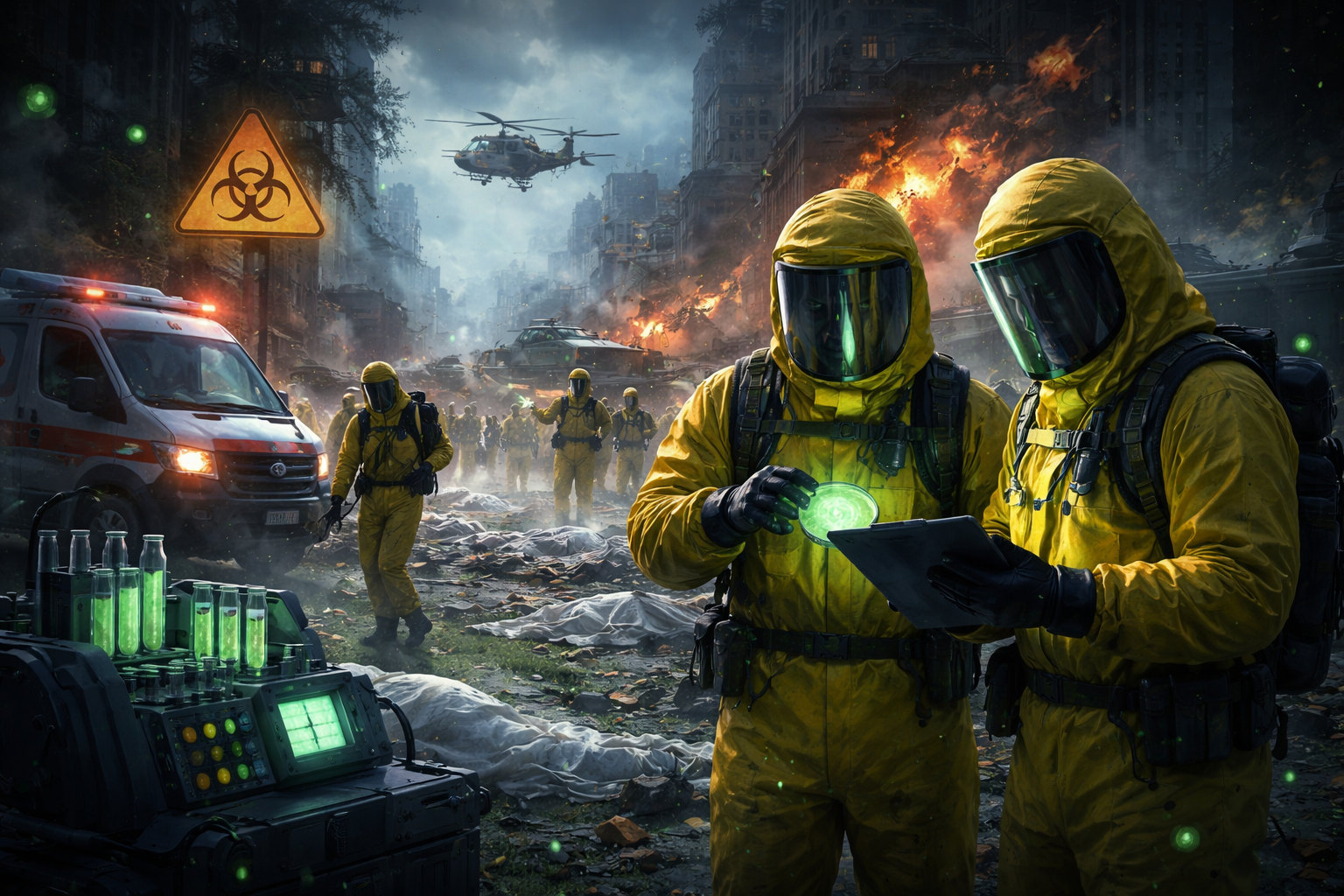
New Delhi: Biological warfare—the use of pathogens or toxins to cause illness or death in humans, animals, or plants—has long been a shadowy but real concern in global security. While the world has made significant strides in medicine and biotechnology, these same advances have also raised questions about the potential misuse of biological science. As we move deeper into the 21st century, many experts believe that the risk of biowarfare has not disappeared; in fact, it may be evolving in new and complex ways.
A Historical Perspective
Biological warfare is not a new concept. Throughout history, armies and states have attempted to use disease as a weapon. During the Siege of Caffa in the 14th century, infected corpses were reportedly catapulted over city walls to spread the Bubonic Plague. In the 20th century, biological weapons programs became more systematic and organized.
During World War II, the Japanese military unit Unit 731 conducted horrific human experiments and released pathogens such as Plague and Cholera in parts of China. Later, during the Cold War, both the United States and the Soviet Union maintained secret biological weapons programs before international agreements attempted to halt such efforts.
The global community took a major step to ban these weapons with the Biological Weapons Convention in 1972, which prohibited the development, production, and stockpiling of biological weapons. Today, over 180 countries are signatories to this treaty. However, enforcement and verification mechanisms remain limited, which leaves room for concern.
Advances in Biotechnology: A Double-Edged Sword
Modern biotechnology has revolutionized medicine, agriculture, and scientific research. Techniques such as Genetic Engineering, CRISPR Gene Editing, and synthetic biology have enabled scientists to develop vaccines faster, treat genetic disorders, and improve crop resilience.
However, these same technologies could theoretically be misused to modify pathogens. A virus or bacterium might be engineered to spread more easily, evade immune responses, or resist existing treatments. The fear is not necessarily that such developments are happening widely today, but that the scientific capability exists and continues to grow.
The global experience with COVID-19 demonstrated how rapidly a contagious pathogen can disrupt societies. Although COVID-19 emerged as a natural outbreak, the pandemic highlighted vulnerabilities in global health systems, supply chains, and international cooperation. If a pathogen were deliberately engineered and released, the consequences could be even more severe.
Why Biowarfare Is Considered Dangerous
Biological weapons are often described as the “poor man’s nuclear weapon” because they can potentially cause massive disruption at a relatively low cost compared with nuclear or conventional military systems. Several factors make them particularly dangerous.
1. Invisible and Delayed Impact
Unlike conventional weapons, pathogens are invisible and may take days or weeks before symptoms appear. During this incubation period, infected individuals could unknowingly spread disease across cities, countries, or continents.
2. Rapid Global Spread
Modern transportation networks allow millions of people to travel internationally each day. A contagious pathogen could move across the globe in a matter of hours, turning a localized attack into a worldwide crisis.
3. Economic and Social Disruption
A major biological attack could shut down transportation, tourism, manufacturing, and trade. Hospitals might become overwhelmed, and governments would need to impose quarantine measures similar to those seen during the COVID-19 pandemic. The economic cost could run into trillions of dollars.
4. Psychological Impact
Fear and uncertainty are powerful weapons. Even a small outbreak could trigger panic, misinformation, and social instability. Public trust in institutions may weaken if people believe governments cannot control the spread of disease.

Potential Targets and Scenarios
Future biowarfare would not necessarily focus only on human populations. Pathogens could also target livestock or crops. For example, diseases that affect cattle, poultry, or staple crops could threaten food security and national economies.
Agricultural biowarfare could be particularly devastating for countries with large farming sectors. Destroying crops or livestock would disrupt supply chains and cause shortages, inflation, and rural economic collapse.
Another potential scenario involves non-state actors or extremist groups attempting to use biological agents. Advances in biotechnology have made some research tools more accessible than ever before, raising concerns about “biosecurity” and the need to monitor misuse.
Global Efforts to Prevent Biowarfare
Despite these risks, the international community has taken significant steps to prevent the use of biological weapons. Organizations such as the World Health Organization and the United Nations play key roles in disease surveillance, outbreak response, and public health coordination.
Many countries have also strengthened biosecurity regulations, ensuring that laboratories handling dangerous pathogens follow strict safety protocols. Research institutions increasingly emphasize “dual-use awareness,” which means scientists are trained to consider how their work could potentially be misused.
In addition, global health networks monitor unusual disease outbreaks that might indicate natural epidemics or deliberate attacks. Rapid genetic sequencing technologies allow scientists to identify pathogens quickly and track how they spread.
The Role of Preparedness
The most effective defense against biowarfare is strong public health infrastructure. Hospitals, laboratories, and surveillance systems must be capable of detecting outbreaks early and responding quickly.
Investment in vaccine technology is also critical. New approaches such as mRNA vaccines have dramatically shortened the time needed to develop immunizations for emerging diseases. Strategic stockpiles of medical supplies—such as antiviral drugs, protective equipment, and diagnostic tests—can also reduce the impact of a biological crisis.
Public communication is equally important. Governments must provide accurate and transparent information during health emergencies to prevent panic and misinformation.
How Dangerous Could the Impact Be?
In a worst-case scenario, a highly contagious and lethal pathogen could cause millions of deaths, collapse healthcare systems, and trigger global economic turmoil. Some experts argue that the potential impact of a large-scale biological attack could rival or even exceed that of nuclear weapons, particularly if the pathogen spreads globally before detection.
However, it is also important to note that scientific advances are improving humanity’s ability to respond to biological threats. Rapid diagnostics, global disease monitoring networks, and new vaccine platforms provide powerful tools that did not exist just a few decades ago.
Biowarfare remains a serious possibility in the future, largely because the technologies that enable life-saving medical breakthroughs can also be misused. The danger lies not only in the pathogens themselves but also in the speed at which they could spread in an interconnected world.
Preventing biological warfare will require constant vigilance, international cooperation, and responsible scientific research. By strengthening global health systems, improving disease surveillance, and maintaining strict biosecurity standards, the world can reduce the likelihood that biology becomes a weapon of war.
In the end, the same scientific knowledge that could theoretically be used to create biological weapons is also humanity’s greatest defense against them.