
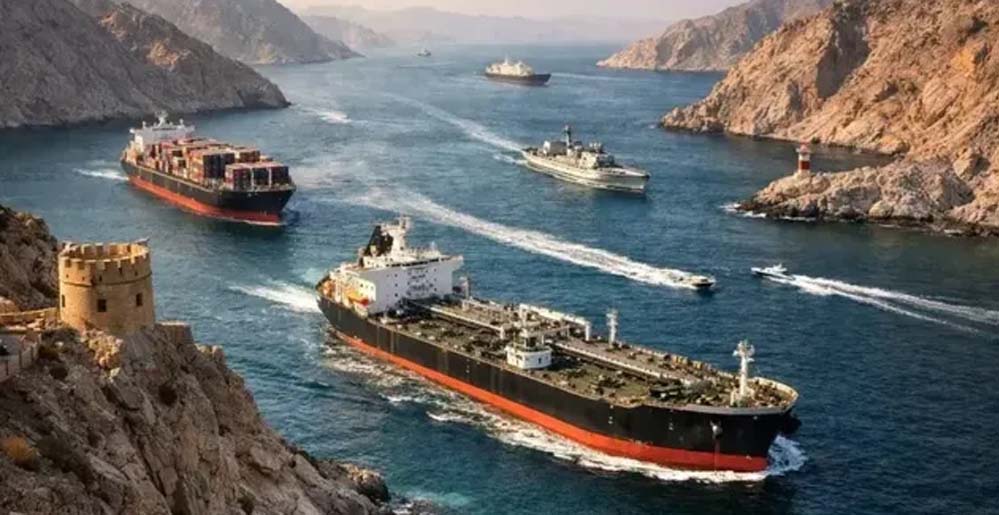
Tehran | In a major escalation of geopolitical tensions, Iran has approved a new maritime policy imposing tolls on vessels passing through the Strait of Hormuz and banning ships linked to the United States and Israel. The move underscores Tehran’s intent to tighten its grip over one of the world’s most critical oil transit routes.
According to Iranian state media Islamic Republic of Iran Broadcasting (IRIB), the country’s parliamentary security committee has cleared a comprehensive “Hormuz Management Plan.” The proposal introduces a rial-based toll system for all vessels transiting the narrow waterway, alongside expanded restrictions targeting specific nations.
Key Features of the Plan
Under the new framework, all commercial and cargo ships passing through the Strait of Hormuz will be required to pay transit fees to Iranian authorities. The plan also outlines provisions related to maritime security, vessel safety, environmental protection, and financial regulations governing shipping traffic.
Most notably, the policy includes a ban on vessels associated with the United States and Israel, as well as broader restrictions on countries that have imposed unilateral sanctions on Iran. Tehran has also reiterated its claim of sovereignty over the strategic corridor and emphasized cooperation with Oman to establish a joint legal framework for managing the strait.
Global Implications
The Strait of Hormuz handles a significant portion of the world’s oil shipments, making Iran’s latest move a matter of global concern. Any disruption or restriction in this corridor can have immediate consequences on international energy markets, shipping costs, and inflation.

The decision comes amid an ongoing regional conflict involving Iran, Israel, and U.S.-aligned forces. Analysts view the toll system and shipping ban as part of Iran’s broader strategy to assert control over vital maritime infrastructure and counter Western pressure.
US Response and Strategic Concerns
The United States has expressed concern over the developments, reiterating its commitment to ensuring freedom of navigation in international waters. U.S. Treasury Secretary Scott Bessent stated that Washington aims to restore unrestricted maritime movement through the strait, potentially through escorted shipping operations.
Speaking to media, Bessent noted that global supply chains remain functional for now, with several countries reportedly negotiating arrangements with Iran to allow continued passage of their vessels.
Rising Tensions in the Region
Iran’s decision is expected to further strain relations in West Asia, particularly as the conflict enters its second month. The move signals Tehran’s willingness to leverage its geographic advantage over the Strait of Hormuz—long considered a chokepoint for global energy supplies. Experts warn that if the situation escalates further, it could trigger wider military or economic repercussions, drawing in multiple global powers and impacting markets far beyond the region.