Tehran/ Washington: Iran’s recurring internal turmoil is not the result of a single incident, decision, or generational outburst. Rather, it is the culmination of a historical, ideological, and geopolitical structure that has shaped the country since the 1979 Islamic Revolution. At a time when protests on the streets, anger on social media, and Western speculation about regime change are intensifying, it is crucial to understand that Iran’s crisis is not merely an issue of domestic unrest. It is deeply intertwined with the global balance of power. Alongside internal instability, Iran’s growing confrontation with the United States is emerging as a major driver of regional conflict and global uncertainty.
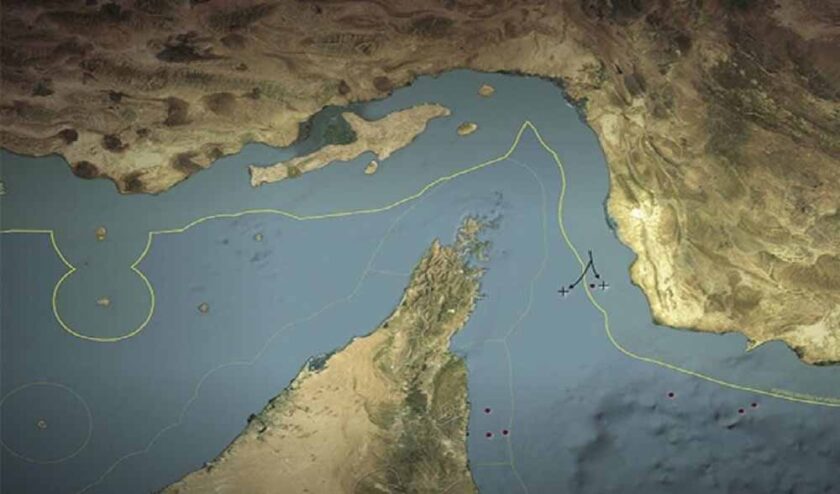
The escalating tension between Iran and the United States goes far beyond bilateral hostility. Its repercussions have the potential to affect the entire world. Rising conflict increases the risk of war in West Asia, which would directly impact global energy supplies and oil prices. Any instability in the Strait of Hormuz—a vital artery of international trade—could disrupt global markets, fueling inflation and economic slowdown. Moreover, such a confrontation could draw regional powers into direct or indirect conflict, intensifying refugee crises, terrorism, and sectarian tensions. A clash involving major powers would further polarize world politics, weaken international cooperation, and replace diplomacy with mistrust and military competition, ultimately harming humanity as a whole.
The 1979 Islamic Revolution in Iran did more than overthrow Shah Mohammad Reza Pahlavi and establish a new government. It created a unique ideological-political system in which religion, politics, and security became inseparably intertwined. Under the concept of Wilayat-e-Faqih, supreme political authority was vested in religious leadership. To protect and expand this system, the Islamic Revolutionary Guard Corps (IRGC) was formed, evolving over time into not just a military force but a powerful economic, political, and ideological institution. This is why Iran’s structure cannot be understood simply as a government; it is a comprehensive system that cannot be dismantled through protests alone.
Over the past four decades, Iran has witnessed several major popular movements—the 2009 Green Movement, the economic protests of 2017–18, the fuel price demonstrations of 2019, and the 2022 protests demanding greater social freedoms. Each time, expectations arose that the system might collapse. Yet, the same power structure endured. One key reason is that Iran’s security apparatus is not separate from the state; it is an extension of it. Unlike in some Arab Spring nations, where militaries ultimately chose to protect the nation-state, Iran’s IRGC views itself as the guardian of the revolution and the Islamic Republic itself.
However, it would be incorrect to assume that Iran’s system is free from pressure. In fact, today’s challenges are deeper and more complex than ever before. A major factor is generational change. A large portion of Iran’s population is young and has no emotional connection to the 1979 revolution. For them, the revolution is history, not lived experience. Their aspirations are shaped by the internet, global culture, education, employment opportunities, and personal freedoms. When these aspirations collide with a rigid socio-political system, discontent is inevitable.
This dissatisfaction has been further intensified by decades of U.S. and Western sanctions. These sanctions have severely damaged Iran’s economy—restricting oil exports, halting foreign investment, weakening the currency, and driving inflation to painful levels. Economic development and modernization have slowed, deepening frustration among the urban middle class and youth. Many Iranians are now questioning whether the burden of perpetual hostility with the United States and Israel must be borne by ordinary citizens. Gradually, ideological confrontation is being viewed less as national pride and more as a heavy social and economic burden.

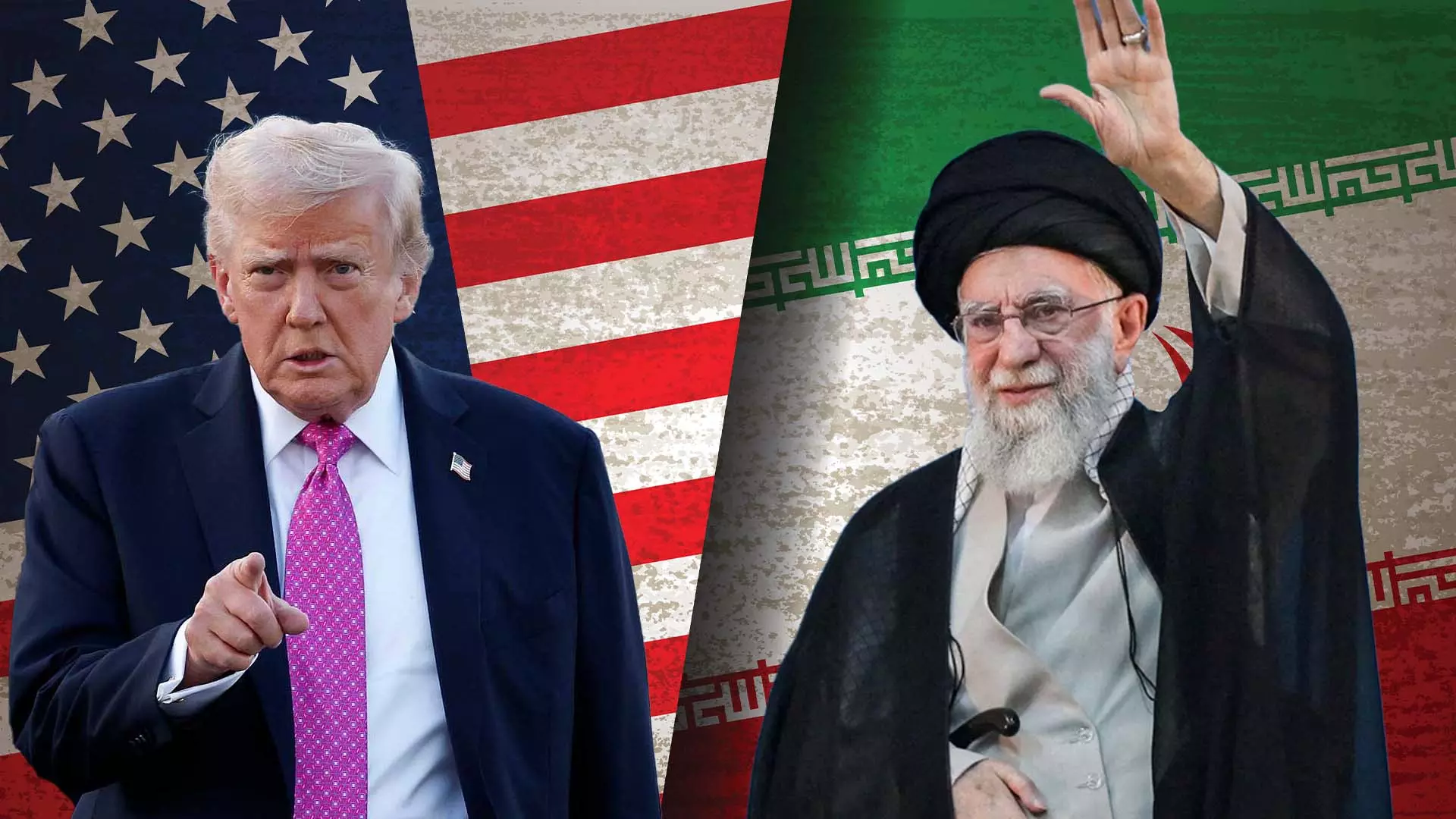
Rising U.S.–Iran tensions have made this situation even more dangerous. Recent signals from U.S. President Donald Trump, including additional tariffs on countries trading with Iran and indications of possible military intervention, have once again pushed West Asia toward the brink of conflict. Iran is arguably facing its most severe external pressure since 1979. This is no longer just a dispute between two nations; it has become a geopolitical contest in which major powers seek to advance their own strategic interests.
There is often an assumption that external intervention could bring about regime change in Iran. History, however, suggests otherwise. Foreign interference—from the 1953 overthrow of Prime Minister Mohammad Mossadegh onward—has consistently strengthened Iranian nationalism. Movements perceived as externally backed have failed to gain lasting domestic legitimacy. This is one reason why opposition leadership based abroad has not emerged as a credible alternative within Iran. Moreover, Iran is not a fragile or isolated state. It is a large, organized, and strategically significant country with influence stretching across Iraq, Syria, Lebanon, and Yemen. Any military intervention could ignite the entire region, affecting Israel, Gulf states, the United States, Europe, and beyond. China and Russia also do not desire an unstable Iran, as it would undermine their regional and global interests. This multipolar balance provides Iran’s system with an indirect security shield.
Within Iran, public anger is no longer limited to economic mismanagement or corruption. A growing segment of society believes that the ruling establishment’s priorities have become disconnected from the everyday needs of citizens. When people are demanding food security, jobs, and dignity, ideological battles against external enemies appear hollow. Many Iranians argue that such policies have pushed the country into international isolation and economic decline.
Any attempt at externally driven regime change would have consequences far beyond Iran. It could severely disrupt the Middle Eastern balance of power, intensify Shia–Sunni tensions, escalate the Iran–Israel conflict, and destabilize global energy markets. For India, this situation poses particular challenges. India shares historical, cultural, and strategic ties with Iran—from energy security to the Chabahar Port. New Delhi will need to maintain careful strategic balance, safeguarding national interests without becoming a pawn in larger power rivalries.
Ultimately, Iran’s current turmoil signals that pressure on the system is real, but predictions of imminent collapse are often premature. This is not merely a struggle for power; it is a conflict over identity, ideology, and visions of the future. Iran’s trajectory is unlikely to change through sudden revolution or sheer repression alone. Instead, it will unfold through a long, complex, and conflict-ridden process—one whose outcomes will shape not only Iran, but global politics in the years to come.