
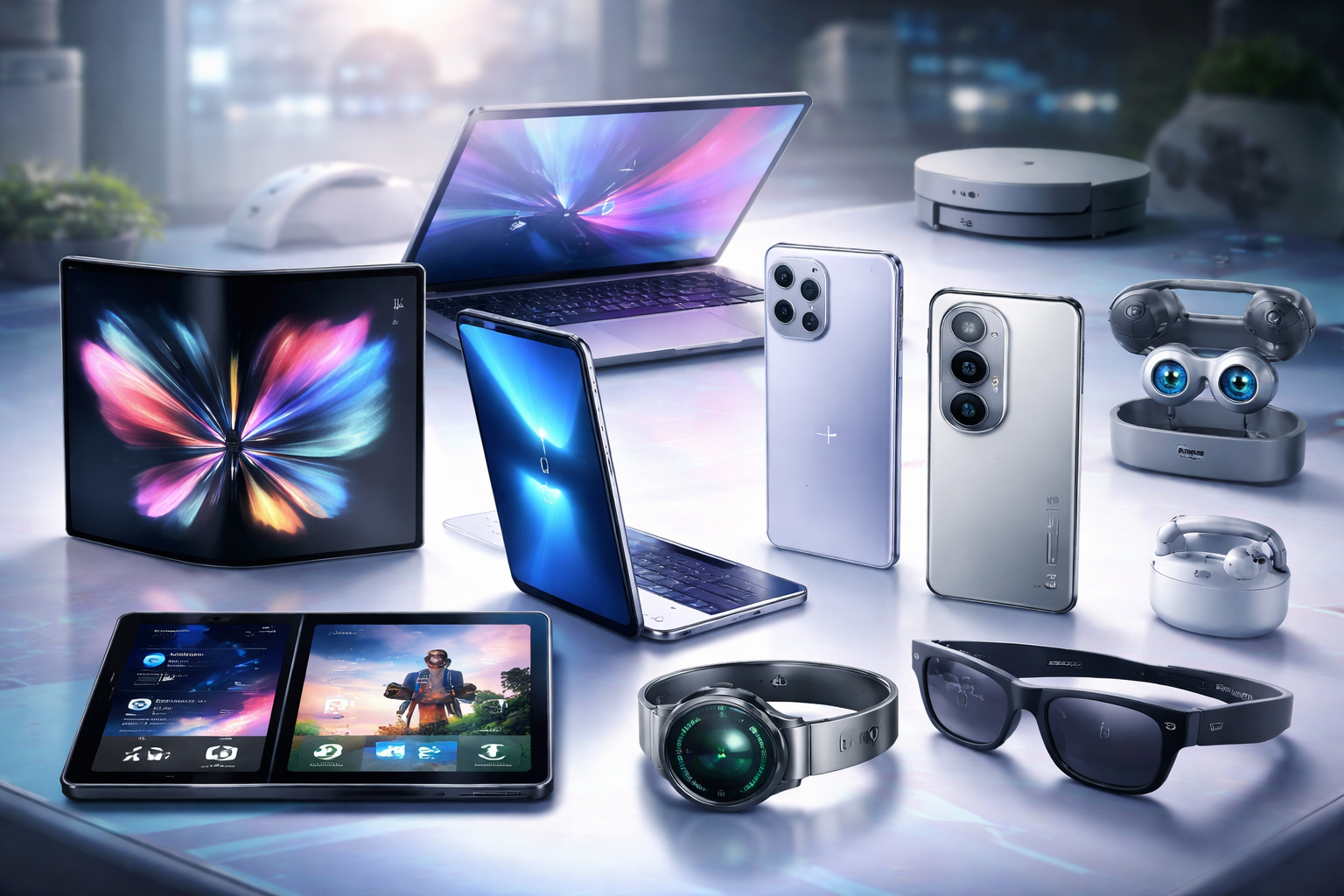
Mumbai: 2025 proved a landmark year for gadget launches in India, a year defined by AI integration, foldable innovations, enhanced wearables, and a significant push toward local manufacturing under government initiatives like the Production-Linked Incentive (PLI) scheme. Indian consumers embraced premium devices at an unprecedented pace, while affordability in budget and mid-range segments brought AI-driven features to millions. Major global players—Apple, Samsung, OnePlus, Vivo, and Google—dominated headlines, yet emerging innovators made waves with unique form factors, including tri-fold phones and AI-enabled smart glasses.
From the ultra-slim iPhone Air to the revolutionary Samsung Galaxy Z TriFold, gadgets in 2025 focused not only on style but also on practicality, health monitoring, and seamless ecosystem integration. Sustainability and “Made in India” components gained traction, boosting domestic production for brands like Apple and Samsung, while also lowering prices and increasing accessibility. This roundup highlights the most impactful releases that shaped India’s tech landscape in 2025.
Smartphones: Flagships and Foldables Take Center Stage
Smartphones remained the hottest gadget category in 2025, with AI-powered processors, innovative designs, and multifunctional capabilities leading the charge.
Apple’s iPhone 17 series, launched in September, brought ProMotion 120Hz displays to the standard model for the first time, quickly becoming a bestseller in India. The standout device was the iPhone Air, Apple’s slimmest iPhone yet, praised for its lightweight elegance and powerful performance, appealing to premium buyers who value portability without compromise.
Samsung pushed boundaries with the Galaxy Z Fold 7 and the groundbreaking Galaxy Z TriFold, the latter offering a triple-folding screen that redefined multitasking. Initially launched in Korea and later expanded to India, the TriFold captivated power users seeking portability and productivity in one device.
OnePlus continued its streak with the OnePlus 15 and 15R, featuring Snapdragon 8 Elite chipsets, massive batteries up to 7,300mAh, and IP69 durability. The OnePlus 15’s “Power Trinity” system optimized performance across apps, gaming, and battery life, making it a favorite among gamers and heavy users.
Vivo’s X300 series, powered by MediaTek Dimensity 9500 processors and advanced imaging chips, excelled in photography, offering users DSLR-like capabilities in pocket-sized devices. Meanwhile, Google’s Pixel 10 lineup, including a new foldable variant, emphasized clean software experiences and AI-powered features like Gemini integration, highlighting the growing importance of AI in day-to-day usability.
Budget and mid-range segments also shone. Realme’s Narzo 90 series offered enormous batteries and smooth performance, Poco delivered sleek and efficient designs, and iQOO carved out a niche with gaming-focused models. This democratization of AI features, once reserved for premium devices, marked a turning point in India’s smartphone ecosystem.
Overall, 2025 saw foldables maturing from niche experiments to mainstream consideration, with tri-fold designs hinting at the future of mobile computing. AI-driven performance became a universal expectation, making premium experiences more accessible than ever.
Wearables and Smart Glasses: Health and AR Go Mainstream
Wearables in 2025 evolved far beyond simple fitness trackers. AI health insights, ecosystem integration, and augmented reality (AR) features defined the year.
The Ray-Ban Meta smart glasses, in their second and third generations, became a cultural phenomenon in India. Equipped with AI assistants, cameras, and Hindi voice support, they merged style and functionality, offering discreet assistance for everyday tasks.
Samsung’s Galaxy Watch 8 introduced features like the Antioxidant Index, while deep integration with Samsung devices made it a wellness hub. Google’s Pixel Watch 4 surprised consumers with a refined design, fast charging, and built-in Fitbit premium features, cementing its place among the top-tier smartwatch options.
Indian brands also made their mark. boAt’s Lunar Embrace smartwatch brought innovations in stress monitoring, sleep tracking, and preventive health alerts, catering to India’s growing wellness consciousness. Unique devices such as the Meta Neural Band—allowing gesture control—and the Mirumi clip-on robot—providing interactive assistance—hinted at the future of AI-driven wearables.
These devices prioritized preventive healthcare and lifestyle enhancements, reflecting a shift in consumer priorities from simple step tracking to holistic wellbeing.
Laptops and Tablets: AI-Powered Productivity Boosters
Laptops and tablets saw significant AI-driven evolution in 2025, with performance and versatility taking center stage.
Apple’s MacBook Air (2025), powered by M4 and M5 chips, delivered remarkable battery life and computational efficiency. Generous discounts in India increased accessibility, ensuring the MacBook Air remained a top choice for students, professionals, and creators.
Asus’ ProArt P16 catered specifically to creators, with AMD Ryzen AI processors and Nvidia RTX GPUs, combining raw power with AI-assisted productivity tools. Other notable releases included Samsung’s Galaxy Book 5 series and the OnePlus Pad 3, designed for hybrid work and study.

Tablets dominated Android segments, with the Galaxy Tab S10 Ultra offering a high-end creative experience, while the OnePlus Pad Go 2 provided an affordable yet competent option for casual use. Rollable concepts, like Lenovo’s ThinkBook Plus Rollable AI, teased future expandability, demonstrating how hardware design continues to push boundaries.
Microsoft and its partners also highlighted Copilot+ PCs, emphasizing on-device AI for privacy, speed, and seamless workflow integration, underscoring a growing trend of AI not just as a feature, but as a core productivity tool.
Other Notable Gadgets: Home, Accessories, and Unique Innovations
2025 was not just about personal devices; home and accessory gadgets also saw innovative leaps.
Roborock’s Saros Z70 robot vacuum refined smart cleaning, while Hohem gimbals like the iSteady X3 and V3 Ultra became essentials for content creators. Portable monitors, face-tracking holders, and ergonomic accessories became mainstream, catering to the surge in remote work and hybrid office setups.
The “Made in India” push extended beyond smartphones, with more devices being assembled domestically. This improved availability, reduced costs, and strengthened India’s position as a global tech manufacturing hub.
Impact and Trends in the Indian Market
Several key trends emerged in 2025, shaping the trajectory of India’s technology ecosystem:
-
AI Accessibility Across Segments: Devices at all price points incorporated AI, making features like smart photography, voice assistance, and health tracking widely available.
-
Local Manufacturing Gains Traction: “Made in India” initiatives allowed faster delivery, competitive pricing, and reduced import dependency, benefiting both consumers and brands.
-
Sustainability Drives Design Choices: Longer-lasting batteries, durable materials, and repair-friendly designs aligned with eco-conscious consumer behavior.
-
Festive and E-Commerce Sales Surge: Platforms like Flipkart, Amazon, and Tata Cliq offered deep discounts during Diwali, Eid, and Christmas, fueling unprecedented demand.
-
Tier-2 and Tier-3 City Adoption: Rising connectivity and affordability drove tech adoption beyond metros, expanding the consumer base for smartphones, wearables, and home gadgets.
Challenges remained, notably the high cost of cutting-edge technology and occasional supply bottlenecks. Yet, adoption across demographics surged, reflecting a market increasingly comfortable with innovation and premium experiences.
A Year of Practical Innovation
2025’s gadget landscape in India blended bold innovation with practical utility, marking a turning point in consumer expectations. From transformative foldables and AI-enhanced smart glasses to powerful flagships and wellness-focused wearables, devices enriched everyday life, entertainment, and productivity.
The synergy of advanced hardware, AI integration, and local manufacturing empowered consumers, while sustainability and affordability drove conscious buying decisions. As these trends mature and AI becomes an intrinsic part of the tech ecosystem, 2026 promises even bolder leaps, with India firmly established as a leading hub for global gadget consumption and innovation.
In retrospect, 2025 was more than a year of launches—it was a defining moment in India’s tech journey, where accessibility, innovation, and practicality converged to shape the future of gadgets for millions.