New Delhi: The aftermath of Operation Sindoor has triggered intense debate within strategic and defence circles about India’s air defence readiness. While official details remain limited in the public domain, the broader implications of the operation—particularly in the context of evolving aerial threats—offer important insights into the strengths and gaps in India’s layered air defence architecture.
A Changing Threat Matrix
India’s air defence preparedness must be viewed against a rapidly transforming regional security environment. The rise of drone warfare, precision-guided munitions, cruise missiles, and stand-off weapons has reshaped modern battlefields. Recent conflicts worldwide have shown how even relatively low-cost unmanned aerial systems can challenge sophisticated militaries.
For India, the dual-front challenge posed by Pakistan and China complicates matters. Pakistan has steadily expanded its drone capabilities and integrated air defence assets, while China has deployed advanced air defence systems and fifth-generation aircraft along the Line of Actual Control (LAC). Operation Sindoor, in this context, became not just a tactical event but a test of preparedness under potential high-intensity conditions.
The Layered Shield: Structure and Intent
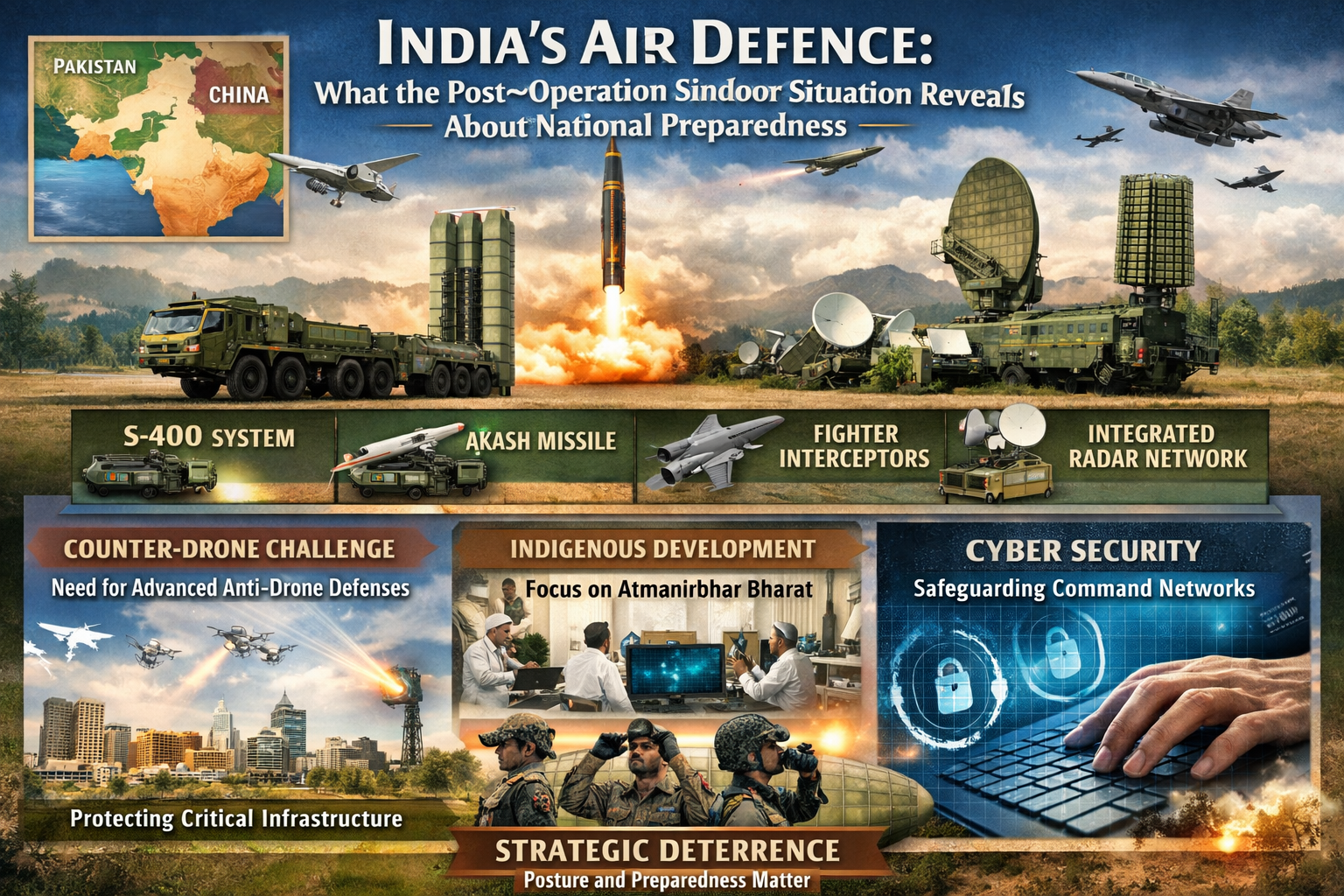
India’s air defence doctrine is built on a layered approach—designed to intercept threats at varying altitudes and ranges. The architecture broadly includes:
- Long-range surface-to-air missile (SAM) systems
- Medium and short-range air defence systems
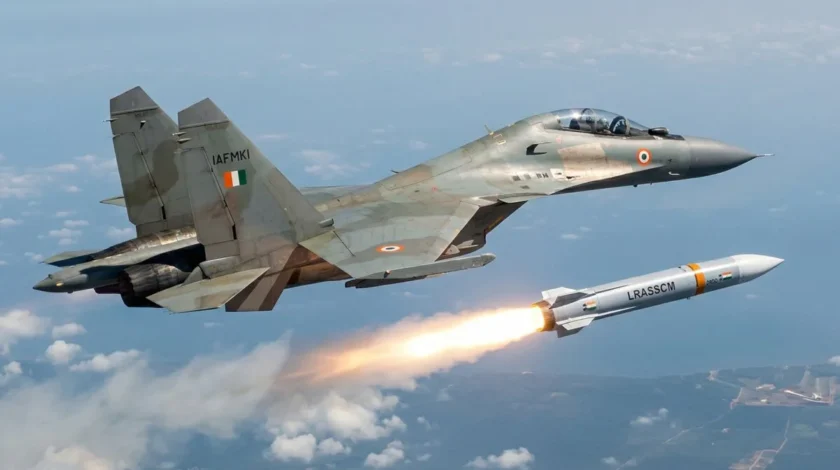
- Fighter aircraft interception
- Integrated radar and command-and-control networks
A major component of India’s long-range shield is the S-400 Triumph system, inducted from Russia. The S-400 significantly enhances India’s ability to detect and neutralize aircraft, ballistic missiles, and cruise missiles at extended ranges. Its deployment has altered the regional air power balance, particularly along sensitive borders.
Complementing this are indigenous systems like the Akash missile system, developed by the Defence Research and Development Organisation (DRDO). Akash provides medium-range coverage and represents India’s push for self-reliance under its broader defence indigenisation drive.
Operation Sindoor highlighted how effectively these systems can integrate in real-time scenarios—especially in terms of detection speed, response coordination, and redundancy.
Radar, Surveillance, and Network-Centric Warfare
Modern air defence is as much about sensors as shooters. India’s Integrated Air Command and Control System (IACCS) plays a critical role in linking radars, airborne early warning systems, and missile batteries into a unified network. This network-centric capability enables quicker decision-making and coordinated engagement.
The post-operation analysis suggests that early detection and seamless communication between various nodes remain central strengths. However, the rapid proliferation of swarm drones and low radar cross-section threats presents fresh challenges. Small unmanned systems flying at low altitudes can evade traditional radar detection, requiring specialized counter-drone technologies.
India has begun deploying anti-drone systems and electronic warfare solutions, but Operation Sindoor underscores the urgency of scaling up these capabilities nationwide.
Indigenous Push and Atmanirbhar Imperative
One of the key takeaways from the operation is the importance of indigenous development. While imports like the S-400 provide immediate capability boosts, long-term sustainability lies in domestic production and R&D.
The government’s emphasis on “Atmanirbhar Bharat” in defence has led to increased funding for indigenous air defence solutions, including advanced radars, next-generation SAMs, and directed-energy weapons under development by DRDO. Reducing dependency on foreign suppliers ensures supply chain resilience, particularly during extended conflicts.

Operation Sindoor reinforces that preparedness is not merely about acquisition but about maintenance, rapid replenishment, and logistical depth—areas where domestic manufacturing capacity becomes decisive.
Civil-Military Coordination and Urban Defence
An emerging dimension of air defence is the protection of critical civilian infrastructure—airports, power grids, refineries, and densely populated urban centres. In any escalation scenario, adversaries may target economic and symbolic assets to create psychological pressure.
The post-operation environment has reportedly prompted reviews of urban air defence grids and coordination between the armed forces and civilian authorities. Integrated drills, improved early warning dissemination, and public preparedness measures are increasingly seen as part of comprehensive national defence.
Strategic Messaging and Deterrence
Beyond tactical outcomes, Operation Sindoor carried strategic signalling value. Demonstrating readiness—whether through interception capability, quick mobilization, or layered defence—strengthens deterrence. In South Asia’s volatile environment, credible air defence can discourage adversaries from considering pre-emptive or coercive air strikes.
However, deterrence is dynamic. As India upgrades its systems, adversaries will adapt with new technologies such as hypersonic glide vehicles, stealth drones, or cyber-enabled attacks on command networks. Preparedness, therefore, is an ongoing process rather than a static benchmark.
Gaps and Future Imperatives
While the operation highlighted robust detection and response mechanisms, experts continue to flag certain areas for enhancement:
- Counter-drone scalability: Expanding low-cost, mobile anti-drone units.
- Indigenous long-range SAM development to reduce import reliance.
- Cybersecurity of air defence networks to protect command systems from digital disruption.
- Jointness among services under integrated theatre commands for seamless coordination.
The establishment of integrated theatre commands—if fully operationalized—could further enhance air defence coordination across the Army, Navy, and Air Force.
Evolution is key
The post–Operation Sindoor situation suggests that India’s air defence preparedness has matured significantly over the past decade. Investments in layered missile systems, radar integration, and indigenous development have created a more resilient shield against conventional aerial threats.
Yet modern warfare evolves rapidly. The increasing use of drones, precision weapons, and cyber warfare means preparedness must continuously adapt. Operation Sindoor serves as both reassurance and reminder: reassurance that India’s layered air defence architecture can respond effectively, and reminder that vigilance, innovation, and self-reliance remain essential to maintaining the edge.
In an era where airspace dominance can determine the outcome of conflicts within hours, India’s ability to detect, deter, and defeat aerial threats will remain a cornerstone of its national security strategy.