New Delhi | The Indian Navy is set to significantly enhance its air defence preparedness by procuring next-generation expendable aerial target drones designed to simulate modern sea-skimming anti-ship missile threats during live-fire exercises.
The Ministry of Defence has issued a Request for Information (RFI) for the Expendable Aerial Targets – Next Generation (EAT-NG) system. The move reflects the Navy’s growing focus on strengthening at-sea missile interception capabilities amid rapidly evolving maritime security challenges.
Realistic Combat Simulation
Unlike reusable target systems, the EAT-NG drones are designed to be destroyed during training missions. This approach provides naval crews with highly realistic, unscripted engagement scenarios that closely replicate actual combat conditions.
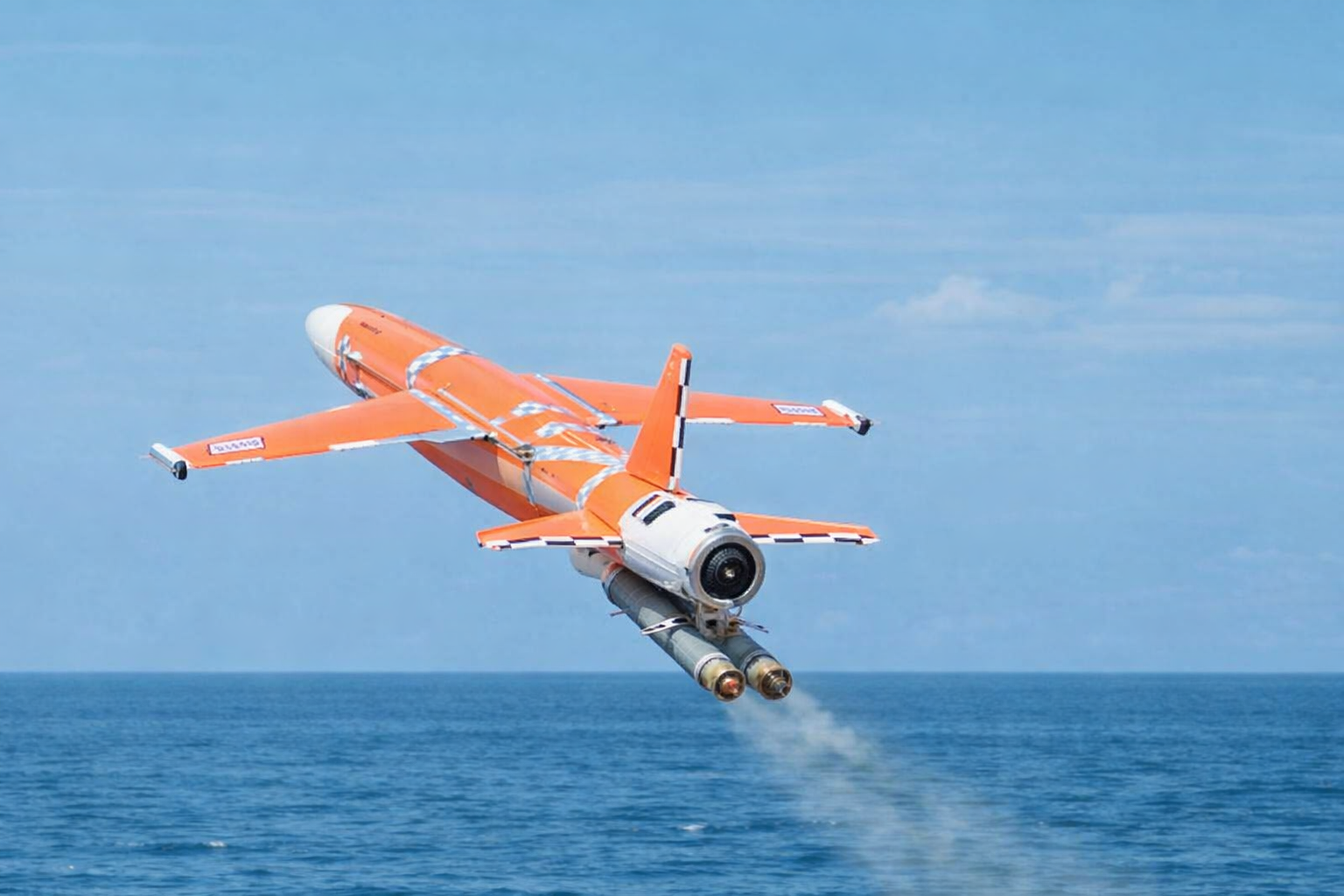
The new platform builds upon the success of Defence Research and Development Organisation (DRDO)’s Abhyas high-speed expendable aerial target, which has recently entered mass production following successful trials. However, EAT-NG is expected to be specially configured to meet the Indian Navy’s specific anti-missile defence requirements.
High-Speed, Sea-Skimming Capability
According to specifications outlined in the RFI, the drone must:
-
Achieve speeds of at least 300 metres per second (approximately Mach 0.87)
-
Sustain flight endurance of 60 minutes
-
Operate at altitudes as low as five metres above sea level
-
Maintain a climb rate of at least 20 metres per second
-
Perform sustained 2G manoeuvres
The ultra-low altitude “sea-skimming” capability is critical to replicating real-world missile threats such as the BrahMos and the Exocet, which are designed to evade radar detection by flying close to the ocean surface.
Multi-Target and Autonomous Operations
The EAT-NG system must support:
-
Control range up to 100 km via radio link
-
Fully autonomous pre-programmed flight modes

-
Mid-course speed and altitude adjustments
-
Simultaneous control of at least six targets from a single ground control station
In case of data-link disruption, a recovery mode will activate as per user-defined protocols.
To enhance training realism, the drone will feature a low radar cross-section by default, with the option to increase radar signature using transponders or reflectors.
Precision Engagement Analysis
An acoustic miss-distance indicator capable of detecting impacts within a 10-metre radius—from 20mm cannon fire to surface-to-air missiles—will enable detailed post-engagement analysis. This data-driven feedback mechanism is expected to refine crew response and interception tactics.
Launch flexibility includes rocket-assisted take-off from ships or shore bases, with operational capability in sea state 3 and wind speeds up to 30 knots. After ditching, the drone will remain afloat for recovery, enabling data retrieval and minimising environmental impact.
Boost to Indigenous Defence Manufacturing
The procurement aligns with India’s Atmanirbhar Bharat policy and the 2020 Defence Acquisition Procedure. The Ministry is prioritising ‘Buy Indian-IDDM’ and ‘Buy Indian’ categories, encouraging domestic manufacturing with significant indigenous content.
This opens opportunities for organisations such as Hindustan Aeronautics Limited, Bharat Electronics Limited, and Tata Advanced Systems Limited to participate in development and production.
Strategic Context
The Navy’s surface fleet currently relies on advanced missile systems such as the Barak 8, which require regular validation through live-fire exercises.
With aircraft carriers like INS Vikrant and INS Vikramaditya fully operational, along with expanding destroyer and frigate fleets, realistic anti-missile training has become a strategic necessity.
Regional maritime dynamics further heighten the urgency. Threats from advanced anti-ship missiles deployed in the Indian Ocean Region demand layered air defence preparedness, including integration with systems such as Akash-NG and VL-SRSAM.
Strengthening Blue-Water Ambitions
By investing in high-fidelity expendable targets, the Indian Navy aims to close potential training gaps and ensure combat-ready proficiency against complex missile salvos.
The EAT-NG initiative marks another step toward strengthening India’s indigenous defence ecosystem while reinforcing the Navy’s capability to safeguard national interests across the Indo-Pacific.