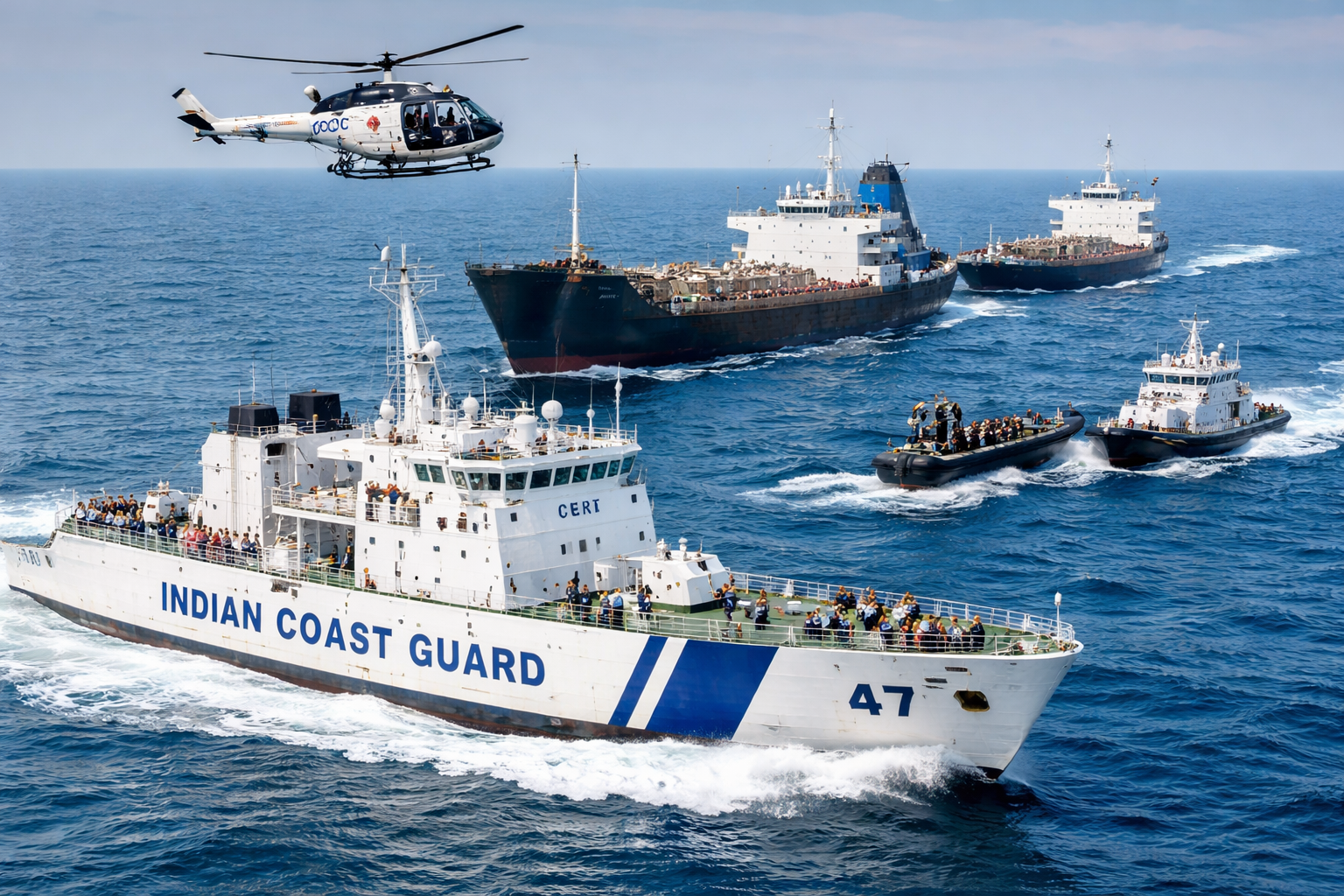
New Delhi: In a major blow to transnational maritime crime, the Indian Coast Guard (ICG) successfully busted an international oil smuggling racket through a meticulously planned sea-air coordinated operation conducted on 05–06 February 2026. The operation led to the interception of three suspect vessels involved in the illegal transfer of oil and oil-based cargo originating from conflict-affected regions.
The operation was initiated following the detection of suspicious maritime activity by the Indian Coast Guard’s technology-enabled surveillance systems. A motor tanker operating within the Indian Exclusive Economic Zone (EEZ) raised red flags due to anomalous movement patterns. Subsequent digital analysis and correlation of vessel movement data revealed the convergence of two additional vessels, indicating a likely illicit ship-to-ship transfer of oil-based cargo in international waters.
Acting swiftly on these inputs, Indian Coast Guard ships intercepted all three suspect vessels on 05 February 2026, approximately 100 nautical miles west of Mumbai. Specialist boarding teams conducted sustained rummaging of the vessels, examined onboard documents, retrieved and corroborated electronic data, and carried out detailed interrogation of crew members. These efforts enabled the Coast Guard to establish the complete chain of events and confirm the criminal modus operandi employed by the syndicate.
Preliminary investigations revealed that the smuggling network operated across multiple countries, with handlers coordinating the transportation and mid-sea transfer of cheap oil using seagoing vessels and motor tankers. The cargo was illegally transferred in international waters to evade customs duties and regulatory oversight of coastal states, including India. Investigators also found evidence suggesting that the vessels frequently changed their identities to avoid detection by maritime law enforcement agencies.

Further inquiries indicate that the ownership of the apprehended vessels is linked to foreign entities, underscoring the transnational nature of the racket. Following confirmation of digital and physical evidence, all three vessels were apprehended and are likely to be escorted to Mumbai for comprehensive investigation. The vessels and crew will subsequently be handed over to Indian Customs and other law enforcement agencies for appropriate legal action.
This successful operation highlights the Indian Coast Guard’s growing capability in leveraging advanced surveillance, digital analytics, and coordinated maritime response to combat sophisticated maritime crimes. It also reaffirms India’s position as a net security provider in the Indian Ocean Region and a steadfast enforcer of the international rules-based order at sea.