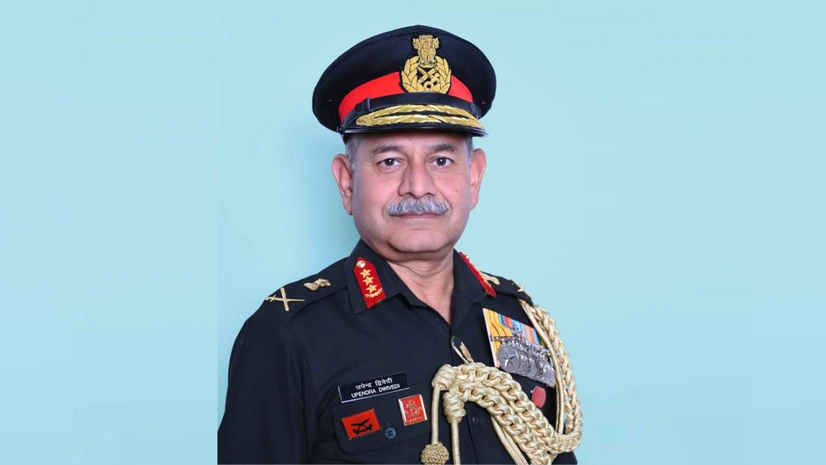
New Delhi: The Indian Army is moving towards the creation of a dedicated rocket-missile force to significantly enhance its long-range precision strike capabilities, Chief of Army Staff General Upendra Dwivedi said on Tuesday, underlining that future conflicts will demand speed, depth and accuracy in firepower.
Addressing the media, the Army Chief said the character of modern warfare is undergoing rapid transformation, requiring armed forces to possess the ability to strike distant targets swiftly and with high precision. According to him, the traditional distinction between rockets and missiles is gradually fading, as both systems now deliver comparable battlefield impact.
“We need a missile force. Today, rockets and missiles are no longer separate in terms of effect. Both can deliver decisive results, and India cannot afford to lag behind,” General Dwivedi said.
Unified Rocket-Missile Structure
General Dwivedi explained that integrating rockets and missiles into a unified force structure would allow the Army to respond rapidly across a wide spectrum of scenarios, ranging from conventional warfare to limited high-intensity conflicts. Such integration, he said, would provide commanders with greater flexibility and operational options.
Pakistan and China Driving the Shift
The Army Chief noted that regional adversaries have already taken steps in this direction. “Pakistan has raised a rocket force, and China has also established specialised formations. It is therefore essential for India to develop similar capabilities,” he said, indicating a major doctrinal shift in India’s approach to long-range fires and deterrence.
Pinaka at the Centre of Modernisation
At the core of this transformation is the indigenous Pinaka multi-barrel rocket launcher system. General Dwivedi revealed that the latest variant of Pinaka has been successfully tested to a range of 120 kilometres, with contracts already in place to push its reach to 150 kilometres.

He added that the Army has a clearly defined roadmap for further upgrades, which will significantly expand India’s conventional strike depth.
Future Variants to Reach 300–450 km
According to the Army Chief, future versions of the Pinaka system are expected to achieve ranges between 300 and 450 kilometres, greatly enhancing the Army’s ability to strike deep targets while maintaining conventional deterrence. Military planners believe such capabilities will enable calibrated responses during crises without immediate escalation.
Pralay and BrahMos Strengthen Arsenal
General Dwivedi also highlighted India’s growing missile inventory, including systems that bridge the gap between artillery and strategic weapons. He referred to the Pralay missile, an indigenous short-range precision system designed to neutralise high-value targets, and the BrahMos supersonic cruise missile, jointly developed with Russia and already deployed across the Army, Navy and Air Force.
Preparing for Future Warfare
Defence experts view the proposed rocket-missile force as a critical pillar of India’s deterrence posture, particularly along its northern and western borders. By combining long-range rockets like Pinaka with precision missiles such as Pralay and BrahMos, the Army aims to build a layered strike capability capable of delivering rapid, decisive blows without crossing nuclear thresholds.
General Dwivedi’s remarks signal that the Indian Army is not only modernising its weapon systems but also reshaping its force structure to meet the demands of future warfare, where range, speed and precision will determine battlefield dominance.