
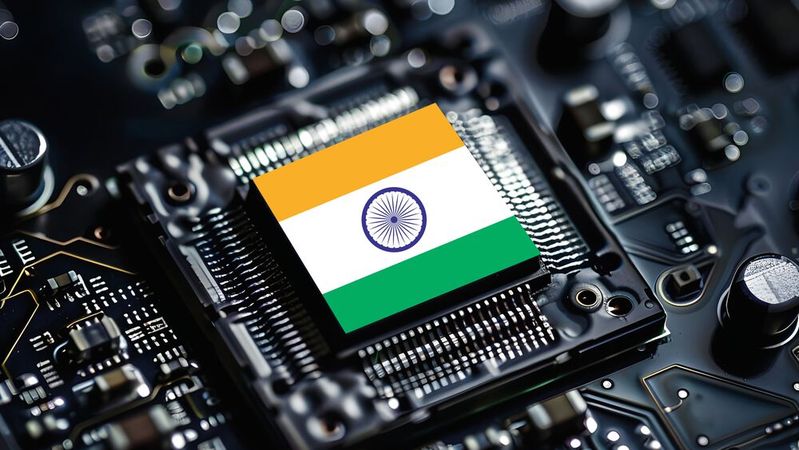
New Delhi: India’s recent semiconductor cooperation agreement with the United States marks more than just a bilateral understanding — it represents a decisive step in the shifting global balance of technological power, economic security, and strategic influence.
Often described as the “oil of the 21st century,” semiconductors have become the backbone of modern economies. From smartphones and automobiles to artificial intelligence systems and advanced missile technologies, microchips are indispensable. In this context, India’s deeper integration into global semiconductor frameworks and enhanced collaboration with the United States signal a major geopolitical and economic development.
A Response to Global Supply Chain Vulnerabilities
The COVID-19 pandemic exposed deep vulnerabilities in the global semiconductor supply chain. Heavy dependence on a limited number of manufacturing hubs — particularly in East Asia — created widespread economic disruptions. The United States and its allies increasingly view this overdependence not only as an economic risk but also as a national security concern.
India, as the world’s largest democracy and one of the fastest-growing major economies, is emerging as a trusted partner in efforts to diversify supply chains and reduce strategic vulnerabilities.
Expanding India’s Role Beyond Design
Historically, India’s participation in the semiconductor value chain has been largely confined to chip design and IT services. While Indian engineers have contributed significantly to global semiconductor innovation, the country has lacked advanced fabrication (fab) capabilities, high-purity raw material processing, and large-scale manufacturing infrastructure.
The new partnership with the United States is expected to bridge these gaps by facilitating technology transfer, investment inflows, and integration into global-standard supply chains. It also aligns with India’s broader push for domestic manufacturing under initiatives aimed at technological self-reliance.
Strategic Importance of Rare Materials
A crucial component of semiconductor manufacturing involves rare earth minerals and high-grade silicon. Global supply of several such materials remains concentrated in a handful of countries, creating strategic vulnerabilities.
India possesses significant untapped mineral potential. Through technological collaboration and targeted investment, these resources could be integrated into diversified global supply chains, reducing overdependence and strengthening resilience.
Economic Opportunities and Employment
The semiconductor industry is capital-intensive but has enormous multiplier effects. A single fabrication unit typically anchors a vast ecosystem of suppliers, research institutions, startups, and skilled human capital.
For India, this presents a dual opportunity: generating high-skilled employment and converting its demographic dividend into economic strength. The development of fabs and associated industries could accelerate innovation, boost exports, and enhance India’s standing as a global manufacturing hub.

Strategic Autonomy and Foreign Policy Balance
India has long pursued a policy of strategic autonomy — cooperating with major powers while avoiding overdependence on any single bloc. The semiconductor partnership with the United States reflects this balanced approach.
Rather than aligning exclusively within one geopolitical camp, India aims to position itself as an independent pillar in global technology supply chains. Strengthening ties with Western democracies enhances bargaining power while preserving policy flexibility.
Challenges Ahead
Despite the promise, significant hurdles remain. Semiconductor fabrication is highly complex and requires stable infrastructure, uninterrupted power supply, large volumes of ultra-pure water, skilled labor, and long-term policy consistency.
Issues related to intellectual property rights, technology transfer, and sustained innovation also require careful management. Without parallel investments in research and development, India risks becoming merely a production base for foreign companies rather than an innovation leader.
To secure long-term gains, India must foster stronger collaboration between universities, research institutions, domestic startups, and global firms.
A Geopolitical Signal
At a broader level, the agreement sends a clear message that democratic nations are working together to create more secure, transparent, and diversified technology supply chains. However, India will need to ensure that it does not become entangled in polarizing geopolitical rivalries, keeping its developmental priorities at the forefront.
A Defining Moment
Ultimately, the India–US semiconductor partnership offers a glimpse into a future where technology, security, and economic policy are deeply intertwined. If supported by sustained political will, institutional capacity, and long-term strategic vision, India’s entry into the global “battle of chips” could become a defining milestone in its technological evolution.
The coming years will determine whether India transforms from a large consumer market into a reliable and influential technological power.