
Lucknow, 26 December 2025
A new India–Russia initiative anchored in energy, technology and trust, World’s first bilateral energy hackathon A trust-led experiment begins with the energy sector laying the foundation for future startups under BRICS
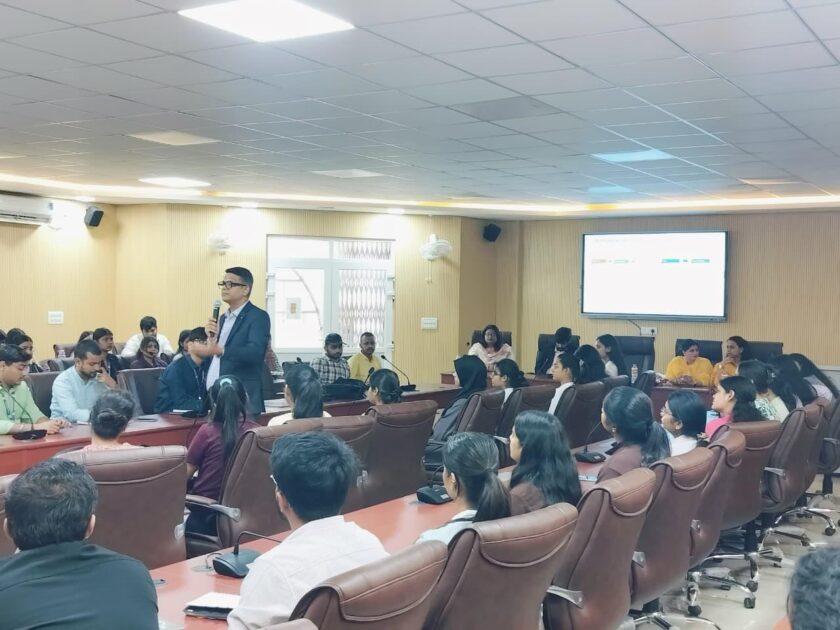
The recent visit of Russian President Vladimir Putin to India has added fresh depth and momentum to India Russia relations. Building on this diplomatic moment, the two countries have moved from conversation to action in the fields of energy and technology. At the centre of this shift is academic collaboration, with Rajiv Gandhi Institute of Petroleum Technology emerging as a key institutional bridge. On Friday, the Go-BRICS Business Forum successfully organised ENERGY-O-THON, marking the world’s first India Russia bilateral energy hackathon under the BRICS framework.
This initiative signals a clear shift. It is not merely an event or a one-off competition. It reflects a growing belief that long-term cooperation must move beyond formal agreements and reach young minds who will shape the future. The core focus of ENERGY-O-THON is simple yet ambitious, to find practical, digital, and trust-based solutions to real global energy challenges.
Several cooperation programmes were outlined during President Putin’s visit to India, and platforms such as the BRICS International Forum and the Go-BRICS Business Forum have helped convert those ideas into action. Traditionally, collaboration between India and Russia has remained concentrated at the level of governments and large corporations. ENERGY-O-THON changes that dynamic by bringing students and young researchers into the centre of the relationship, where genuine and lasting partnerships often begin.
The hackathon was organised by the Go-BRICS Business Forum in collaboration with the Department of Computer Science and Engineering at the Rajiv Gandhi Institute of Petroleum Technology. Undergraduate and postgraduate students from engineering, artificial intelligence, energy, and management disciplines participated with strong enthusiasm. Leading Russian institutions such as the Higher School of Petroleum in Almetyevsk, Moscow Polytechnic, and Saint Petersburg Polytechnic joined the initiative, along with active interest from financial institutions including Bayer Bank and industry representatives. Together, this participation underlined one important point. This was not an academic exercise alone. It was a foundation being laid for future startups and workable solutions.
The second phase of ENERGY-O-THON is planned for March 2026 and will be conducted as an online ideathon as part of a larger long-term roadmap. Mixed teams from India and Russia will collaborate in a virtual environment, using advanced scientific platforms developed in Russia such as DION. These platforms allow secure communication, project sharing, and joint work without physical barriers, making collaboration smoother and more accessible.
The pilot phase saw participation from around 250 students from India and nearly 100 students from Russia. These were not casual participants. They were young researchers working seriously on real-world scientific and energy-related problems. Following the success of this phase, Phase Two is scheduled for March 2026 with an expected participation of nearly 7,000 students. The organisers have also outlined a long-term vision to expand the initiative to nearly 50,000 innovators over time.

What really sits behind this initiative is a concern scientists have lived with for a long time. The worry that if an idea is shared too early, it might be taken or misused. That fear makes many researchers hold back, and in the process, solid innovations stay tucked away instead of moving forward. ENERGY-O-THON is meant to change that way of thinking.Ideas presented on this platform are formally recorded and acknowledged, creating a sense of safety and confidence among participants.
Speaking on the occasion, the Chairperson of the BRICS International Forum and the Go-BRICS Business Forum, Ms Purnima Anand, said that following President Vladimir Putin’s visit to India and his discussions with Prime Minister Narendra Modi, India Russia relations are evolving beyond diplomacy and entering a scientific and innovation-led phase. She noted that the aim is to build a safe and credible platform where young people can share ideas without fear. Beginning with the energy sector allows both countries to build on an already strong foundation of trust, and the hackathon is an effort to take that trust further by connecting innovation with funding and industry support.
Dr. Amritanshu Shukla from the Rajiv Gandhi Institute of Petroleum Technology said that it was a moment of pride for the institute to be at the centre of this historic initiative. The representative added that students from RGIPT are working closely with their Russian counterparts using low-code and no-code technologies to improve energy efficiency and sustainability. The collaboration, they said, shows how young talent from both countries can set new benchmarks together.
A representative from the participating Russian universities echoed similar views and said that the involvement of institutions such as the Higher School of Petroleum in Almetyevsk, Moscow Polytechnic, and Saint Petersburg Polytechnic reflects the seriousness of this collaboration. The interest shown by financial institutions like Bayer Bank and industry partners further confirms that the initiative is focused on real outcomes and future-ready solutions.
Looking ahead, a major energy conference aligned with the Prime Minister’s proposed engagements in mid-February, tentatively around 15 and 16 February, is also being planned. ENERGY-O-THON is expected to serve as a strong preparatory platform for this conference. At present, the focus remains on the energy and petroleum sectors, which form the strongest pillar of cooperation between India and Russia. Once this model proves effective, it is expected to be extended to other scientific domains as well.
The organisers have confirmed that selected teams will receive opportunities to progress through advanced rounds, academic exchange programmes, and structured industry exposure. Through this initiative, India and Russia aim to bring their knowledge economies closer together, steadily and with intent, under a shared framework of trust, collaboration, and innovation.