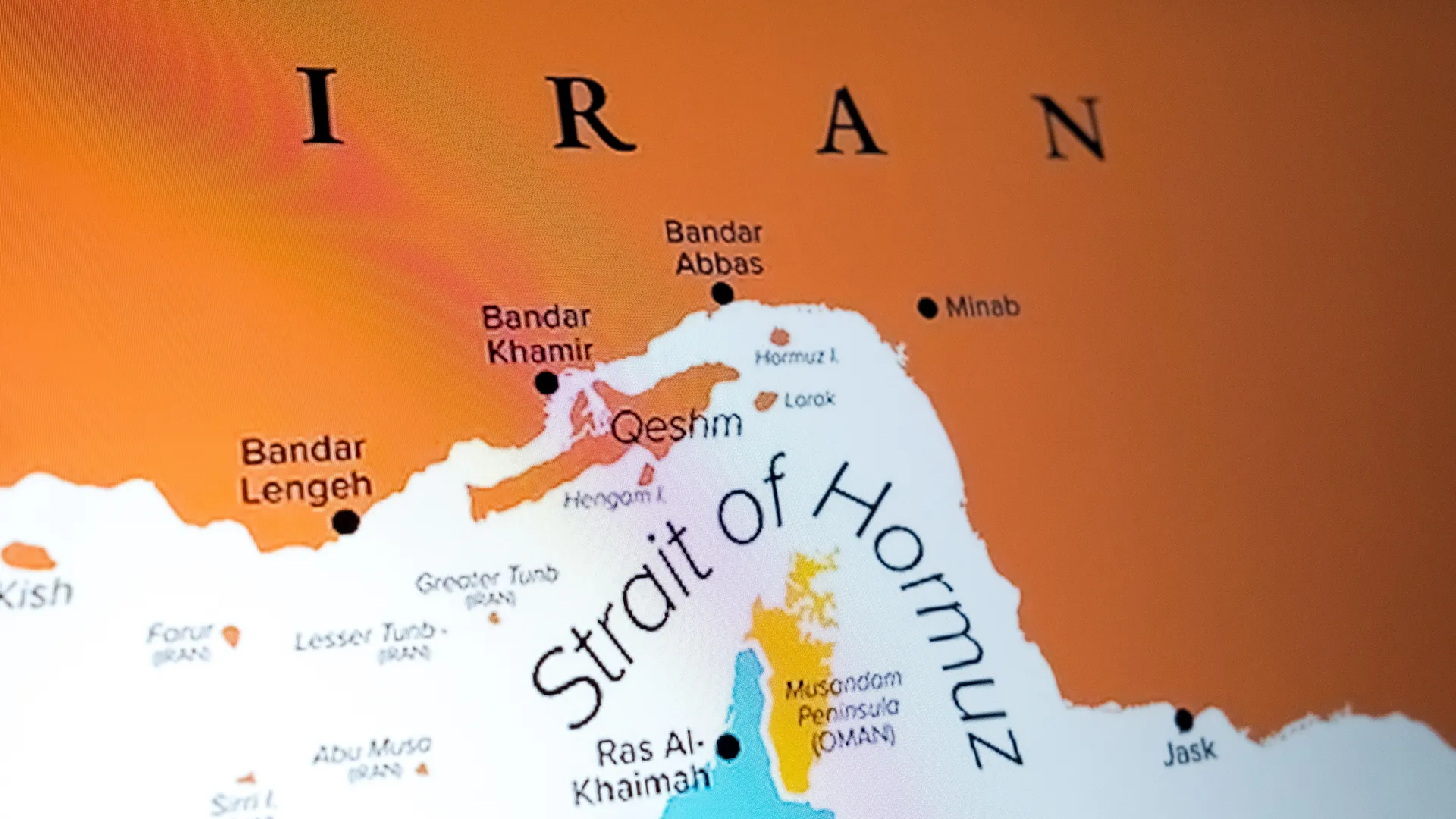
Tehran: Rising tensions in West Asia have triggered severe disruption in shipping through the Strait of Hormuz, one of the world’s most vital energy corridors, raising concerns over global oil supply and market stability.
The strategic waterway, located between Iran to the north and the Musandam Peninsula to the south—shared by Oman and the United Arab Emirates—is a crucial maritime route for global energy trade. Stretching roughly 178 kilometres in length and narrowing to about 39 kilometres at its tightest point, the strait typically carries around 20 million barrels of oil each day, nearly one-fifth of the world’s daily oil consumption.
However, since the conflict escalated on February 28, shipping activity has slowed dramatically. Reports indicate that tanker traffic through the strait has dropped by nearly 90 percent, with many vessels anchoring in nearby waters while awaiting safer conditions.
Despite its narrow width, the waterway remains relatively deep and free from major maritime hazards, particularly along the Omani coast near the Musandam Peninsula. To manage heavy maritime movement, the International Maritime Organization operates a traffic separation scheme with two shipping lanes—one inbound and one outbound—each about two miles wide and separated by a two-mile buffer zone.
Iran maintains naval and air bases on nearby islands such as Abu Musa and the Greater Tunb and Lesser Tunb islands. These islands are part of a long-standing territorial dispute between Iran and the United Arab Emirates and give Tehran significant oversight over vessels transiting the strait.

Security agencies report that between eight and ten commercial ships have been damaged in attacks involving drones, missiles, or explosive surface craft in and around the Strait of Hormuz and the Gulf of Oman. Widespread GPS jamming has also been reported, creating additional navigation risks even for ships not directly targeted.
The disruption is particularly concerning for Asian economies, as more than 80 percent of oil and gas passing through the strait is destined for markets such as Japan, South Korea, India and China.
While Saudi Arabia and the United Arab Emirates operate pipelines capable of partially bypassing the Strait of Hormuz, their combined spare capacity of about 3.5 million barrels per day is far below the normal flow through the waterway.
Global markets have already reacted to the disruption, with oil prices rising above $100 per barrel and briefly approaching $120. Analysts warn that any prolonged interruption in this narrow but critical passage could have far-reaching economic consequences, increasing energy costs and affecting economies worldwide.