Ali Hasan
Lucknow: Lucknow’s pace of development is unmistakably fast. Under the Smart City Mission and through municipal initiatives, the city is witnessing beautified intersections, widened roads, heritage walks, the Gomti riverfront, and an expanding digital infrastructure. On paper, the transformation looks impressive. On the ground, however, especially in Lucknow’s heritage zones, a glaring absence remains—shade.
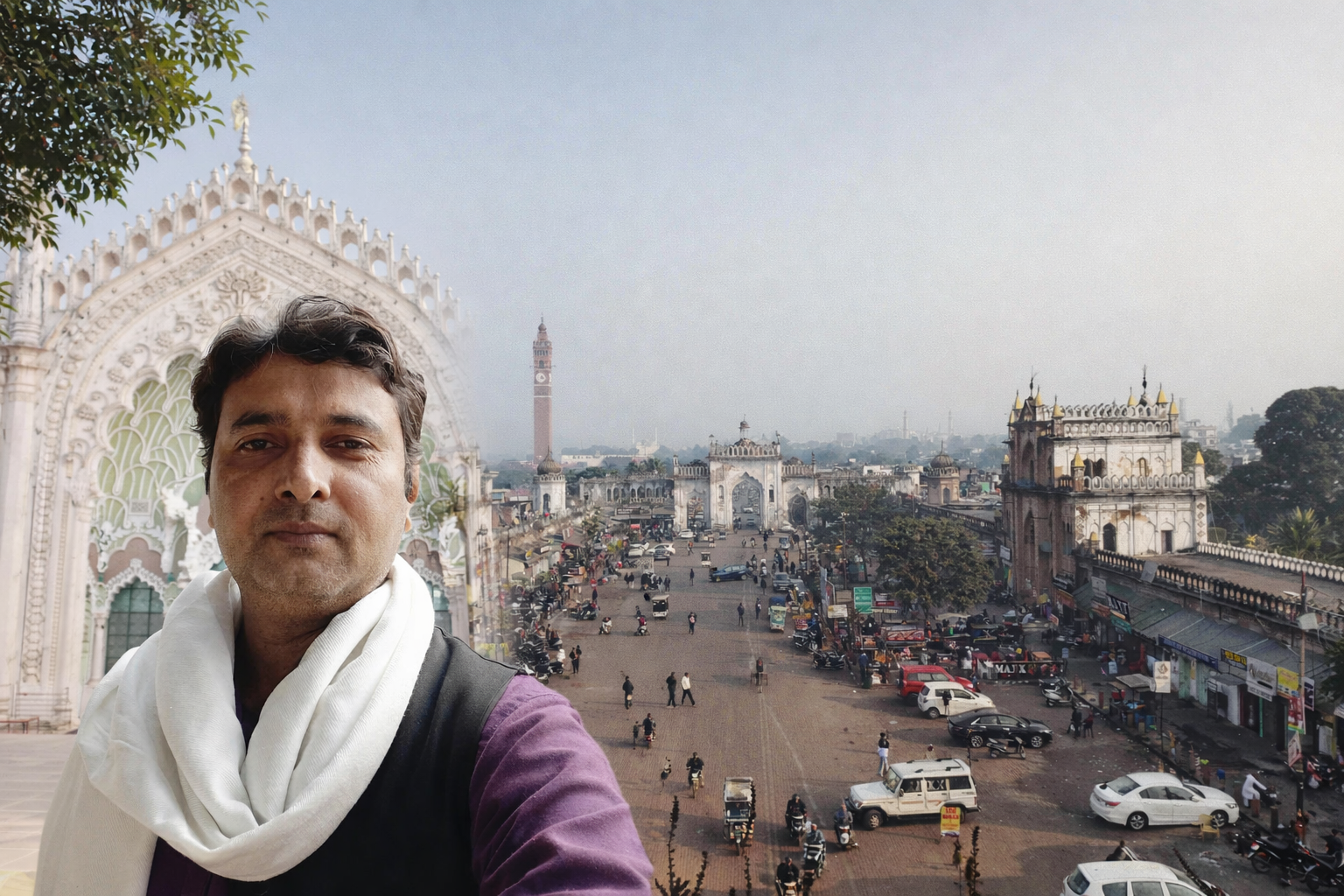
Lucknow is not merely a city of bricks, stones and monuments. It is a living culture—an inheritance of grace, civility, refinement and calm that has evolved over centuries. The Bara Imambara, Chhota Imambara, Rumi Darwaza, the Residency and the old neighbourhoods are not just tourist spots; they are the soul of the city. This is where Lucknow breathes, where its story walks alongside its visitors.
Every year, particularly during the summer holidays, thousands of tourists from India and abroad flock to these heritage zones. Some come to explore history, others to feel the famed tehzeeb of Lucknow, and many to capture memories through their lenses. Yet today, these historic spaces share a common and troubling reality—the absence of greenery and shade.
As summer approaches, with temperatures soaring between 40 and 45 degrees Celsius from April to June, conditions in heritage areas become punishing. For tourists, elderly visitors, children, photographers, tour guides and small vendors, the experience turns exhausting. The sun beats down relentlessly, stone pathways radiate heat, and vast open courtyards offer grandeur—but no relief.
The Chhota Imambara complex is a telling example. It sees heavy footfall throughout the day. Its open grounds and stone architecture reflect historical magnificence, yet the severe lack of shade diminishes the visitor experience. There are few places to rest, fewer spaces to sit in comfort. Elderly visitors hesitate to stop, children lose interest quickly, and tourists cut their visits short—not because history fails to inspire, but because the heat overwhelms.
This raises a crucial question: Is heritage meant only to be seen, or also to be experienced humanely?
Often, the argument is made that planting trees near heritage structures could damage their foundations. This concern is not entirely baseless—but it is only half the truth. The real issue is not trees, but poor planning. With the right selection of native, low root-spread, shade-giving species, greenery can coexist safely with heritage structures. Across the world, historic cities demonstrate that heritage and greenery are not adversaries—they are companions. Trees do not hide history; they enhance it.

Lucknow’s development narrative cannot ignore this reality. Smart cities are not defined by CCTV cameras, LED lights and mobile apps alone. A truly smart city is one where tourists are not defeated by heat, where elderly citizens can sit peacefully, where children can explore safely, and where urban spaces are designed with human comfort at their core.
Specific, practical solutions are well within reach—scientific plantation of native shade trees, large planters and green corridors, shaded pedestrian routes, “green rest points,” and landscape designs that reduce heat absorption from stone and concrete. These interventions can be implemented without compromising heritage integrity. What they require is intent and foresight.
The need for greenery is not limited to heritage zones alone. Areas like Hazratganj, Alambagh, Aliganj, Gomti Nagar and older residential localities face the same crisis. Pitting development against the environment is flawed thinking. Lucknow’s identity survives only when both move forward together.
A city that taught adab and nazakat must not fail to offer shade to its people and guests. Trees are not merely an environmental concern—they are a matter of health, culture and patience. A city that cannot shelter its visitors from the sun cannot truly claim to honour its heritage.
Summer is approaching. Tourists are on their way. This is the moment for the Municipal Corporation, Smart City authorities and the Tourism Department to act together—treating greenery in heritage zones not as an emergency fix, but as a long-term, sustainable policy. Because these trees will offer more than shade; they will strengthen the foundations of Lucknow’s heritage, its hospitality, and its future.
(The author is a senior journalist.)