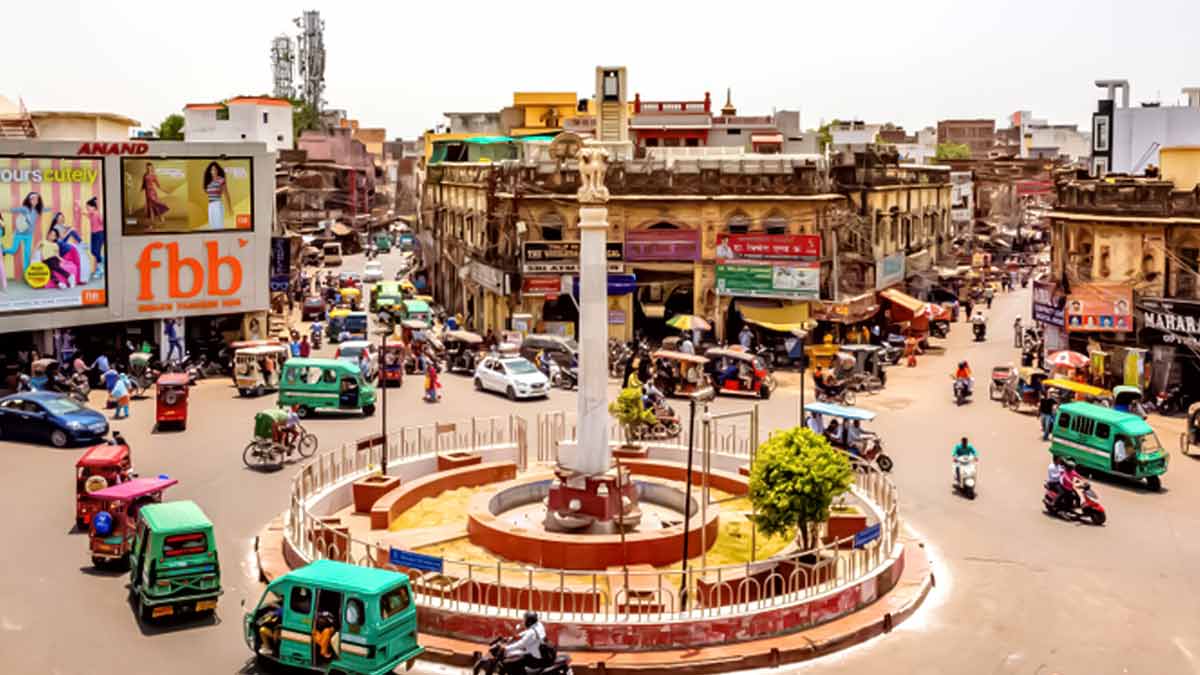
Lucknow: In the labyrinthine streets of Lucknow, where the air carries whispers of Awadhi poetry and the aroma of kebabs, Hazratganj stands as a living monument to the city’s syncretic soul. Named after Prince Mirza Hazrat, son of Nawab Asaf-ud-Daula, this bustling market district emerged in the 19th century as a colonial-era enclave, blending Victorian architecture with Mughal grandeur. For nearly two centuries, it was the city’s social and commercial epicenter. Yet, decades of unchecked urbanization had dulled its luster: encroachments choked its alleys, haphazard signboards clashed with its heritage facades, and vehicular chaos drowned out the pedestrian charm that defined its heyday.
Hazratganj is undergoing a transformative redevelopment, spearheaded by the Lucknow Development Authority (LDA) and the district administration. This ambitious facelift, blending preservation with modernity, aims to resurrect the area’s “old-world charm” while infusing it with sustainable urban vitality. With budgets scaling from ₹16 crore for immediate beautification to a staggering ₹440 crore for institutional anchors, the project is not just a cosmetic overhaul but a blueprint for heritage-led economic revival. Drawing from recent directives by District Magistrate Vishak G. Iyer and LDA Vice-Chairman Prathamesh Kumar, the initiative promises to restore Hazratganj as a pedestrian paradise, a cultural hub, and a magnet for investors. This redevelopment narrative is one of community resilience, bureaucratic resolve, and a delicate dance between nostalgia and progress.
The Blueprint: From GPO to Pedestrian Paradise
At its core, the redevelopment targets an 850-meter stretch from the iconic Hazratganj crossing—flanked by the grand General Post Office (GPO)—to the District Magistrate’s residence, weaving through Plaza Street and Naza Market. Announced in early 2025, the ₹16 crore façade upgradation and beautification drive kicked off with vigor in November.
The LDA’s strategy is multifaceted:
- Structural reinforcements to aging colonial buildings.
- Aesthetic enhancements to evoke the pink-and-yellow palette of Lucknow’s Awadh era.
- Infrastructural tweaks for seamless mobility and connectivity.
“We are committed to restoring the charm of Hazratganj while preserving its architectural identity,” Kumar affirmed in a July 2025 interview, underscoring the project’s dual ethos of conservation and innovation.
Aesthetic Alchemy: The Black-and-White Mandate
Aesthetic revival forms the bedrock of this transformation, aiming to reclaim visual harmony from chaos. Under strict LDA guidelines, all signboards must now adhere to a uniform black-background, white-lettering scheme, with lettering no taller than 300 mm—a rule that extends from the main boulevard to labyrinthine bylanes.
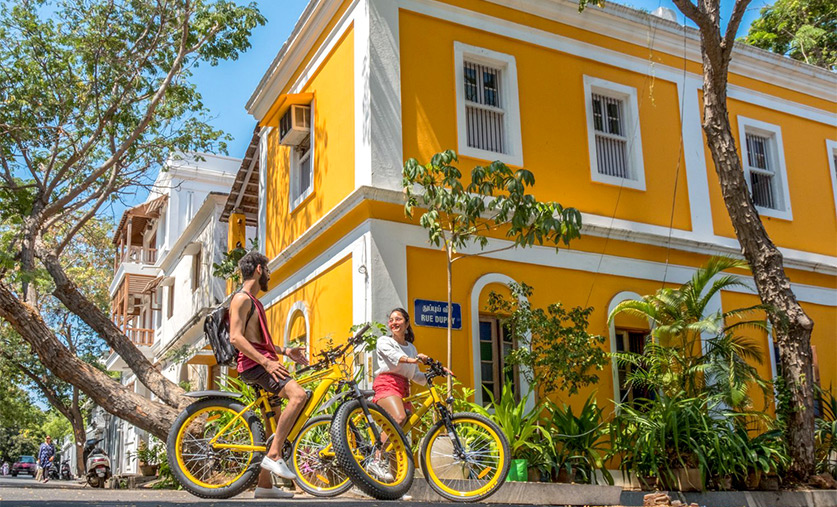
Building exteriors are being repainted in the signature pink and yellow hues reminiscent of Nawabi havelis, while windows and grilles receive standardized designs to safeguard the area’s heritage zoning status. The November 2025 acceleration of works at Naza Market, a parallel artery famed for its antique dealers and street food stalls, includes painting railings, benches, and bollards in thematic colors.
This isn’t mere repainting; it’s a reclamation of visual identity. Encroachments—those notorious squatters on sidewalks and facades—are being systematically dismantled, freeing up space for wider pedestrian pathways lined with theme-based street lamps that mimic gaslight-era lanterns, now solar-powered for eco-friendliness.
Mobility and Metro Integration
Pedestrian safety emerges as a pressing priority, addressing long-standing grievances. Plaza Street, once a vehicular gauntlet where cars vied with chai-wallahs for space, is being redesigned as a car-free zone. Bollards and barriers will segregate traffic, while underground parking facilities—rumored to accommodate 500 vehicles beneath the market’s core—are in the tendering phase.
This aligns with broader smart city imperatives, integrating with the Lucknow Metro’s Hazratganj station, a bustling node on the Red and Blue Lines. The metro’s expansion, projected for full completion by 2027, will funnel commuters directly into the revamped bazaar, slashing congestion by an estimated 30%. Furthermore, enhanced connectivity via flyovers like the 3.6 km Munshi Pulia-Polytechnic corridor (slated for 2025 finish) will link Hazratganj to Gomti Nagar’s IT hubs, positioning it as a nerve center for commerce.

Institutional Anchors and Regulatory Backbone
Institutional infusions are elevating Hazratganj’s stature beyond retail nostalgia. A crown jewel is the ₹440 crore Integrated Divisional Office complex, rising on 6 acres along Wazir Hasan Road. This six-story behemoth will consolidate administrative functions—from revenue to urban planning—under one roof, complete with green roofs, rainwater harvesting, and energy-efficient glazing.
Adjacent to Sarojini Naidu Park, it will house the LDA’s new Prescribed Authority Court, dedicated to adjudicating illegal construction cases, streamlining what was once a fragmented judicial maze. Unveiled in mid-November, this court symbolizes the project’s regulatory backbone: a deterrent to future encroachments and a testament to governance transparency. “All proceedings under one roof will expedite justice,” LDA officials noted, targeting a 2026 operational debut.
Commercial Dynamism and Investment Surge
The transformation is being reinforced by private investments that dovetail with public efforts. Omaxe Hazratganj, a 2-acre mixed-use enclave in Gomti Nagar Extension, exemplifies this synergy. Offering 746 units—from 500 sq ft service apartments to 1,156 sq ft retail shells—it promises high returns.
Nearby, residential micro-projects like Eldeco Heritage and Jugals Emerald Court are sprouting, blending 1-2 BHK units with modern amenities. Property rates in Hazratganj itself are surging 15% year-on-year to ₹8,000-12,000 per sq ft, countering the area’s aging stock. LDA’s oversight ensures this boom isn’t unchecked, prohibiting high-rises that could eclipse the heritage skyline.
Sustainability and Community Buy-in
Sustainability threads through every facet, aligning with Uttar Pradesh’s green urban agenda:
- Native Landscaping: Gulmohar avenues and jasmine creepers combat the urban heat island effect.
- Smart Infrastructure: LED lighting and smart waste bins (piloted in Naza Market) aim for zero-discharge status.
- Water Management: Deepened storm drains and permeable pavements tackle waterlogging, a perennial woe during monsoons.
- Utility Retrofitting: The Lucknow Electric Supply Administration (LESA) and Water Department are retrofitting underground cabling to bury unsightly overhead wires, improving aesthetics and reducing outage risks.
Community voices, amplified through monthly LDA carnivals on the second Sunday, have shaped this evolution. Shopkeepers, initially wary of signboard mandates, now embrace them as branding upgrades, with associations like the Hazratganj Traders’ Welfare Society collaborating on facade designs, ensuring local ownership of the revival.
A Legacy Polished, Not Erased
Challenges persist, including delays in land acquisition for parking lots and bureaucratic hurdles. However, with 60% of façade works complete by December 2025, the stretch already gleams under trial illuminations, evoking sepia-toned postcards of yore.
As Hazratganj emerges from scaffolding into splendor, it redefines urban renewal in India’s heartland. This isn’t just redevelopment; it’s resurrection—a bridge from the nawabs’ opulent courts to a smart, inclusive tomorrow. By 2027, when the divisional office towers over revitalized plazas and metro trains hum beneath chikankari boutiques, Hazratganj will no longer be a relic but a renaissance. In Lucknow’s eternal adab (respect), it whispers: progress need not erase the past; it can illuminate it.