New Delhi: The Government of India will reduce the number of Goods and Services Tax (GST) slabs from four to two as part of the next phase of GST reforms, aimed at making essential commodities cheaper for the common man. Announcing the reform from the ramparts of the Red Fort on the 79th Independence Day, Prime Minister Narendra Modi described it as a “Diwali gift” that will also benefit micro, small, and medium enterprises (MSMEs).
The Finance Ministry detailed that the reforms will focus on three areas — structural changes, rate adjustments, and measures to improve ease of living. The rate-related changes include reducing the current four GST slabs — 5%, 12%, 18%, and 28% — to just two, with special rates for select items. Structural changes will align input and output taxes, reducing pending input tax credits and disputes. Compensation cess will be abolished.
For ease of living, GST registration, return filing, and refunds will be made simpler, time-bound, and technology-driven, particularly benefitting small businesses and startups. Automated refunds will cut processing times significantly.
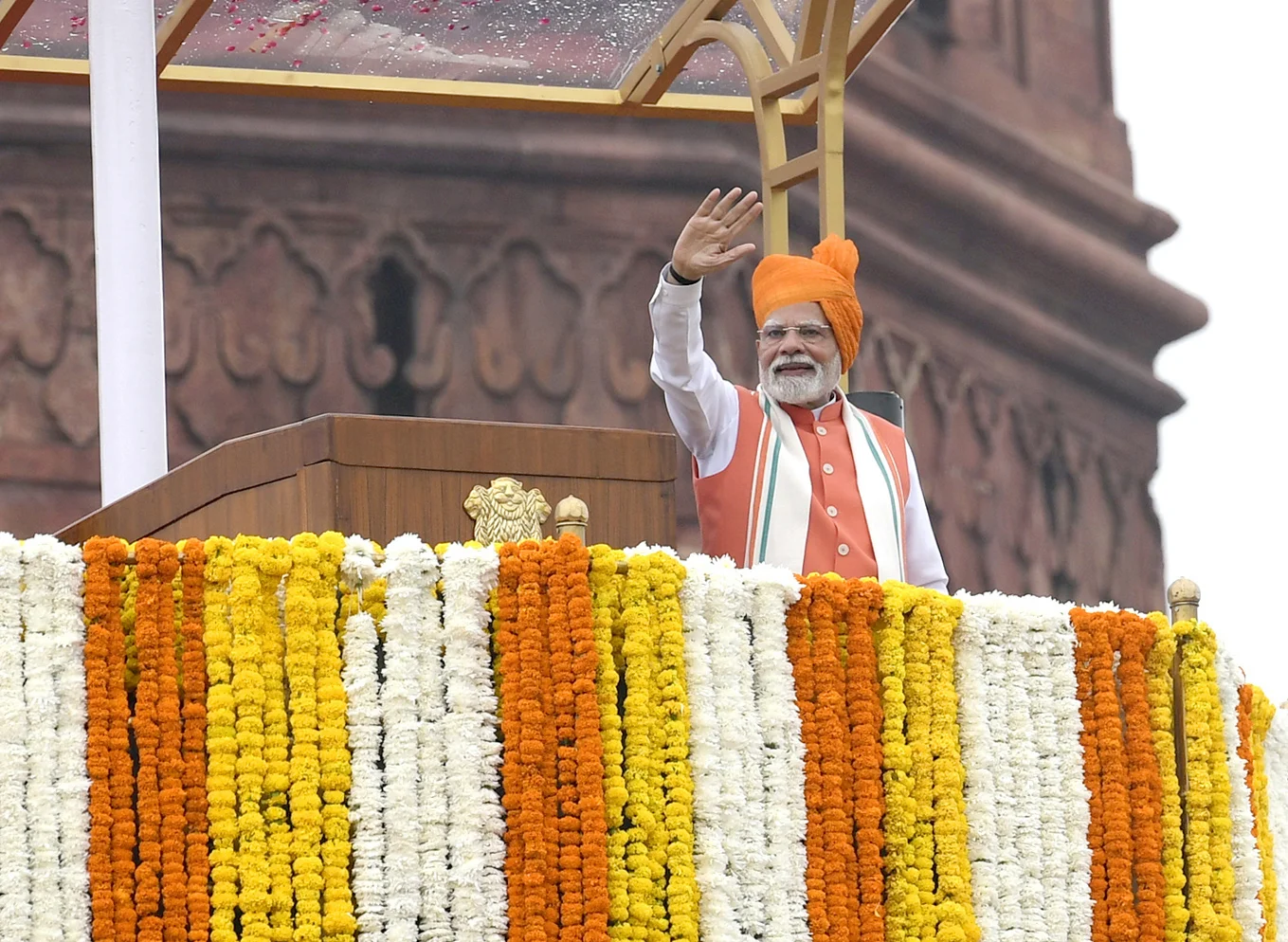
PM Modi in Saffron Attire at Independence Day Ceremony
Marking the occasion, PM Modi appeared in a saffron turban and jacket over a white kurta, blending traditional and modern styles. His attire became one of the key attractions of his 12th Independence Day celebration as Prime Minister.
“Sindhu Waters Belong to India”: Modi
PM Modi reiterated that the Indus waters belong to India and called the existing Indus Water Treaty “unjust.” He declared that India will not continue the agreement in its current form, asserting the nation’s right to its share of water for the benefit of farmers. “Blood and water cannot flow together,” he said, stressing that India would no longer tolerate nuclear blackmail or terrorism from across the border.

Poverty and Governance
The Prime Minister shared his personal experience with poverty, stating that he has witnessed it firsthand, not merely read about it. He emphasized that welfare schemes for the poor must reach their intended beneficiaries without getting stuck in bureaucratic processes.
Naxalism to End by March Next Year
PM Modi announced that the government aims to completely eliminate Naxalism by March 31 next year, noting that its presence has already been reduced from over 125 districts to just 20.
Mission Sudarshan Chakra
Unveiling Mission Sudarshan Chakra, PM Modi outlined a 10-year plan to develop advanced, technology-based security systems for both military and civilian infrastructure by 2035. This will include hospitals, railways, religious sites, and other critical locations. Inspired by Lord Krishna’s Sudarshan Chakra in the Mahabharata, the mission will feature indigenous research, development, and manufacturing.
The system will be capable of neutralizing enemy attacks and delivering counterstrikes with far greater impact. Targeted action missiles will be developed to pursue and destroy their targets. “In modern warfare, technology rules the battlefield, and India must stay one step ahead,” the Prime Minister said, adding that national security is essential to sustaining prosperity.