Lucknow: In the narrow, history-soaked lanes of Hussainabad, near Lucknow’s Chota Imambara, stands a printing establishment that has quietly witnessed nearly six decades of change. Nukkar Printing and Binding Centre is not just a business address on Jama Masjid Road; it is a living chronicle of how traditional Indian printing has adapted, survived, and now prepares to reinvent itself for a digital future.
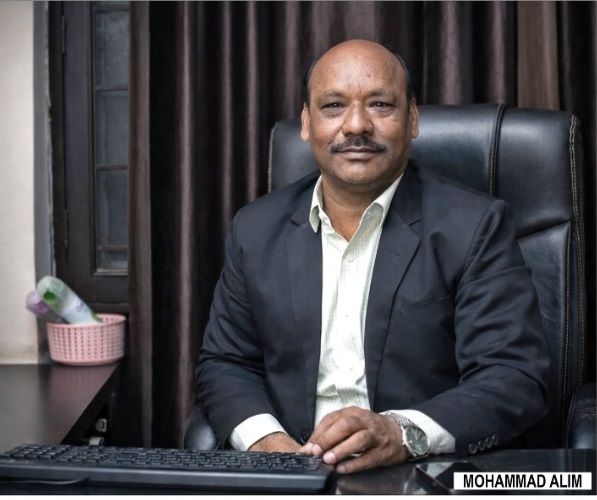
Established in 1967 as a modest offset printing unit, Nukkar Printing began with just five people and limited machinery. Founder and proprietor Mohammad Alim built the enterprise brick by brick, reputation by reputation. In an era when printing meant manual compositing, letterpress work, and long hours of binding by hand, Alim focused on two simple principles that still guide him today: hard work and honesty. “Money will follow,” he often says, summing up a philosophy forged over decades of persistence.
Adapting to a Shifting Landscape
The printing industry is once again at a moment of transition. With indications that the CBSE may soon change its pedagogy and textbooks, private printers and publishers are bracing for impact. For Mohammad Alim, such a shift could significantly affect workflows, volumes, and timelines. Educational publishing has long been a key component of the printing ecosystem, and any curriculum overhaul demands agility.
Yet Alim sees challenge as opportunity. Looking ahead to 2026, he plans to take a decisive step: entering digital publishing. For a business rooted in offset printing and binding, this marks a significant evolution. “You have to stay updated,” he says, acknowledging that today’s printing business demands more than ink and paper—it requires technology, speed, and integrated solutions.
Technology as a Necessity, Not a Luxury
Nukkar Printing and Binding Centre has steadily invested in top-of-the-line facilities to remain competitive. The unit today boasts a comprehensive range of machinery and capabilities: Speedmaster presses, offset machines, different-size CTP units, perfect binding systems, wiro machines, islet machines, dye cutting, lamination, forecolor processing, and full packaging units. From leaf printing and cutting to lamination and binding, the centre offers end-to-end solutions under one roof.
Equally important is the focus on modern offset printing, young-unit framing, advanced machine setup, and the continued use of traditional skills such as letterpress composition—creating a rare blend of heritage craftsmanship and modern efficiency.
Global Exposure, Local Impact
Mohammad Alim’s outlook has also been shaped by exposure beyond India. He has participated in several international printing events, including a notable experience in Germany, where he observed global best practices firsthand. These included strategies to manage paper costs, enhance print quality, adopt digital packaging techniques, and optimize machine technology. According to Alim, such learnings are not merely about profitability; they directly contribute to improving employability by upgrading skills and workflows within the unit.
This global-local synthesis is now central to Nukkar Printing’s growth strategy. Alim sees major scope in working with government bodies and MSMEs, sectors that increasingly require reliable, scalable, and quality-driven printing and publishing partners.
PMX Mumbai and the Road Ahead

A key milestone in this journey will be PMX Mumbai, a major printing and packaging event scheduled from 26 to 29 January 2026. Mohammad Alim’s participation signals his intent to engage with emerging technologies, industry peers, and new markets. For a legacy printer from Lucknow’s old city, PMX represents both validation and aspiration—a platform to connect tradition with innovation.
A Family-Driven Enterprise
At the heart of Nukkar Printing’s resilience is its family-oriented structure. The next generation is already deeply involved. Innama Akbar, Mohammad Alim’s daughter, manages the financial side of the business, bringing professional discipline and modern accounting practices. She is strongly supported by her husband, Qasim Hussain, a chartered accountant whose expertise has strengthened compliance, planning, and financial strategy. Another family member, Razi Hasan, also plays an active role, contributing to day-to-day operations and growth.
This collective effort ensures continuity while allowing the business to modernize without losing its core values.
Legacy, Respect, and Recognition
Over the years, Mohammad Alim has earned deep respect within Lucknow’s printing and business community. Nukkar Printing and Binding Centre is frequently associated with cultural, religious, and community publications—from books and booklets to event materials—cementing its role in the social fabric of the old city. Alim’s work has been acknowledged through various community recognitions and awards, reinforcing his standing as a trusted name in the trade.
Bridging Past and Future
As Nukkar Printing approaches nearly six decades of operation, it stands at a pivotal crossroads. Rooted in the heritage of Hussainabad yet oriented toward digital publishing, modern offset technology, and national-level collaborations, the enterprise reflects a broader story of Indian MSMEs navigating change.
For Mohammad Alim, the journey is far from over. With evolving education policies, digital transformation on the horizon, and platforms like PMX Mumbai opening new doors, Nukkar Printing and Binding Centre is poised to move from a historic press to a future-ready publishing partner—without forgetting the values that started it all in 1967.