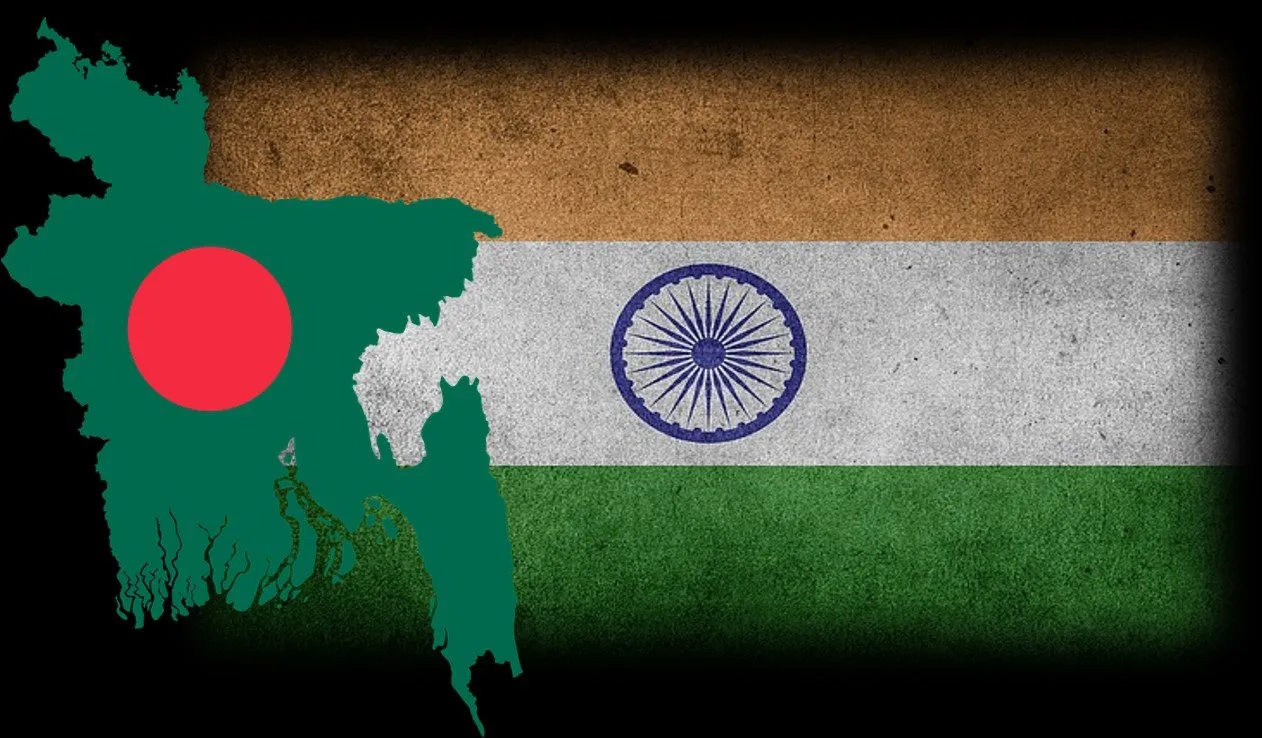
New Delhi: The India-Bangladesh relationship, forged in the crucible of Bangladesh’s independence in 1971, has long been shaped by friendship, shared history, and strategic alignment. India’s decisive support during the Liberation War laid the foundation for what was once considered a “golden era” of bilateral ties. However, in recent years, this relationship has faced increasing complexity, marked by political shifts, public unrest, and rising skepticism.
From Liberation to Strategic Partnership
India’s enduring support for Sheikh Hasina and the Awami League has been a cornerstone of its policy for decades. Even through military coups and alternative governments, India maintained backing for what it viewed as a stable, pro-India political force. This alignment strengthened the Awami League’s dominance in Dhaka, but also limited political diversity and left opposition voices feeling marginalized.
The pivotal question now is whether India fully understood the evolving realities of Bangladesh’s internal politics. The public’s loyalty is not confined to a single party or leader, a fact made clear by the mass protests of 2024, which culminated in Sheikh Hasina stepping down and an interim government taking office. The demonstrations reflected broader dissatisfaction with a system perceived as heavily influenced by Indian support, fueling anti-India sentiment among sections of the population.
Historical Distrust and Bilateral Tensions
The roots of distrust run deep. While the bilateral relationship often appeared cooperative on the surface, tensions lingered beneath. Many in Bangladesh felt India’s interventions were primarily driven by strategic interests rather than equitable partnership, while India sometimes perceived Dhaka as undervaluing its contribution to Bangladesh’s independence. Border security issues, concerns over insurgent groups in India’s northeast, and migration controls in the 1980s further complicated perceptions.

Current Crisis and Path Forward
By 2025, relations have become increasingly public and politically charged. Suspension of visa services and sharp official statements signal cracks at the institutional level. Dhaka now views India not just as a neighbor but as a powerful influence on domestic politics. How relations evolve will depend on the next electoral cycle—if the Bangladesh Nationalist Party (BNP) assumes power, there may be greater insistence on equality and mutual respect.
Despite the challenges, shared history, cultural connections, and economic interdependence remain strong foundations. Restoring trust will require dialogue, transparency, and a recognition of Bangladesh as a sovereign and politically conscious nation. India’s approach must balance strategic priorities with sensitivity to domestic political sentiment in Dhaka.
The India-Bangladesh relationship today is a complex tapestry of diplomacy, distrust, strategic interest, and people-to-people connections. Understanding public sentiment, fostering mutual respect, and rebuilding trust are essential if both nations are to move beyond episodic tension and toward a stable, long-term partnership.