New Delhi: The Indian Navy is poised to significantly enhance its coastal defence, maritime surveillance, and search-and-rescue capabilities by wet-leasing four fixed-wing amphibious aircraft for a period of four years. The move, reported by defence sources, is aimed at rapidly addressing critical operational gaps across India’s vast maritime domain.
To this end, the Ministry of Defence has issued a Request for Information (RFI) inviting responses from original equipment manufacturers (OEMs) or authorised lessors. Under the wet lease model, the selected vendor will provide not only the aircraft but also trained flight crews, comprehensive maintenance support, and insurance, enabling immediate operational deployment without lengthy procurement or training delays.
With a 7,500-kilometre-long coastline and strategically sensitive island territories such as the Andaman and Nicobar Islands and Lakshadweep, India faces a wide spectrum of maritime threats ranging from piracy and smuggling to maritime terrorism and natural disasters. Amphibious aircraft, capable of operating from both land runways and open water, offer unmatched flexibility for such complex operational environments.
The aircraft will primarily be employed for maritime reconnaissance, long-range search-and-rescue (SAR), operational logistics, humanitarian assistance, casualty evacuation, and special operations. Their ability to land directly on water will allow rapid deployment of personnel, medical teams, and relief material during emergencies, cyclones, or maritime accidents. Secondary roles will include anti-piracy patrols, anti-narcotics missions, and general maritime surveillance in remote oceanic regions.
The RFI specifies stringent technical requirements, including a corrosion-resistant airframe suitable for harsh saline and humid conditions, advanced avionics with secure communications, satellite navigation, and mission-specific sensors for SAR and surveillance. Long-range detection systems, survival equipment, and enhanced visual aids are also mandated to ensure effectiveness in low-visibility or high-risk maritime scenarios.

At present, the Indian Navy does not operate any fixed-wing amphibious aircraft, creating a notable capability gap. The proposed wet lease is intended as an interim solution, providing operational experience and immediate capability while informing decisions on future permanent or indigenous acquisitions.
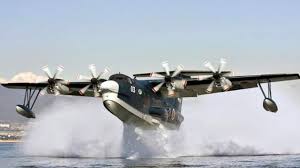
Earlier discussions with Japan regarding the ShinMaywa US-2 amphibious aircraft—known for its short take-off and landing capability on water—did not progress due to cost and technology transfer constraints. By opting for a wet lease, the Navy avoids such hurdles while gaining practical exposure to amphibious operations.
Strategically, the initiative will bolster India’s maritime domain awareness, particularly in the Andaman and Nicobar Command, a key tri-service hub for monitoring critical sea lanes in the Indo-Pacific. The aircraft will complement existing naval assets such as the P-8I Poseidon maritime patrol aircraft and MH-60R helicopters, creating a more layered and responsive coastal defence architecture.
Responses to the RFI are due by March 5, 2026, after which shortlisted platforms may undergo evaluation and trials. The induction of these amphibious aircraft is expected to set a precedent for agile, cost-effective capability enhancement through leasing, reflecting the Navy’s evolving doctrine focused on coastal security, island defence, and rapid humanitarian response.