New Delhi: Environmental sustainability and carbon economy are increasingly becoming key themes in India’s evolving political and development discourse. Experts believe that in the coming years, political strategies may expand beyond traditional electoral factors such as caste equations and populist promises to include policies aligned with global environmental standards.
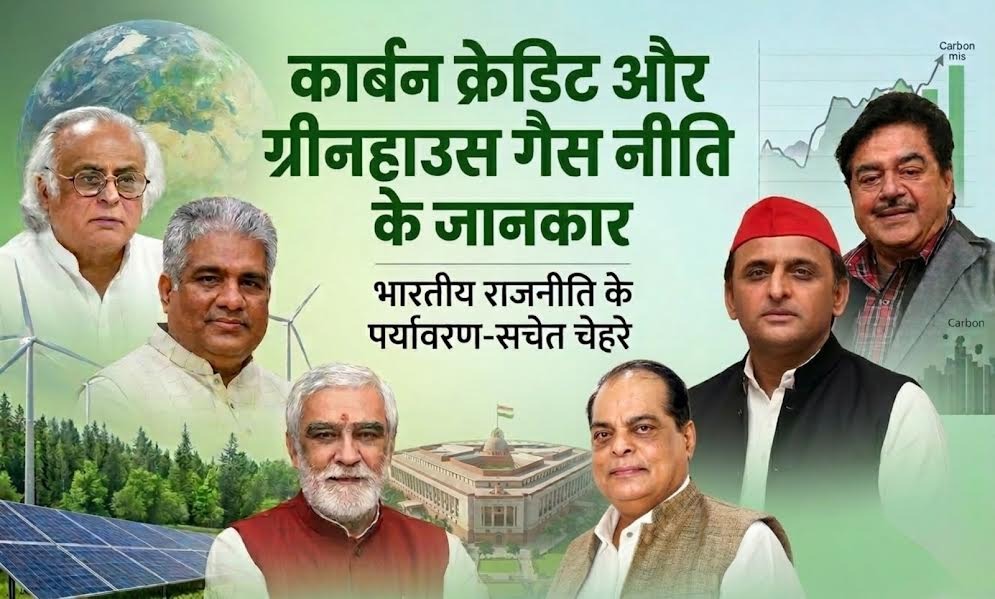
Political analyst Atul Malikram, widely known for his deep understanding of grassroots politics in Hindi-speaking states and expertise in public communication, has recently shown interest in the technical domain of environmental policy and carbon credits. Observers see this development as a significant indicator that political leaders and strategists are gradually acknowledging the growing importance of sustainability and climate responsibility in governance.
Similarly, policymakers such as Jairam Ramesh have long emphasized the role of environmental protection and climate policy in shaping India’s development trajectory. Their work highlights how environmental concerns are becoming increasingly integrated with economic planning and public policy.

For a developing country like India, concepts like carbon credits and sustainable development are no longer confined to academic discussions. Experts argue that the country will need development models in the coming decades that maintain economic growth while ensuring ecological balance and long-term environmental sustainability.
Analysts believe that as awareness about climate change and sustainability grows among citizens, political leaders may also be evaluated on their environmental performance—such as efforts to increase green cover and reduce carbon emissions—alongside traditional governance metrics.