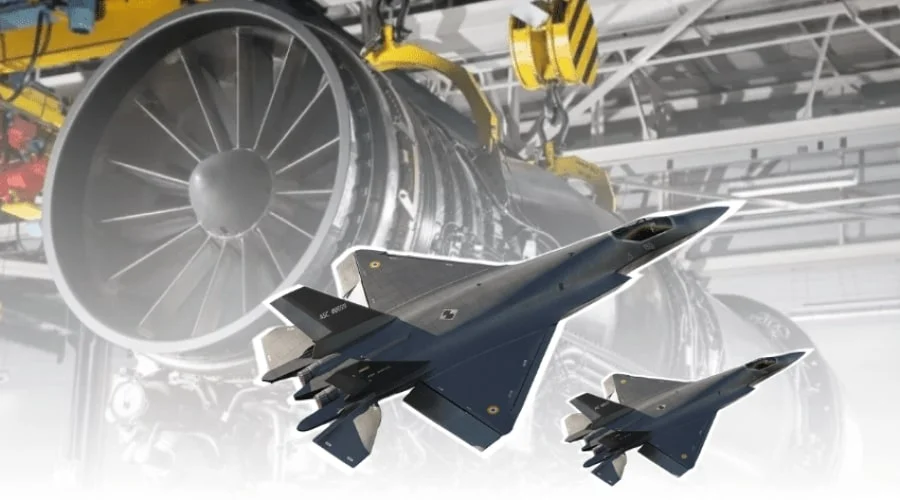
New Delhi | As India moves closer to selecting a foreign partner for the development of a high-thrust engine for its Advanced Medium Combat Aircraft (AMCA), British aerospace major Rolls-Royce has stepped up its outreach, positioning its fifth-generation fighter engine experience as a key differentiator against French rival Safran.
With the AMCA programme seen as a cornerstone of India’s long-term air power and self-reliance goals, competition between global engine manufacturers has intensified. While industry reports indicate that Safran may currently enjoy an edge, Rolls-Royce is emphasising its historical involvement in advanced stealth fighter propulsion to strengthen its bid.
Speaking recently, Sashi Mukundan, Executive Vice President, Rolls-Royce India, underscored the company’s experience in designing engines for fifth-generation platforms, stating that such expertise aligns closely with India’s requirements for the AMCA project.
Leveraging the F-35 Legacy
At the centre of Rolls-Royce’s pitch is its role in the F-35 Lightning II fighter programme. The company was a core partner in a joint initiative with GE Aviation to develop the F136 engine, which was conceived as an alternative powerplant for the F-35.
According to Mukundan, the joint programme involved designing an engine specifically for fifth-generation performance parameters, including high thrust, stealth compatibility, and advanced thermal management. He noted that the experience gained from this effort remains highly relevant to India’s ambition of building a next-generation fighter with a clean-sheet engine design.
Although the F136 programme was eventually shelved due to budgetary and policy decisions in the United States, the engine progressed through advanced design stages and extensive ground testing. The development process provided Rolls-Royce with deep technical exposure to the complexities of fifth-generation propulsion systems.
Technology Sharing and Strategic Autonomy
Beyond performance metrics, Rolls-Royce is also pitching its proposal as a pathway to greater strategic autonomy for India. The company has indicated its willingness to structure the partnership in a way that grants India intellectual property rights over the AMCA engine, enabling future upgrades, modifications, and potential exports without external restrictions.

Another aspect highlighted by Rolls-Royce is cross-domain technology use. The firm has suggested that the core engine technologies developed for AMCA could be adapted for naval propulsion, offering potential applications for future Indian Navy platforms. Rolls-Royce already has experience in this area through its MT30 marine gas turbines, derived from aero-engine technology.
Safran Remains a Strong Contender
Despite Rolls-Royce’s renewed push, defence analysts point out that Safran continues to be widely viewed as the frontrunner. The French aerospace company is understood to have offered an extensive technology transfer package, including access to hot-section technologies, one of the most critical and closely guarded areas of jet engine design.
Safran’s proposal is further supported by strong India–France defence ties and the operational success of the Rafale fighter in the Indian Air Force. The French firm has also committed to long-term industrial collaboration aimed at helping India overcome historical challenges faced by indigenous engine programmes.
A Defining Decision Ahead
The AMCA engine partnership is more than a procurement decision—it will shape India’s aerospace capabilities for decades. The selected partner will play a decisive role in determining the depth of India’s technological independence in combat aircraft propulsion.
While Safran may currently hold momentum, Rolls-Royce’s emphasis on its fifth-generation engine development experience serves as a reminder that the contest remains open, with strategic, technical, and geopolitical factors all likely to influence the final outcome.