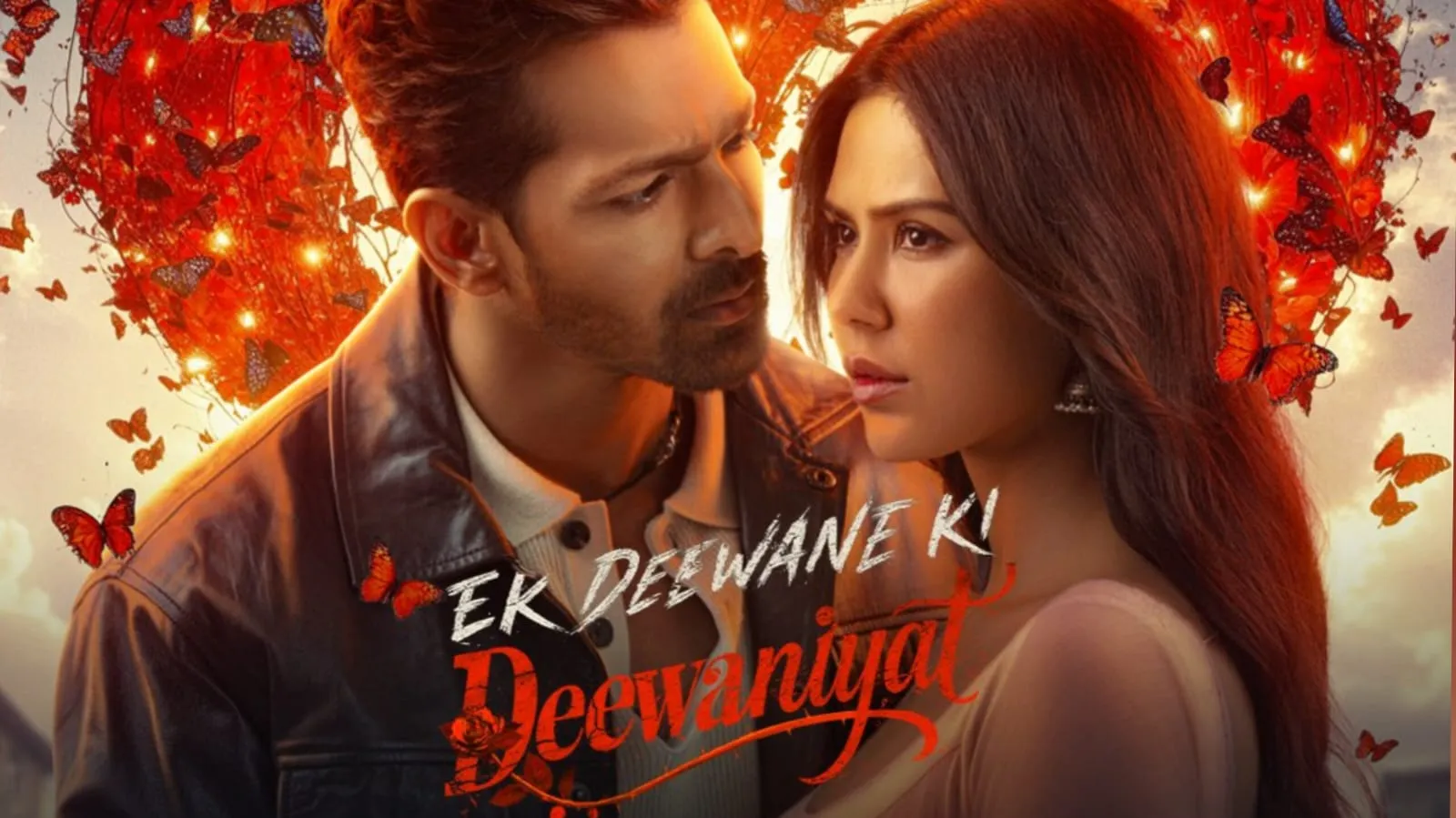
Mumbai: When Ek Deewane Ki Deewaniyat hit theatres, it positioned itself as a throwback to Bollywood’s era of feverish, all-consuming love stories—where obsession blurred into devotion and intensity was mistaken for romance. Directed by masala specialist Milap Zaveri, the film stars Harshvardhan Rane and Sonam Bajwa in a glossy, politically charged romance that grossed an impressive ₹112 crore worldwide despite overwhelmingly negative reviews.
The box office success proves one thing: mass audiences still have an appetite for high-decibel passion dramas—even when critics are left exasperated.
The Plot: Love or Control?
Rane plays Vikramaditya Bhonsle, a rising Maharashtra politician molded by his manipulative father Ganpatrao (played with gravitas by Sachin Khedekar). Scarred by childhood trauma and guilt, Vikram grows into a man obsessed with control and validation.
Enter Adaa Randhawa (Sonam Bajwa), a glamorous Bollywood superstar at the peak of her fame. Their worlds collide when Vikram falls for her at first sight. What begins as admiration quickly spirals into coercion. Using his political clout, Vikram sabotages her projects, corners her socially, and manipulates situations to assert dominance—all under the guise of “passionate love.”
Supporting characters, including Sawant (Shaad Randhawa), Vikram’s conflicted aide, flesh out the power structure, but the narrative ultimately hinges on one question: is this a tragic love story—or a dangerous abuse of power?
A Nostalgic Throwback That Feels Regressive
Milap Zaveri clearly attempts to evoke the spirit of obsession-driven 90s thrillers like Darr, Anjaam, and Tere Naam—films that romanticized possessiveness as proof of love.
The first half shows promise. Political drama intertwined with celebrity glamour offers an intriguing contrast. Lavish sets, rain-drenched confrontations, and dramatic monologues create a glossy cinematic atmosphere.
However, what may have worked in the 90s feels deeply problematic in 2025. The film repeatedly frames harassment as heartbreak and coercion as commitment. Consent becomes an afterthought. Instead of critically examining Vikram’s behavior, the screenplay often seeks sympathy for him, diluting what could have been a sharp cautionary tale.
The second half descends into melodrama—overpowering background scores, illogical twists, and emotional manipulation. Scenes meant to evoke tragedy instead feel indulgent.
Performances: Intensity Saves the Screen
Harshvardhan Rane is undeniably committed. He throws himself into Vikram’s manic energy, shifting from charming suitor to volatile obsessive with conviction. His eyes convey vulnerability and fury in equal measure, and he handles the film’s poetic dialogues with flair. Yet the script limits his character’s emotional depth, leaving Vikram more toxic than tragic.

Sonam Bajwa exudes glamour and confidence, convincingly embodying a superstar. She captures fear and defiance effectively, but Adaa remains underwritten—a narrative device rather than a fully realized character.
Shaad Randhawa brings understated intensity, grounding several scenes. Sachin Khedekar, as the manipulative patriarch, adds credibility and gravitas.
Music: The Real Crowd-Puller
If there’s one department where the film truly excels, it’s the music. The soundtrack features soulful romantic ballads that morph into haunting refrains as the obsession escalates. Lavishly picturized songs have significantly contributed to the film’s commercial success. In many ways, the album has outlived the narrative.
Style Over Substance
Visually, the film is polished. Political rallies feel grand; intimate scenes are framed with moody lighting and dramatic flair. But slick cinematography cannot compensate for shallow messaging. Editing falters in the latter half, where repetition dulls impact.
Zaveri’s direction embraces excess, but lacks the nuance required to elevate the story beyond a loud potboiler.
Summing it up
Ek Deewane Ki Deewaniyat is a film caught between eras. It aspires to be a tragic commentary on obsession, yet glamorizes the very behavior it seeks to critique. For audiences craving unapologetic, old-school Bollywood drama with explosive emotions, it offers guilty-pleasure entertainment. For others, it feels ethically outdated and dramatically hollow.
Its box-office performance may signal a continuing demand for such narratives in certain circuits—but critically, it underscores Bollywood’s uneasy relationship with evolving conversations around gender and consent.
In the end, the film raises an unsettling question: can obsession ever truly be romanticized without consequence? Here, it tries—and stumbles.
Rating: 2 out of 5 stars ⭐⭐