
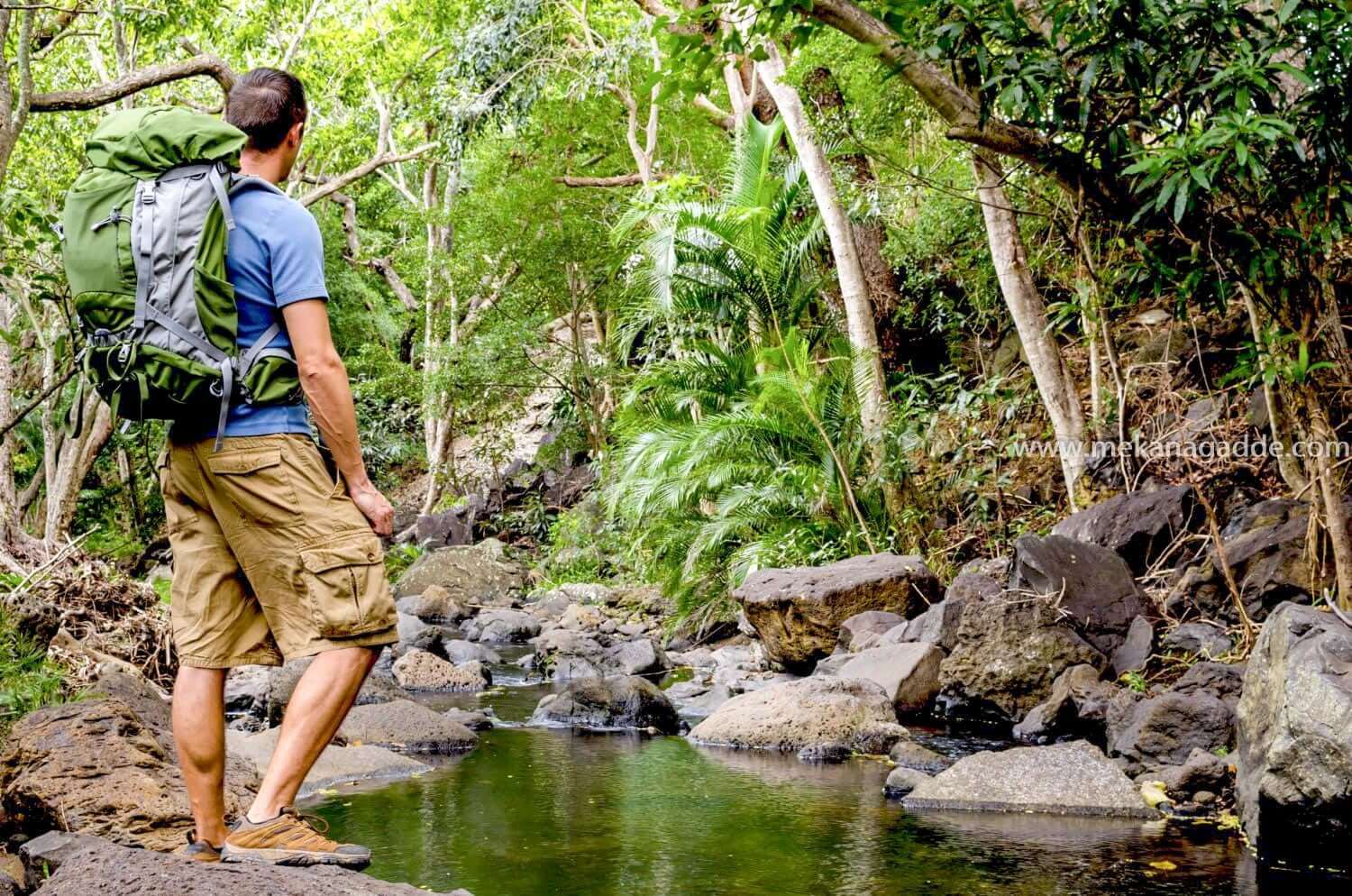
The research, prepared by Prof. Pankaj Mathur (Mathematics Department, Lucknow University), Dr. Rachna Pathak (Lucknow University), Dr. Harendra Verma (Dr. Shakuntala Mishra University) and their colleagues, has shown that a balanced relationship between eco-tourism, industry and natural resources – all three is essential.
If this balance is upset, the same tourism that is the means of conservation can also lead to destruction.
Social context
Rapidly growing population and industrialisation in India have increased the pressure on forests. On the other hand, “eco-tourism” is becoming a major source of employment for rural and tribal areas. According to research, when tourism activities ‘exceed’ the limit, an environmental imbalance begins giving rise to chaotic situations — what is called Hopf bifurcation in scientific parlance. In simple terms, this is the situation when the bio-property of the forest begins to lose its balance.
That is, if more tourists start coming to the forests than the ‘carrying capacity’ of the forests then the ecosystem starts to falter.
The research found that when this limit goes above a certain level (K = 9.5), both productivity and stability of the forest have a negative impact.
Employment versus conservation
Pankaj Mathur explains that eco-tourism has provided livelihood to thousands of rural families, but ‘sustainable development’ is possible only if there is a balance between industry, tourism and environment.

The model also made it clear that the ecosystem is still unstable if industries take excessive resources from forests (when β = 4.2) or a decline in industrial activity becomes too fast (when β0 = 0.5).
Connection with people
The social message of this research is that every tourist can not be only a spectator, but also a protector.
Local communities should take economic benefit from tourism but at the same time have to share the responsibility of forest conservation. “Surable tourism” means – return as much as you take.
This model can be practically successful if tourists plant a tree or prefer local products after each trip.
The result of this study is clear – eco-tourism is a boon for the environment only when its movement is controlled.
Without taking into account of the “carrying capacity” of forests, indiscriminate tourism can harm not only bio-diversity but also the local economy.
Balance is the formula for stability.
This research forces us to think that development and conservation may complement each other, not oppose each other, but not oppose each other — provided that science, society, and policy have the same direction. This research work has been done under the Research and Development Project, Uttar Pradesh.