Lucknow: As spring casts a gentle glow over Lucknow, the city transforms into a radiant hub of devotion and celebration with the arrival of Chaitra Navratri in March 2026. The nine-day festival dedicated to Goddess Durga brings together spirituality, commerce, and community life, turning streets, temples, and markets into vibrant spaces filled with energy and faith.
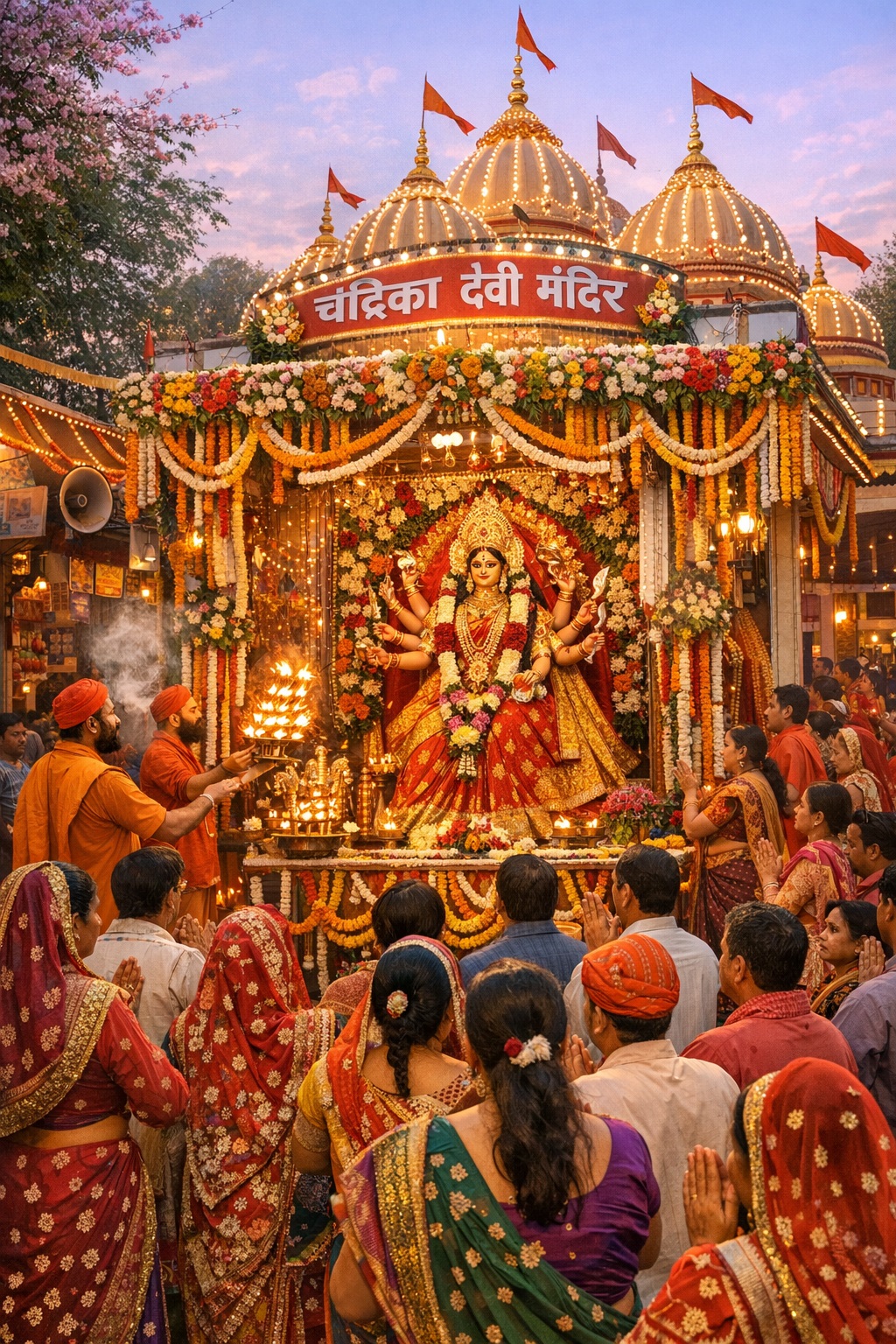
At the center of this spiritual fervor stands the revered Chandrika Devi Temple in Khantwara, one of the most visited shrines during Navratri. Devotees gather in large numbers for darshan, as the temple dazzles with elaborate decorations and daily adornments of the goddess in colorful sarees and fresh floral garlands. The atmosphere resonates with devotional chants and ceremonial rituals performed by priests.
“Navratri is a time when faith reaches its peak,” says Mahant Ramesh Giri, the temple’s chief priest. “We prepare for weeks to ensure that every devotee experiences both comfort and spiritual fulfillment during their visit.”
Similar scenes unfold at Badi Kali Mata Temple in Aliganj and Chhoti Kali Ji Temple in Aminabad, where long queues begin forming at dawn. Families arrive with offerings such as coconuts, sweets, and sacred cloth, seeking blessings.
Sunita Verma, a resident of Indira Nagar, shares her experience: “Even after waiting for hours, you don’t feel tired. There is a deep sense of peace and devotion that keeps you going.”
Other prominent religious sites, including Sheetala Devi Temple, 51 Shaktipeeth Temple, and Kali Bari, also witness a surge in visitors. Each day, the deity is presented in a different form, attracting devotees eager to witness these unique representations. Temple authorities have introduced organized queue systems, drinking water stations, and cleanliness drives to manage the heavy footfall efficiently.
Beyond the temples, Lucknow’s iconic markets—Chowk, Aminabad, and Hazratganj—buzz with festive activity. Shops are filled with traditional items such as bangles, bindis, colorful scarves, and decorative items for home shrines. The aroma of incense blends with the sweetness of popular treats like peda and malai gilori, creating a sensory-rich experience.
“Navratri is the busiest time of the year for us,” says Rizwan Ahmed, a shopkeeper in Chowk. “People are shopping not just for rituals but also for celebrations at home. It’s a festive boost for everyone in the market.”

Street vendors set up temporary stalls near temples, selling flowers, lamps, incense sticks, and complete worship kits. These small businesses thrive during the festival, contributing to the local economy while adding to the festive charm. The restriction on meat sales around temple areas further enhances the traditional atmosphere, with many households embracing vegetarian meals throughout the nine days.
To ensure that the celebrations remain safe and well-managed, the Uttar Pradesh Police has implemented extensive security measures. Key locations are monitored through CCTV cameras and drone surveillance, while additional police personnel are deployed to manage crowds.
Deputy Commissioner of Police Anjali Singh highlights the preparations: “Our focus is on maintaining a secure environment for all devotees. With coordinated planning and support from volunteers, we are ensuring smooth and peaceful celebrations across the city.”
Special patrol units and civil defense volunteers are stationed at crowded areas, offering assistance and maintaining order. These efforts have been widely appreciated, especially by families attending late-night rituals and events.
Public transport has also been strengthened to handle the surge in commuters. Services by the Uttar Pradesh State Road Transport Corporation have been expanded, with additional buses running on routes connecting major temple areas such as Bakshi Ka Talab and Aliganj. Metro services and local transport options have extended their operations, ensuring easy accessibility for devotees.
A notable addition this year is the introduction of eco-friendly double-decker electric buses, which allow visitors to explore multiple religious sites conveniently. “This has made travel much easier,” says Rajesh Tiwari, a visitor from a nearby district. “We can plan our temple visits without worrying about transport.”
As evening descends, the spiritual atmosphere blends seamlessly with cultural celebrations. Temples host devotional music sessions and spiritual discourses, while homes resonate with sacred recitations, creating a sense of unity and shared celebration.