Integrating Plants Transcriptome (RNA-Seq) Data Analysis and Functional Annotation with Functional Genomics for novel metabolic pathway genes identification
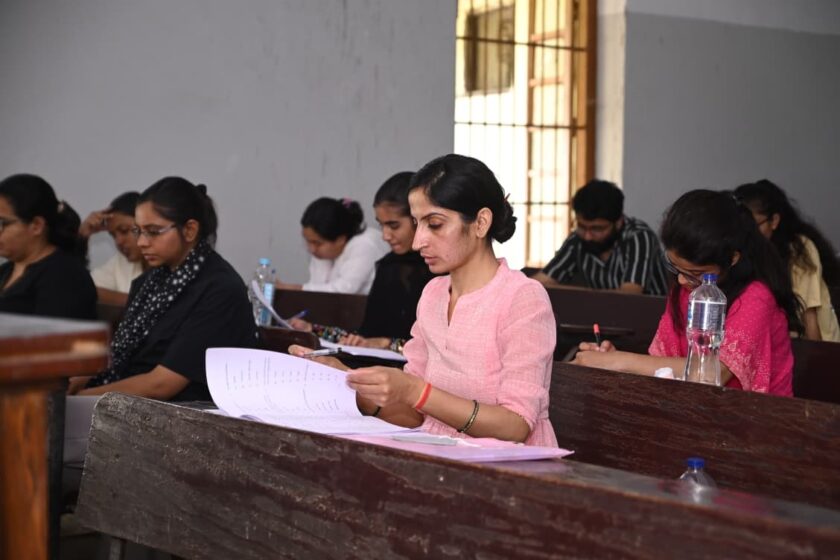
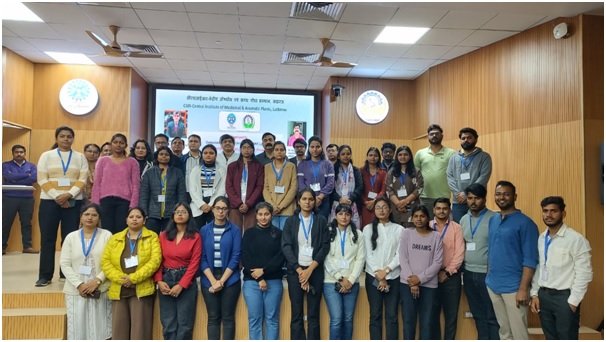
Lucknow: CSIR-Central Institute of Medicinal & Aromatic Plants (CSIR-CIMAP)organized a Seven Days Bioinformatics Skill Development Training Program on “Plant’s Transcriptome (RNA-Seq) Data Analysis & Functional Annotation” (Feb. 16-22, 2026) at Lucknow. The programme witnessed enthusiastic participation from 34 participants fromSrinagar, Lucknow, Kharagpur, Aligarh, Motihari, Kanpur, Prayagraj, Jaunpur, and New Delhi.
The workshop aimed to investigate specialized metabolite biosynthesis in plants;establishing a data-mining framework is required by employing next-generation sequencing and computational algorithms to construct and analyze plant transcriptomes that produce compounds of interest for biotechnological applications. ‘Omics’ technologies cover universal detection of genes (genomics), mRNA (transcriptomics), proteins (proteomics), and metabolites (metabolomics) in a specific biosample. Data analysis is complicated as a massive amount of data is generated, and bioinformatician involvement in the process is essential. Transcriptomics data mining is an efficient way to discover genes or gene families encoding enzymes involved in various metabolic pathways. High-throughput next-generation sequencing (NGS) technologies have revolutionized transcriptomics, especially with the advent of RNA-sequencing (RNA-seq). This technology can be used to obtain RNA sequences on a massive scale with enormous sequencing depth. Plants produce a vast array of specialized metabolites, many of which are used as pharmaceuticals, flavors, fragrances, and other high-value fine chemicals. Most of these compounds occur in non-model plants for which genomic sequence information is not yet available.
Dr.Zabeer Ahmed, Director, CSIR-CIMAP &IIIM Jammu, in his message, appreciated participants’ presence, which reflects a shared commitment to learning, collaboration, and innovation. Also conveyed that this gathering is not just about acquiring knowledge, but also about exchanging ideas, building connections, and inspiring one another to achieve greater heights. He also appreciated the efforts of the SDP-2026 organizing committee and welcomed participants to this workshop.
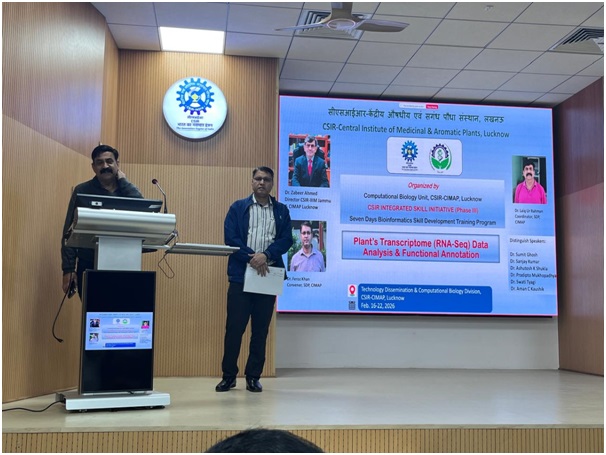
Dr Arvind Singh Negi, Sci. G, CSIR-CIMAP, inaugurated the training program. In his message to the participants, while appreciating their active participation in the training workshop, he emphasized the importance of analyzing the Plant’s transcriptome data to leverage the potential of various Medicinal and Aromatic Plants (MAPs) for novel plant secondary pathway genes identification, pathway modulation, synthetic biology, enabling gene editing, and transgenic plants production.

Dr.Laiq Ur Rahman, Sci. G& Coordinator, SDP-2026, CIMAP, in his interaction with the participants, informed that the researchers and scientific staff at the CIMAP are continuously utilizing the plant’s transcriptome data in identifying differentially expressed genes under different treatments & transgenic modifications, so as to characterize them and utilize these genes in pathway modulation for more productivity and tissue culture-based transgenic varieties development.
Dr.Feroz Khan, Sci.F& Convener, SDP-2026 (Bioinformatics), CSIR-CIMAP, Lucknow, gave a brief overview of the aim of this bioinformatics training Program, introduced the participants, acknowledged the Dr.Zabeer Ahmad, Director, CIMAP, Dr.Laiq Ur Rahman, Coordinator, SDP, Admin staff, ICT division, Guest House, and Canteen staff for their kind support and appreciated the applicants for their keen interest inthis training workshop.
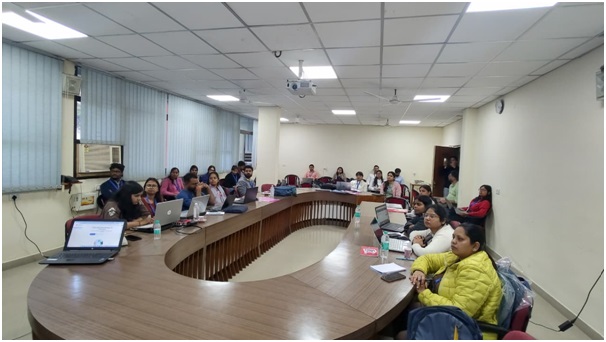
In the technical session expertDr. Sanjay Kumar, Sci. G & Coordinator, Technology Dissemination & Computational Biology Division, CSIR-CIMAP, Lucknow deliberated upon the scope and viability of Medicinal & Aromatic Plants (MAPs), their commercialization, marketing, economics, extension, entrepreneurship examples, and overall income enhancement of farmers from the MAPs. Participants were sensitized to the role of functional genomics in the sustainable cultivation of MAPs using modern biotechnology tools and techniques. Other distinguished speakers are Dr.Sumit Ghosh, Dr.Ashutosh K. Shukla, Dr.PradiptoMukhopadhyay, Dr. Swati Tyagi, from the Plant Biotechnology Division, and Dr.Aman C. Kaushik from the Computational Biology Unit, CSIR-CIMAP, who will deliver their talk on the workshop theme.
The workshop reaffirmed CSIR-CIMAP’s commitment to strengthening linkages among students/farmers/entrepreneurs-scientist linkages and to promoting sustainable, high-value farming systems and translational research.