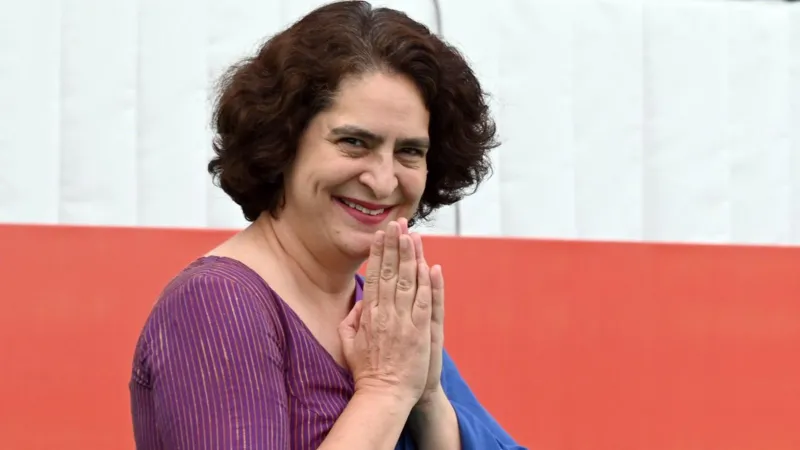
New Delhi: In the ever-evolving landscape of Indian politics, few figures embody continuity, charisma, and an ability to make heads turn quite like Priyanka Gandhi Vadra. Born into the Nehru-Gandhi dynasty yet long absent from frontline politics, she has often been described as the Congress party’s great “what if”. In 2025, that question has grown sharper—and far more consequential.
As the daughter of former Prime Minister Rajiv Gandhi and Congress stalwart Sonia Gandhi, and sister to Rahul Gandhi, Priyanka has always carried the weight of legacy. But it is this year that her political relevance has surged decisively. At a time when the Congress is grappling with leadership dilemmas, uneven electoral performances, and a dominant BJP narrative, Priyanka’s parliamentary assertiveness, grassroots engagement, and instinctive connect with voters have positioned her as a potential pivot in the party’s revival strategy.
Her role in leading campaigns such as the “MGNREGA Bachao Abhiyan”, along with her outspoken positions on women’s rights, employment, and economic inequality, has not only energized party cadres but also intensified speculation about her assuming a more central leadership role within the Congress.
Legacy and Late Entry: From Shadow to Spotlight
Priyanka Gandhi Vadra’s political relevance is inseparable from her lineage. Born in 1972, she grew up amid the triumphs and tragedies of India’s most influential political family, witnessing the assassinations of both her grandmother Indira Gandhi and her father Rajiv Gandhi. That personal history has shaped her political persona—one rooted in resilience, restraint, and a deep emotional connection with Congress loyalists.
Unlike Rahul Gandhi, who formally led the party as Congress President, Priyanka stayed largely behind the scenes for years, managing Sonia Gandhi’s Rae Bareli constituency and overseeing Rahul’s campaigns in Amethi. Her formal political debut in 2019, as Congress General Secretary in charge of Uttar Pradesh, came at a moment of crisis for the party following crushing electoral defeats.
By 2025, her transformation is unmistakable. Now a Member of Parliament from Wayanad, a seat earlier held by Rahul Gandhi, Priyanka has evolved from a reluctant entrant into a frontline political combatant. Her sustained campaigns in Uttar Pradesh—despite limited electoral success—showcased her oratorical confidence, organisational grip, and capacity to energise demoralised cadres.
While critics continue to dismiss her as a beneficiary of dynastic politics, supporters argue that in a party anchored in historical symbolism, the Gandhi surname remains a mobilising force. More importantly, her growing political agency has made her a bridge between the Congress’s ageing old guard and its aspirational, younger base.
Parliamentary Sharpness and Policy Focus
A key factor amplifying Priyanka’s relevance in 2025 is her increasingly commanding presence in Parliament. During the Winter Session, she emerged as one of the Congress’s most articulate voices, taking on the government over alleged cuts in MGNREGA funding, rising unemployment, women’s safety, and widening economic inequality.
As the driving force behind the nationwide MGNREGA Bachao Abhiyan, Priyanka helped bring rural distress back into national focus, spotlighting delayed wage payments and administrative bottlenecks affecting millions of workers. Her interventions—marked by a mix of empathy, sharp questioning, and political clarity—stood in contrast to Rahul Gandhi’s more measured style, making her a frequent headline-maker and a rallying point for opposition unity.
Her policy engagement has not been limited to domestic issues. In 2025, her responses to international developments, including the Bangladesh crisis, signalled a growing comfort with foreign policy discourse—an arena traditionally dominated by senior Congress leaders. This breadth has strengthened her image as a leader capable of navigating both street-level politics and national governance debates.
The Mass Connect Factor
What truly distinguishes Priyanka Gandhi Vadra is her natural rapport with the electorate. Often compared to Indira Gandhi for her ease with crowds, Priyanka’s public engagements in 2025—across Uttar Pradesh, Kerala, Maharashtra, and beyond—have drawn substantial turnouts.
Speaking in local dialects, sharing personal anecdotes, and addressing everyday anxieties around prices, jobs, and safety, she has adopted a style that blends political sharpness with accessibility. This approach has resonated strongly with women and young voters, demographics the Congress has struggled to consolidate in recent years.

Her impact was evident in recent by-elections, where her campaign presence contributed to crucial Congress victories. Senior leaders such as Imran Masood have openly praised her ability to connect with voters, describing her as a credible national leader in the making. Even within the party, her grassroots appeal is increasingly seen as addressing a gap critics often attribute to Rahul Gandhi—perceptions of distance and inaccessibility.
Leadership Churn and Internal Calculations
By 2025, murmurs within the Congress about Priyanka assuming a more prominent leadership role have grown louder. Amid criticism of the party’s uneven performance in several states, voices within the organisation have begun floating her name as a potential prime ministerial face—an idea that has both energised supporters and unsettled the status quo.
The media-fuelled “Priyanka vs Rahul” narrative, amplified by BJP attacks, reflects deeper anxieties within the Congress about direction and leadership clarity. Yet, Priyanka’s organisational interventions—particularly her work in Uttar Pradesh—have demonstrated administrative rigour, from candidate selection to booth-level mobilisation.
In a party often accused of nepotism without delivery, her results-driven approach has made her a rallying point for those seeking a more assertive, hands-on leadership model.
Challenges, Criticism, and the Road Ahead
Priyanka Gandhi Vadra’s rise has not been without resistance. Critics point to her limited electoral track record—her first Lok Sabha victory came only in 2024—and question whether charisma alone can translate into sustained national leadership. The BJP continues to weaponise Congress’s family dynamics, while personal controversies involving her husband occasionally resurface.
Yet, these challenges have arguably sharpened her political relevance. Her refusal to be drawn into personal attacks, coupled with a consistent focus on policy and people-centric issues, has strengthened her public image. Like Indira Gandhi before her, Priyanka appears to draw political capital from adversity.
Why Priyanka Matters to Congress now more than ever
As the Congress looks toward 2029, Priyanka Gandhi Vadra represents more than just another leader—she represents timing. Her blend of legacy and modernity, emotional intelligence and political aggression, positions her uniquely at a moment when the party is desperate for reinvention without rupture.
Whether she emerges as a prime ministerial contender or remains a key strategist shaping alliances and narratives, her growing centrality is undeniable.
In 2025, Priyanka Gandhi Vadra has moved decisively from the margins to the mainstream of Congress politics. With parliamentary firepower, grassroots magnetism, and an intuitive understanding of voter sentiment, she has become the party’s most vital political asset.
As leadership debates intensify and electoral battles loom, one reality is clear: Priyanka is no longer the Congress’s wildcard—she is its most compelling possibility.