Beijing/ New Delhi: The military dynamics between India and China have undergone a significant transformation over the past two decades. What was once characterized by sporadic border tensions and limited skirmishes has evolved into a sophisticated, multi-domain contest involving land, air, maritime, cyber, space, and information warfare dimensions. The shift reflects not only changing geopolitical realities but also technological advancements, doctrinal evolution, and strategic recalibration on both sides.
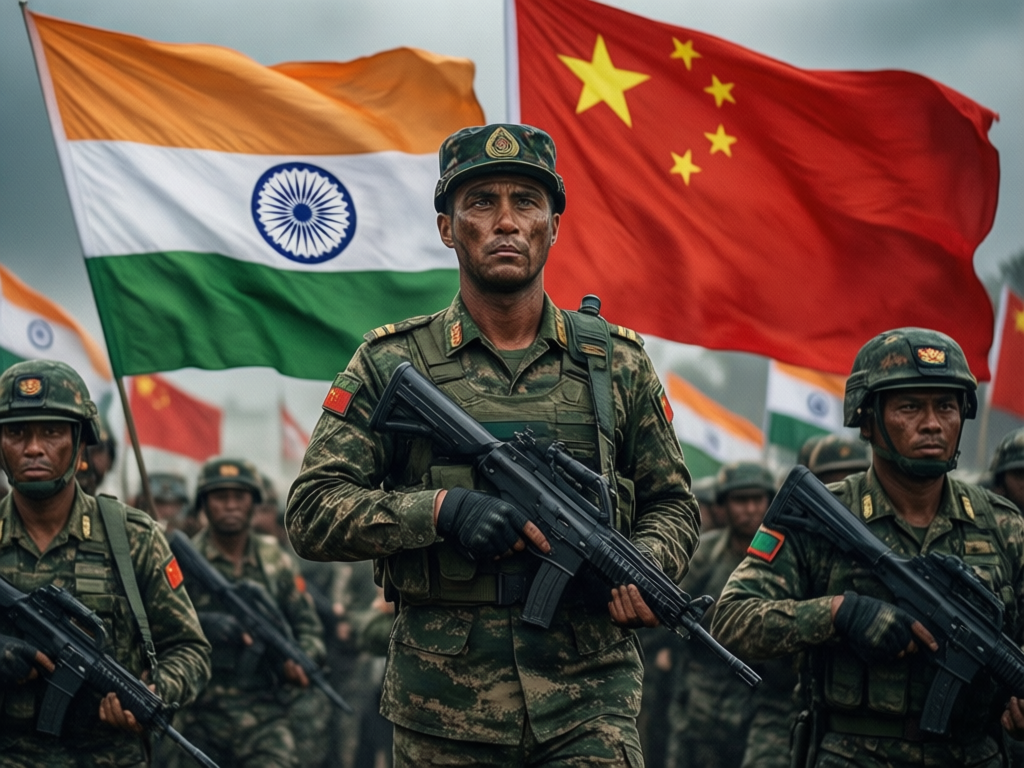
The India–China military relationship is shaped by a contested 3,488-km Line of Actual Control (LAC), unresolved boundary disputes, and growing strategic competition across the Indo-Pacific. The Galwan Valley clash in 2020 marked a watershed moment, signaling the end of decades of relative stability and ushering in a new phase of hardened postures and tactical innovation.
From Confidence-Building to Forward Posturing
For decades after the 1962 war, India and China maintained an uneasy but managed peace along the LAC. Confidence-building measures (CBMs), including agreements in 1993, 1996, 2005, and 2013, sought to prevent escalation through troop limits, communication protocols, and non-use of firearms near the border.
However, the pattern began shifting in the mid-2010s. Infrastructure development accelerated on both sides. China expanded roads, airstrips, and logistics hubs in Tibet, while India enhanced connectivity to forward areas in Ladakh, Arunachal Pradesh, and Sikkim.
The 2017 Doklam standoff and the 2020 eastern Ladakh crisis revealed a new tactical reality: forward deployment, rapid mobilization, and permanent presence in previously lightly manned areas.
Both armies transitioned from patrol-based assertion of claims to sustained occupation of strategic heights and buffer zones.
The 2020 Galwan Shift: Tactical and Psychological Impact
The Galwan clash in June 2020 — the first fatal encounter in decades — altered operational assumptions. It demonstrated that non-firearm engagements could still result in deadly violence. Subsequently, both sides moved away from reliance on old CBMs.
India deployed tens of thousands of troops in high-altitude areas through winter — a first in scale and duration. China mirrored this with massive logistical backing from the Tibetan plateau.
The post-Galwan phase saw:
- Permanent forward deployment
- Heavy artillery positioning
- Armoured units stationed at high altitude
- Enhanced air defence systems
- Increased surveillance through drones and satellites
The LAC effectively transformed into a heavily militarised frontier.
Infrastructure as Strategy
One of the most significant changes in military tactics is the role of infrastructure. Roads, bridges, tunnels, and advanced landing grounds now function as strategic enablers.
China’s Western Theatre Command has leveraged its superior infrastructure in Tibet to mobilize forces rapidly. High-speed rail links, all-weather roads, and pre-fabricated barracks allow swift troop concentration.
India responded by accelerating projects such as the Darbuk–Shyok–DBO road in Ladakh and the construction of tunnels like Atal Tunnel to ensure year-round connectivity.
Infrastructure has shifted from being a support mechanism to a core tactical instrument.
Air Power Integration
Air power now plays a more central role in the India–China military calculus. Both sides have upgraded forward air bases.
China has modernized airfields in Hotan, Ngari, and Kashgar, deploying advanced fighter aircraft and unmanned aerial vehicles (UAVs). Hardened shelters and integrated air defence systems enhance survivability.
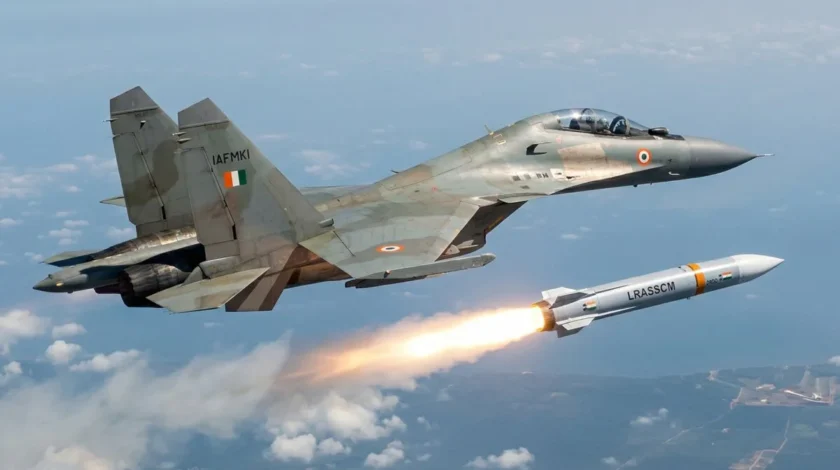
India has enhanced capabilities at Leh, Thoise, and Tezpur, deploying Rafale fighter jets, Su-30 MKIs, and advanced surveillance platforms.
The use of air mobility for rapid reinforcement, heavy-lift transport aircraft for logistics, and airborne surveillance systems indicates a doctrinal shift toward integrated theatre-level operations.
Technological Transformation: Drones and ISR
Unmanned systems have become central to tactical operations.
China has invested heavily in high-altitude long-endurance drones capable of reconnaissance and potential strike missions. Real-time intelligence, surveillance, and reconnaissance (ISR) capabilities enable persistent monitoring.
India has increased drone deployments for surveillance along the LAC and is expanding domestic drone production.
Satellite imagery, thermal sensors, and electronic intelligence now provide both sides with near real-time situational awareness. The fog of war has narrowed considerably.
Grey-Zone Tactics and Salami Slicing
China’s use of “grey-zone” tactics — incremental, ambiguous actions below the threshold of open war — has reshaped border engagement.
The concept of “salami slicing” involves gradual territorial assertion through infrastructure buildup, patrol incursions, and negotiation leverage.
India has responded with mirror deployment strategies, occupying commanding heights in certain sectors during the Ladakh standoff to gain tactical advantage.
The competition now involves positional manoeuvring, information control, and diplomatic signalling alongside military posture.
Cyber and Information Warfare
Modern military competition between India and China extends into cyberspace and information domains.
Cyber intrusions targeting critical infrastructure, power grids, and data networks have become part of strategic signalling. Though often denied officially, cyber capability is widely understood as a component of deterrence.
Information warfare — shaping narratives domestically and internationally — has also intensified. Satellite images, official statements, and social media dissemination play roles in strategic messaging.

The battlefield is no longer confined to physical terrain.
Naval Dimension: The Indian Ocean Factor
While the land border remains central, maritime competition has grown.
China’s expanding naval presence in the Indian Ocean — including submarine deployments and port access agreements — has prompted India to recalibrate maritime strategy.
India has strengthened naval surveillance in the Andaman and Nicobar Islands and increased cooperation with Quad partners (United States, Japan, Australia).
The Indian Navy’s anti-submarine warfare exercises and monitoring of Chinese vessels represent a broader shift: extending deterrence beyond the Himalayas into the Indo-Pacific.
This maritime layer complicates tactical calculations for both nations.
Logistics and High-Altitude Warfare
High-altitude warfare presents unique challenges — oxygen scarcity, extreme cold, and limited mobility.
China’s investments in acclimatised troop rotations, heated barracks, and pre-positioned supplies reflect preparation for prolonged deployment.
India, with decades of experience in Siachen Glacier operations, has leveraged its high-altitude warfare expertise. Winter stocking, specialised clothing, and rapid induction capabilities have improved resilience.
Sustained deployment in harsh climates is now an integral tactical consideration.
Theatre Commands and Jointness
China reorganised its military into theatre commands in 2016, with the Western Theatre Command overseeing India-related operations. This integration allows coordinated action across army, air force, and rocket force units.
India has moved toward greater jointness, with the creation of the Chief of Defence Staff and plans for integrated theatre commands.
Future India–China military dynamics will likely hinge on how effectively each side integrates land, air, cyber, and space assets under unified command structures.
Space and Strategic Deterrence
Space assets — satellites for navigation, communication, and reconnaissance — are critical enablers.
Both India and China have demonstrated anti-satellite (ASAT) capabilities. While not openly integrated into tactical engagements, the presence of counter-space potential adds a strategic layer to competition.
Strategic deterrence also plays a stabilizing role. Both are nuclear-armed states with declared no-first-use policies (though interpretations vary). Nuclear deterrence constrains escalation but does not prevent conventional friction.
Diplomatic and Military Signalling
Military tactics are increasingly intertwined with diplomatic signalling.
Corps commander-level talks, disengagement agreements, and buffer zone creation coexist with military buildup. Tactical disengagement in one sector may coincide with reinforcement in another.
The pattern suggests controlled competition — managing escalation while maintaining pressure.
The Emerging Pattern: Controlled Confrontation
The evolving India–China military dynamic can be described as “controlled confrontation.” Neither side seeks full-scale war due to economic interdependence and nuclear deterrence. However, both are unwilling to concede strategic space.
This results in:
- Permanent forward deployments
- Tactical mirror responses
- Infrastructure race
- Multi-domain competition
- Calibrated escalation
The contest is less about decisive battle and more about positional advantage and long-term leverage.
The Road Ahead
Future military tactics between India and China will likely focus on:
- Greater use of autonomous systems
- Enhanced cyber capabilities
- Artificial intelligence-driven surveillance
- Integrated theatre operations
- Expanded maritime competition
- Rapid reaction capabilities
Climate challenges in high-altitude areas and technological disruption will shape operational doctrine.
The LAC may remain tense but managed — punctuated by localised standoffs rather than full-scale conflict.
The military relationship between India and China has evolved from sporadic border skirmishes to sustained, multi-domain strategic competition. Tactical adjustments now span land manoeuvres, air integration, maritime positioning, cyber capabilities, and information warfare.
The shift reflects broader geopolitical rivalry in the Indo-Pacific. While open war remains unlikely due to mutual deterrence and economic costs, persistent friction is now embedded in the relationship.
The changing tactics reveal a deeper reality: the India–China equation is no longer about isolated border disputes. It is about shaping regional influence, securing strategic depth, and preparing for a future where competition defines coexistence.
In this new era, military preparedness is not merely about fighting wars — it is about preventing them while maintaining advantage.