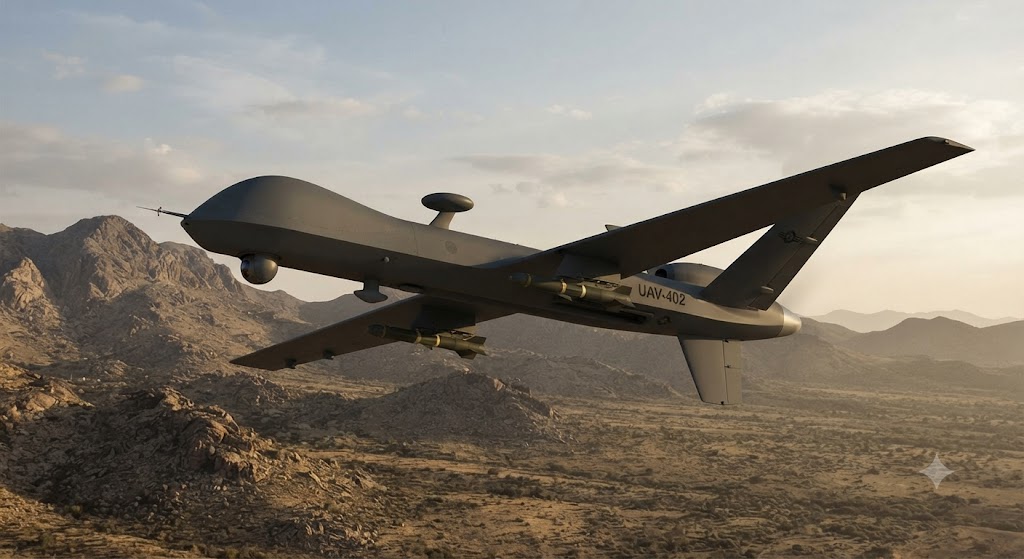
Tehran: The latest escalation in the Middle East conflict is increasingly shifting attention from battlefields and military installations to the region’s critical oil routes. A reported drone attack on Saudi Arabia’s East-West oil pipeline has highlighted the vulnerability of infrastructure that was designed to reduce the kingdom’s dependence on the Strait of Hormuz. The roughly 1,200-kilometre East-West pipeline carries crude from Saudi Arabia’s eastern oil fields to the Red Sea port of Yanbu. It has a maximum capacity of around 7 million barrels per day. The reported attack forced operations…
Read MoreCategory: World
A Pause in the War? Kremlin Welcomes Trump’s Energy Truce Push
Moscow/Kyiv: The Kremlin has welcomed US President Donald Trump’s call for Russia and Ukraine to halt attacks on each other’s energy facilities, after Trump said Kyiv had agreed to stop targeting Russian energy infrastructure. Kremlin spokesman Dmitry Peskov described any effort to prevent attacks on civilian and economic infrastructure as a positive development. He also said countries with influence over Ukraine could encourage Kyiv to adopt a more flexible position as diplomatic efforts to resolve the conflict continue. Trump said in a post on Truth Social that Ukraine had agreed…
Read MoreTrump Dismisses AI Doomsday Warnings as ‘Hoax’, Vows to Expose What He Calls New Lies
US President Questions Push for Strict AI Regulations, Warns Excessive Controls Could Benefit China New Delhi: US President Donald Trump has dismissed warnings that artificial intelligence could destroy humanity or take control of the world, calling such fears a “hoax” and questioning demands for stringent regulations on the rapidly expanding technology sector. Trump said he would expose what he described as another set of false claims surrounding AI and argued that excessive restrictions could undermine America’s technological and economic competitiveness. The President expressed his views in a post on his…
Read MoreBRICS Echo Resonates from Washington to Islamabad as Global Power Equations Shift
New Delhi: The growing visibility of India, Russia and China on the BRICS platform is drawing renewed attention to the changing balance of global power, with the grouping increasingly being viewed as an important forum for the Global South. The appearance of Prime Minister Narendra Modi alongside Russian President Vladimir Putin and Chinese President Xi Jinping at the BRICS summit in New Delhi has carried significance well beyond the optics of a diplomatic gathering. It highlights the continuing importance of BRICS at a time when international politics is witnessing a…
Read MoreIsrael Announces Closure of British Consulate in East Jerusalem Amid West Bank Dispute
New Delhi: Tensions between Israel and Britain over the occupied West Bank have escalated into a fresh diplomatic confrontation, with Israel announcing the closure of the British consulate in East Jerusalem. The Israeli government has also decided to remove Britain from the US-led Gaza coordination mission and suspend British training arrangements for Palestinian security forces. Israeli Foreign Minister Gideon Sa’ar said the measures were among several steps taken following discussions with Prime Minister Benjamin Netanyahu. The British consulate in East Jerusalem has traditionally handled matters involving Britain’s relations with the…
Read MoreBRICS Summit: India Faces Diplomatic Test as Members Seek Common Ground Amid Differences
New Delhi: As the upcoming BRICS Summit approaches, a key diplomatic question is whether member countries will be able to set aside their differences and unite around a common agenda. The challenge has gained prominence following the BRICS Foreign Ministers’ Meeting held under India’s chairmanship in May, where efforts to reach consensus on a joint communique failed. BRICS traditionally operates through consensus-based decision-making. However, the disagreements at the ministerial meeting highlighted the growing complexity within the grouping as its membership expands and countries bring increasingly diverse strategic interests to the…
Read MoreAfD’s Rising Influence in Germany Carries Wider Implications for Europe
Berlin: The growing electoral influence of Germany’s far-right Alternative for Germany (AfD) is drawing increasing attention across Europe, with the party’s advance raising questions about the country’s political direction and the future of the European Union. Founded in 2013, the AfD initially emerged as a eurosceptic movement focused on opposition to eurozone bailout policies, but its politics shifted sharply to the right during the 2015 refugee crisis. Immigration, opposition to multiculturalism, German nationalism and criticism of the European Union have since become central to the party’s platform. The AfD advocates…
Read MoreWorld Map May Change, but India’s Sovereignty Will Not: A Debate Over Accurate Mapping
New Delhi: A recent United Nations initiative on improving the accuracy of world maps has triggered renewed discussion over geography, historical representation and national sovereignty. India has supported efforts aimed at promoting more scientifically accurate representations of the relative sizes of continents and countries, while maintaining that any depiction of its territory must conform to its official position. The debate centres on the longstanding limitations of conventional world maps, particularly the Mercator projection, which was developed in the 16th century primarily to assist maritime navigation. While the projection preserves directions…
Read MoreAyodhya’s Dr Vinay Prakash Singh Re-Elected APPU Secretary General for Second Term
Ayodhya: Senior Indian Postal Service officer Dr Vinay Prakash Singh, a native of Purabazar in Ayodhya, has once again brought honour to India and Uttar Pradesh by being re-elected as the Secretary General of the Asian-Pacific Postal Union (APPU) for a second consecutive four-year term. Dr Singh was declared elected unopposed on September 4 during the APPU Congress held in Bangkok, Thailand. The Asian-Pacific Postal Union comprises 32 member countries, including India, China, Iran, Japan, Pakistan, Afghanistan, Sri Lanka, South Korea, Australia, New Zealand, Bhutan, Nepal and Fiji. His first…
Read MoreIran and Afghanistan: How Different Interpretations of Sharia Shape Women’s Lives
By Tanveer Jafri Tehran: The debate over Sharia often overlooks an important reality: Islamic law is interpreted differently across Muslim-majority countries, producing sharply contrasting legal and social outcomes. The experiences of women in Iran and Afghanistan offer perhaps one of the clearest examples of this divergence. Sharia broadly refers to a body of Islamic principles derived from sources including the Quran, Sunnah, Hadith, scholarly consensus and methods of legal reasoning. Its scope can cover worship, marriage, divorce, inheritance, commerce, criminal law and other aspects of social life. Yet there is…
Read More