Foundational Learning Takes Centre Stage as Leadership Circle Conference Unites 18 States and UTs in Lucknow

Lucknow: Lucknow witnessed a powerful coming together of educators, policymakers, social leaders, and learning experts as the two-day Leadership Circle Conference concluded with a strong collective commitment to ensure that every child in India becomes foundationally literate and numerate. Organised by DEVI Sansthan, the conference brought together more than 2,000 educationists, school leaders, academicians, policymakers, and social sector representatives from 18 states and Union Territories, creating a vibrant national platform focused on improving foundational learning outcomes across the country. The event highlighted the growing urgency around foundational literacy and numeracy…

Read More

“Quality Education is the world’s best investment.” – Dr Joseph Emanuel, Chief Executive & Secretary, CICSE

Lucknow: “Quality in Education can never be compromised. Otherwise, a whole generation of students stands affected. Dr Sunita Gandhi, Founder-Director of DEVI Sansthan is doing a tremendous job in taking educational literacy and numeracy to touch the farthest corners of India and even beyond so that the country may reap a golden harvest of talented youth. She is preparing them to face the challenges of the present and oncoming centuries by improving the quality of education making it more purposeful, active, transformative and holistic than it was ever before. The…

Read More

A Brief History of Prakrit and Sanskrit

Prakrit languages, ancient India, Pali, Buddhist literature, Magadhi, Avantija, Pracya, Sauraseni, Ardhamagadhi, Bahlik, Maharashtri, Apabhramsha, Sanskrit, vernacular languages, Bharata, Natyashastra, phonetics, grammar simplification, dual number, Atmanepadi, Karakachihnas, local vocabulary, linguistic evolution, Middle Indo-Aryan languages, Hindi evolution, Sauraseni Prakrit, Buddhist sources, Indian linguistics, spoken language, regional dialects, phonetic changes, vibhrashta, Sanskrit grammar, Prakrit literature, ancient linguistics, Indian drama, performing arts, linguistic diversity, language transformation, inflectional forms, dhaturupas, shabdarupas, Nāṭyaśāstra, George Cardona, classical India, Indo-Aryan philology, historical linguistics, Indian cultural history, Sanskrit and Prakrit, local pronunciation, literary traditions, ancient Indian theatre, language variation, medieval India, Prakrit grammar, spoken dialects, Sanskrit refinement, Siddhanta Knowledge Foundation

Lucknow: Prakrit refers to a bunch of languages that belonged to different epochs in different regions of ancient India, as it represents the changing aspect of the spoken language. So they are studied in three main time periods i) The Ancient Period 2500 BCE to 500 CE – The Prakrit language used in this period is mostly termed Pali, based on the literature available from these times, which are mostly Buddhist sources. Some of the key features are that the dual number (dvivacana) is left out, ṣa and śa sounds…

Read More

QAD | Redzone to Inaugurate New Regional Hub in Pune on National Technology Day

  Pune, India – Marking National Technology Day, QAD | Redzone will inaugurate its new regional hub in Pune on May 11, 2026, reinforcing the company’s commitment to AI-led innovation, advanced engineering capabilities, and next-generation manufacturing technologies. Located at Phoenix Millennium Towers, Wakad, the new hub represents a strategic expansion of the company’s global engineering and product innovation ecosystem. The facility is designed to accelerate AI-first product development, strengthen scalable system engineering, and enhance service delivery capabilities for global customers. The Pune hub will play a critical role in supporting…

Read More

Student Success Earns Arihant Academy a Prestigious Recognition 

Anil Bedag Arihant Academy Honoured on a National Stage for Excellence in Education Where Results Meet Innovation: Arihant Academy Wins Top Award Mumbai: Arihant Academy made a strong mark at the prestigious Economic Times Maharashtra Business Awards 2026, where it was honoured in the ‘Excellence in Coaching and Competitive Prep’ category. Held at Taj Lands End, the grand event brought together industry leaders and changemakers, and once again highlighted how the right blend of direction, dedication, and innovation drives true success. Over the years, Arihant Academy has transformed competitive exam…

Read More

Bright Futures Begin: Lucknow’s ICSE, ISC Toppers Lead the Way

Lucknow: The morning of board exam results, arrived with a mix of nervous anticipation and quiet hope in thousands of homes across Lucknow. By 11 am, as the Council for the Indian School Certificate Examinations (CISCE) declared the ICSE (Class 10) and ISC (Class 12) results, that silence gave way to cheers, tears, and heartfelt celebrations. In Rajajipuram, the Awasthi household became the center of jubilation. Shivam Awasthi, a student of Lucknow Public College, scored a near-perfect 99.80% in Class 10, emerging as one of the city’s brightest stars. For…

Read More

Sanskrit or Prakrit: Which Came Earlier? 

Sanskrit, Prakrit, language evolution, linguistics, phonetic change, dialects, sub-dialects, standard language, Vedic Sanskrit, classical Sanskrit, Panini grammar, Chandas, Bhasha, phonology, pronunciation shift, economy of effort, word simplification, linguistic variation, regional languages, Indian linguistics, etymology, sound change, language development, historical linguistics, Indo-Aryan languages, colloquial speech, formal language, linguistic structure, grammar rules, language transformation

A language that is well-established is said to have three important aspects by linguistic experts: ➤ i) Sub-Dialect – This is a highly localized form of the spoken language that may have a small area or district over which it is used. Especially in earlier times before the advent of technology and mass communication, local dialects could be clearly seen. ➤ ii) Dialects – These have a wider geographical presence than sub-dialects and may even show literary activity. There is some distinction of vocabulary and grammatical structure and over time,…

Read More

Prerna Yog Utsav 2026 celebrated with spiritual fervour and vibrant participation at Amity International School, Lucknow

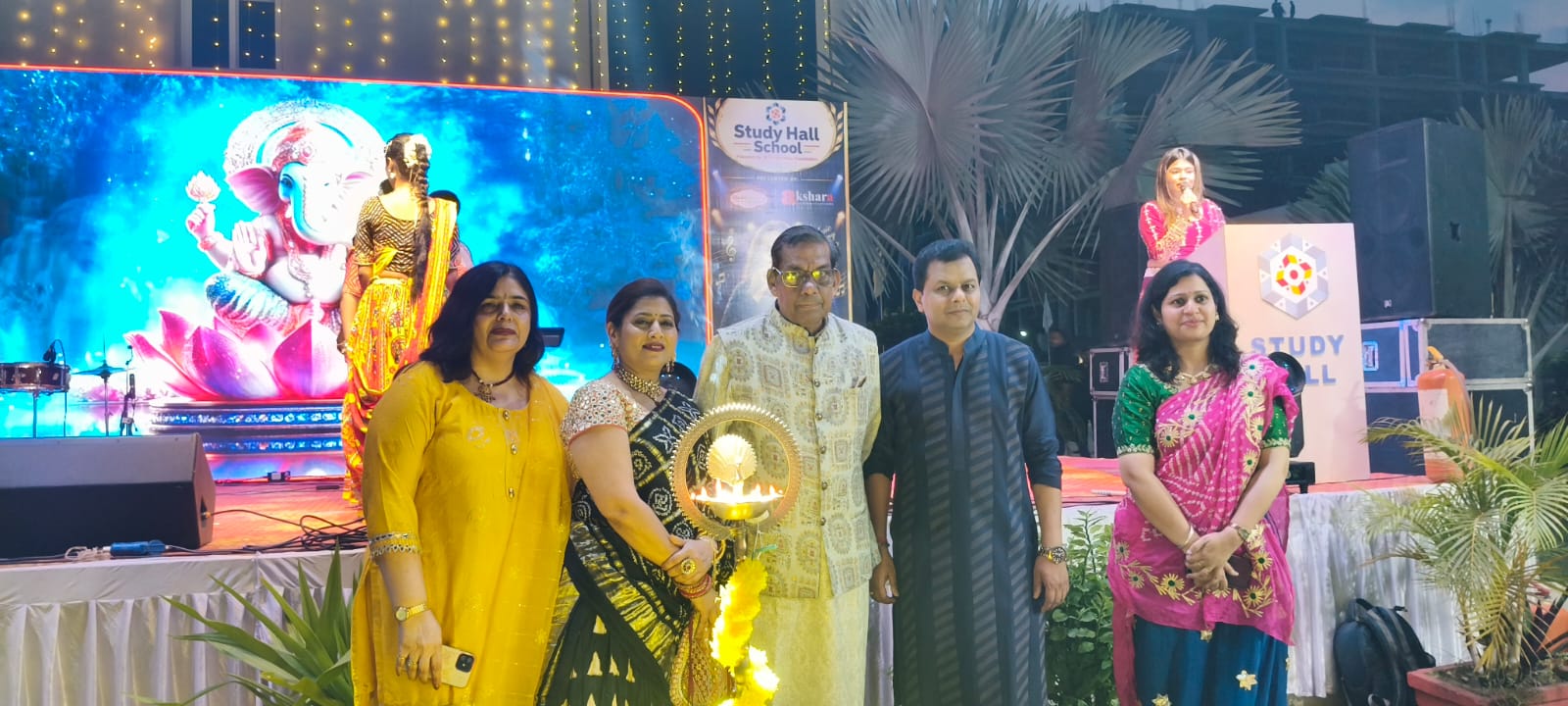
Lucknow: Amity International School, Viraj Khand–5, Gomti Nagar, Lucknow, witnessed an atmosphere of devotion, discipline and youthful energy as it celebrated Prerna Yog Utsav 2026 with great enthusiasm and reverence. This event was organised on the occasion of birthday of Chairperson, Amity International Schoos, Dr. (Mrs.) Amita Chauhan. The event beautifully blended the essence of Indian tradition with the spirit of holistic well-being, reinforcing the significance of yoga in nurturing both mind and body. The programme commenced on a spiritually uplifting note with the ceremonial lighting of the lamp by…

Read More

Lucknow University to Launch Apprenticeship-Embedded Undergraduate Programmes from July 2026

Lucknow: In alignment with the vision of National Education Policy 2020 and the guidelines issued by the University Grants Commission for Apprenticeship Embedded Degree Programmes (AEDP) 2025, the University of Lucknow has announced the launch of its Undergraduate Apprenticeship Embedded Degree Programme (UGAEDP) under the Faculty of Commerce from the academic session commencing July 2026. Approved by the UGC in March 2025, the initiative aims to integrate academic learning with structured industry-based apprenticeships. The programme is designed to bridge the gap between classroom education and workplace requirements, enhance employability, promote…

Read More

Lucknow University Approves PhD Ordinance 2026, Emphasises Flexibility and Research Integrity

Lucknow: In a significant academic reform, University of Lucknow has approved its PhD Ordinance 2026, introducing a comprehensive framework aimed at enhancing research quality, flexibility, and a student-centric academic ecosystem. The ordinance has been passed by both the Academic Council and the Executive Council. The revised framework aligns doctoral education with global research standards while maintaining academic rigor and integrity. One of the key provisions allows fast-track researchers to submit their thesis up to six months earlier than the prescribed timeline, subject to approval by Vice-Chancellor Prof. J. P. Saini.…

Read More