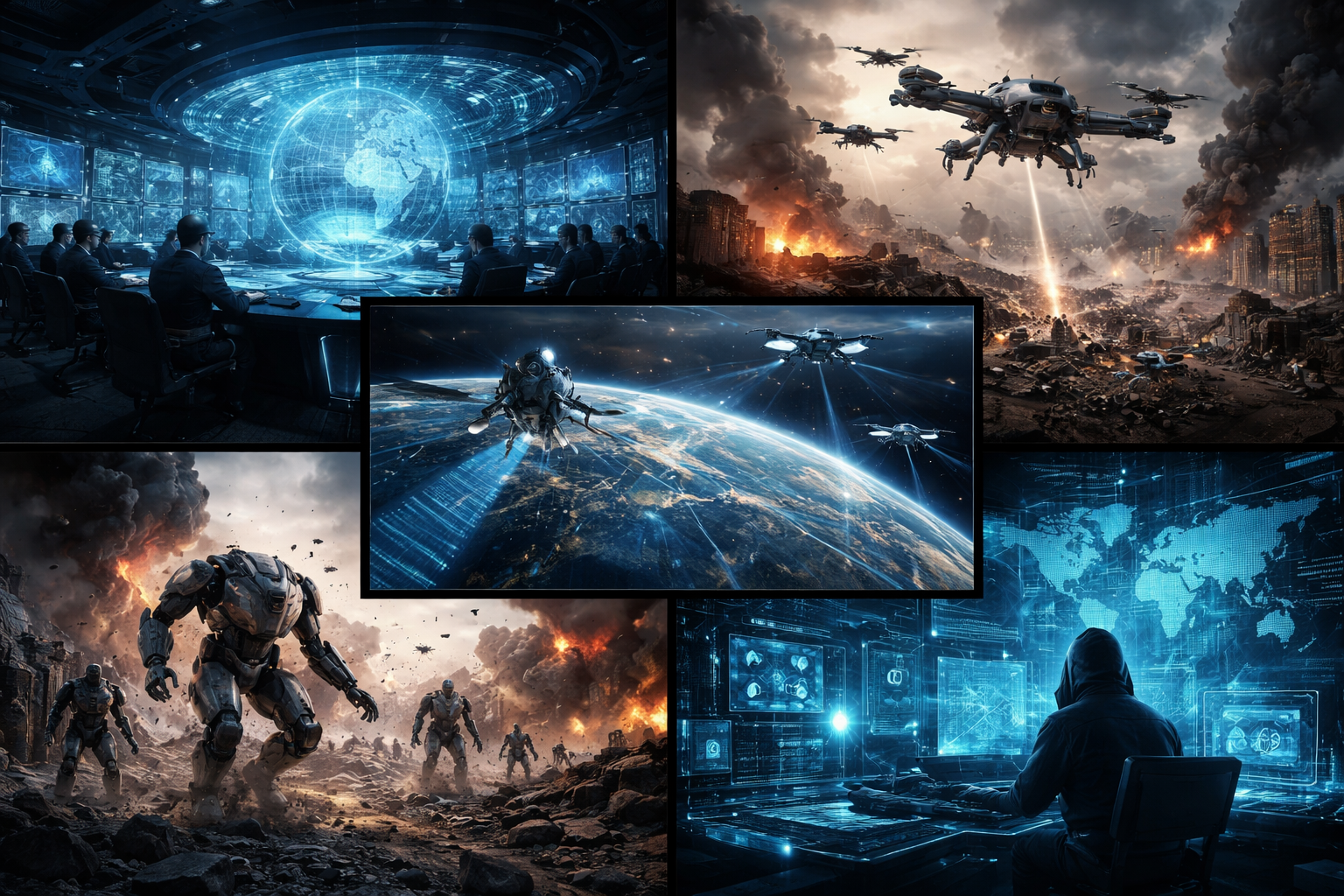
New Delhi: The rapid advancement of Artificial Intelligence (AI) is reshaping nearly every sector of modern society—from healthcare and finance to education and entertainment. Yet perhaps no area will be affected more profoundly than warfare. As nations race to integrate AI into their military systems, the nature of conflict itself may undergo a fundamental transformation. From autonomous weapons and predictive intelligence to cyber warfare and battlefield robotics, AI has the potential to redefine how wars are fought, won, and even prevented.
At its core, AI refers to computer systems capable of performing tasks that typically require human intelligence, such as analyzing data, recognizing patterns, making decisions, and learning from experience. In the military domain, these capabilities can translate into faster decision-making, enhanced situational awareness, and more efficient coordination of complex operations.
One of the most widely discussed applications of AI in warfare is the development of autonomous weapons systems. These are machines capable of selecting and engaging targets without direct human control. Autonomous drones, for example, could patrol battle zones, identify threats using advanced sensors, and neutralize targets within seconds. Supporters argue that such systems could reduce risks to soldiers by removing them from dangerous environments. Critics, however, warn that delegating life-and-death decisions to machines raises serious ethical and legal questions.
Another significant area where AI could transform warfare is intelligence gathering and analysis. Modern military operations generate enormous volumes of data from satellites, surveillance drones, radar systems, and communication networks. Human analysts alone cannot process this information quickly enough. AI systems, however, can sift through massive datasets in real time, identifying patterns and threats that might otherwise go unnoticed. This capability can give military commanders a strategic advantage by enabling faster and more informed decisions.
Cyber warfare is another domain where AI is becoming increasingly influential. In an age where critical infrastructure—from power grids to banking systems—depends on digital networks, cyberattacks can cripple a nation without firing a single bullet. AI-powered cyber tools can both launch and defend against such attacks. Advanced algorithms can detect unusual activity within networks, identify potential vulnerabilities, and respond to threats within milliseconds. At the same time, adversaries can deploy AI to create more sophisticated malware capable of adapting and evading detection.
AI-driven robotics is also changing the dynamics of the battlefield. Ground robots, unmanned aerial vehicles (UAVs), and autonomous naval systems are already being deployed by several countries. These machines can perform tasks ranging from reconnaissance and logistics to explosive ordnance disposal and direct combat support. By reducing reliance on human soldiers in high-risk roles, AI-enabled robotics could lower casualty rates while expanding operational capabilities.
Another transformative application of AI lies in military logistics and planning. Modern warfare depends heavily on efficient supply chains for fuel, ammunition, food, and medical resources. AI systems can analyze logistical data to optimize transportation routes, anticipate shortages, and allocate resources more effectively. Predictive algorithms can also forecast enemy movements based on historical patterns and current intelligence, helping military planners prepare for potential scenarios before they unfold.
However, while AI offers significant advantages, it also introduces new risks and challenges. One major concern is the potential for an AI arms race among global powers. As countries compete to develop more advanced military AI technologies, the pace of innovation could outstrip the development of international rules and safeguards. Without clear regulations, the deployment of autonomous weapons and AI-driven decision systems could increase the risk of accidental conflicts or unintended escalation.
Another challenge involves the reliability and transparency of AI systems. Machine learning algorithms often function as “black boxes,” meaning their decision-making processes are not always easily understood by humans. In high-stakes military situations, this lack of transparency can be dangerous. If an AI system misidentifies a target or misinterprets data, the consequences could be catastrophic.

Cybersecurity is also a critical concern. AI systems themselves can become targets for hacking or manipulation. Adversaries might attempt to corrupt data inputs, disrupt algorithms, or seize control of autonomous weapons. Ensuring the security and resilience of military AI systems will therefore be essential.
Ethical considerations further complicate the use of AI in warfare. Many experts argue that machines should never be given full authority to decide when to take human life. International organizations and advocacy groups have called for global agreements to regulate or even ban fully autonomous lethal weapons. At the same time, military strategists contend that if responsible nations refrain from developing such technologies, less constrained actors might gain a dangerous advantage.
The geopolitical implications of AI-driven warfare are profound. Countries with strong technological capabilities could gain significant military superiority, potentially shifting global power balances. Smaller nations, meanwhile, may seek asymmetric strategies such as cyberattacks or AI-enabled drone swarms to counter larger adversaries. This evolving landscape could make conflicts less predictable and more complex.
Despite these concerns, AI also holds the potential to reduce the frequency and severity of wars. Improved surveillance and predictive analytics could help detect early signs of conflict, allowing diplomatic interventions before violence escalates. AI simulations may enable policymakers to test strategies and understand potential consequences without real-world confrontation.
Furthermore, AI-driven defense systems could strengthen deterrence by making it more difficult for adversaries to achieve surprise attacks. Advanced missile defense systems, autonomous patrol networks, and real-time threat detection may help protect populations and critical infrastructure.
Ultimately, the impact of AI on warfare will depend on how governments, militaries, and international institutions choose to develop and regulate these technologies. Responsible innovation, transparent governance, and global cooperation will be essential to ensure that AI enhances security rather than undermines it.
The future battlefield may not look like the wars of the past. Instead of large armies facing each other across physical front lines, conflicts could unfold through networks, algorithms, and autonomous machines operating at unprecedented speeds. In this new era, the question is no longer whether AI will influence warfare—it already has. The real challenge lies in ensuring that its power is guided by human judgment, ethical responsibility, and a commitment to global stability.
Artificial intelligence may indeed transform the future of war. Whether that transformation leads to greater destruction or a more stable world will ultimately depend on the choices humanity makes today.