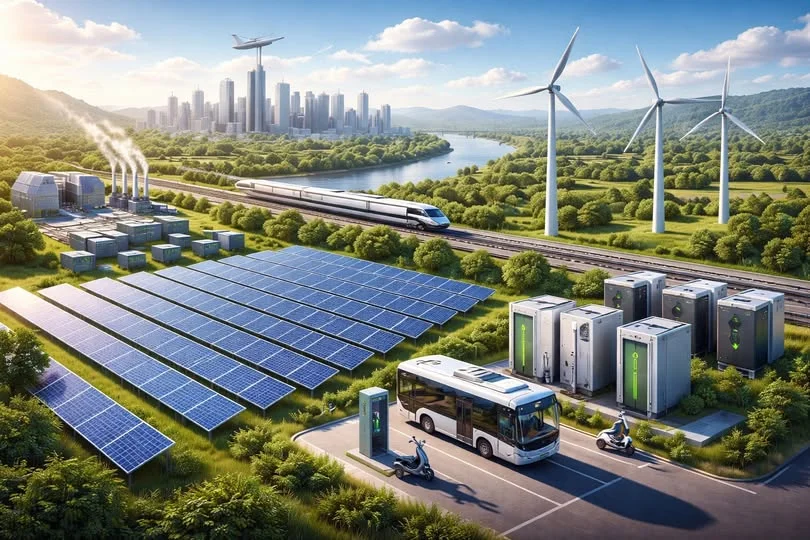
Lucknow: The Union Budget 2026 is being seen as a potential gamechanger for Uttar Pradesh’s energy and mobility landscape, with significant customs duty concessions for solar energy, renewable technologies, battery storage, and e-mobility. Policy experts believe these measures will strongly complement the implementation of the PM Surya Ghar: Muft Bijli Yojana in the state and accelerate the growth of a robust green energy ecosystem.
According to experts, the duty exemptions announced for raw materials used in lithium-ion battery manufacturing—such as cobalt powder, battery scrap, and other critical minerals—will strengthen grid-level battery storage and power system balancing. Battery storage is crucial for managing the variability of solar power generation across day-night cycles and seasonal changes. With improved storage capacity, Uttar Pradesh’s power supply is expected to become more stable, reliable, and cost-effective.
The budget has also provided major relief to the solar sector by exempting sodium antimonate, a key raw material used in solar glass manufacturing, from customs duty. Solar glass plays a vital role in improving the durability, efficiency, and performance of solar panels. Industry stakeholders say this move will reduce the cost of solar glass and, in turn, lower the overall price of solar modules and rooftop solar systems. This is expected to directly benefit households under the PM Surya Ghar scheme, enabling wider adoption of rooftop solar and offering significant savings on electricity bills.
Experts further note that these concessions will support Domestic Content Requirement (DCR)-based solar manufacturing. With input costs declining, domestic manufacturers will become more competitive, reducing reliance on imports and strengthening the local solar value chain in Uttar Pradesh.

Following the budget announcements, increased investment interest is being anticipated across industrial hubs such as Noida, Lucknow, Kanpur, and regions of Purvanchal. New opportunities are expected in solar manufacturing units, EV components, battery pack assembly, and charging infrastructure, which could also generate substantial employment.
From an e-mobility perspective, Budget 2026 is considered particularly important for Uttar Pradesh. Reduced battery costs are likely to make electric vehicles more affordable, accelerating the adoption of e-buses, e-autos, electric two-wheelers, and three-wheelers. This shift is expected to reduce dependence on fossil fuels and help curb urban pollution.
Overall, experts believe that the integrated approach reflected in Budget 2026—linking solar manufacturing, grid balancing, and e-mobility—positions Uttar Pradesh to emerge as a leading state in clean energy, sustainable transport, and the green economy.