Rio de Janeiro – In response to the escalating trade tensions fueled by US President Donald Trump’s aggressive policies, senior diplomats from the BRICS nations are convening in Brazil on Monday to forge a unified front.
The summit takes on added significance as the International Monetary Fund recently revised global growth projections downward, citing the detrimental impact of the US President’s sweeping new tariffs.
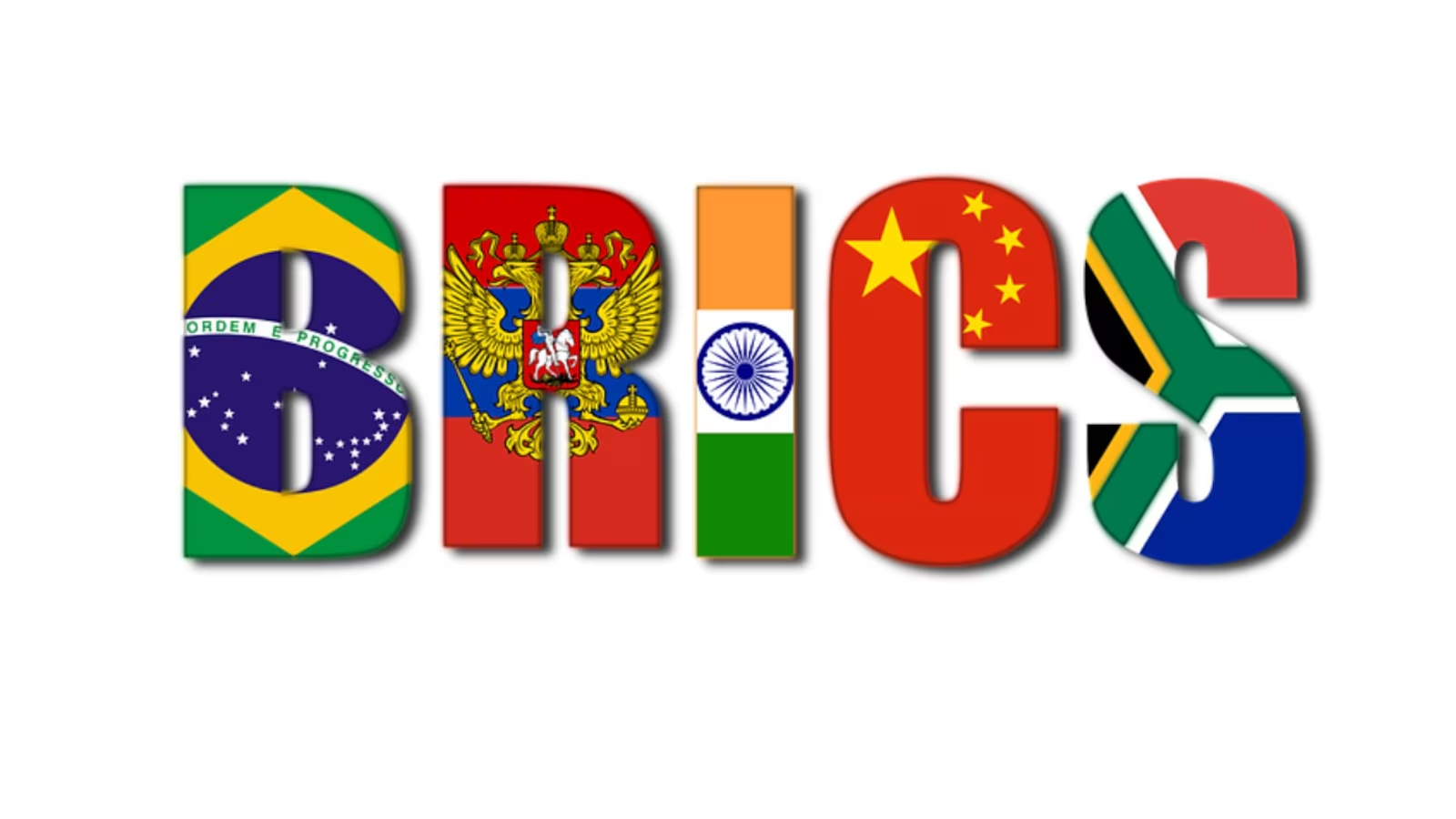
Over two days in Rio de Janeiro, diplomats from the BRICS trade bloc – comprising Brazil (the current president), Russia, India, China, and South Africa – will lay the groundwork for a crucial leaders’ conference scheduled for July. “The ministers are negotiating a declaration aimed at reaffirming the centrality and importance of the multilateral trading system,” stated Mauricio Lyrio, Brazil’s BRICS delegate, to reporters on Saturday.
Since its inception in 2009, the BRICS alliance has expanded to include Iran, Egypt, and the United Arab Emirates, collectively representing 39% of the world’s GDP and nearly half of its population.
Trump’s recent trade actions, including a general 10% tariff on goods from numerous countries and up to 145% levies on a wide range of Chinese products, have triggered retaliatory measures. Beijing has responded by imposing 125% tariffs on US imports. Trump has further threatened 100% tariffs if BRICS nations attempt to undermine the US currency.

The conference, hosted by Brazilian Foreign Minister Mauro Vieira, will see the participation of China’s Wang Yi and Russia’s Sergei Lavrov. A joint statement is expected, following discussions that began around 11:00 am (1400 GMT).
Climate change is anticipated to be a key focus of the discussions, particularly in the lead-up to the United Nations COP30 climate summit in November, which Brazil will host in the Amazonian city of Belem. The ongoing conflict in Ukraine, as Trump seeks to broker a peace deal between Russia and Ukraine, is also expected to be addressed.
On Tuesday, nine additional “partner” nations, including several former Soviet republics, along with Cuba, Malaysia, Thailand, Uganda, and Nigeria, will join the BRICS for further talks.