Mumbai: Few festivals in India have inspired filmmakers quite like Holi. Beyond its riot of colours and cultural symbolism, Holi has long served as Bollywood’s most expressive canvas for romance — a moment where longing glances turn into confessions, where social barriers dissolve in clouds of Gulaal, and where love stories find their most visually poetic expression.
From the golden era of Hindi cinema to contemporary blockbusters, Holi songs and sequences have been carefully crafted to heighten emotional tension, celebrate desire, and often change the course of a film’s narrative. In Bollywood, Holi is never just a festival — it is a cinematic turning point.
The Classic Era: Playful Passion and Poetic Expression
One cannot speak of Holi in Bollywood without revisiting the timeless “Rang Barse” from Silsila. Sung by Amitabh Bachchan and filmed amidst swirling colours, the song became an anthem of flirtation layered with emotional complexity. The charged chemistry between Bachchan and Rekha gave Holi an intensity that blurred the line between celebration and confession. The scene allowed hidden feelings to surface under the socially permissible chaos of colour play — a cinematic device Bollywood has repeatedly embraced.
Earlier still, “Aaj Na Chhodenge” from Kati Patang captured Holi’s teasing sensuality. The playful pursuit through vibrant streets mirrored the blossoming romance between the lead pair, using colour as both metaphor and mischief.
These early portrayals established a template: Holi as a socially sanctioned space where romance could unfold openly, even rebelliously.
Holi as Emotional Release
In many films, Holi sequences are strategically placed at moments of emotional upheaval. The festival becomes a release valve — for love, jealousy, longing, or heartbreak.
Take “Holi Ke Din” from Sholay. While primarily remembered as an action epic, its Holi song is steeped in community warmth and budding romance. The sequence offers a fleeting glimpse of innocence before the narrative descends into tragedy, making the colours feel bittersweet in retrospect.
Similarly, “Mohe Rang Do Laal” from Bajirao Mastani, though more classical and restrained, channels Holi’s symbolic power. The act of being coloured becomes an act of emotional surrender — love expressed through art, dance, and devotion.
Modern Bollywood: Chemistry in Colour Storms
Contemporary cinema has reinvented Holi romance with heightened energy and youthful exuberance. “Balam Pichkari” from Yeh Jawaani Hai Deewani transformed the festival into a vibrant college reunion of friendship, flirtation, and rediscovered love. The electric chemistry between Ranbir Kapoor and Deepika Padukone unfolds through playful splashes and uninhibited dance, reflecting modern relationships — equal parts nostalgia and spontaneity.
In “Badri Ki Dulhania” from Badrinath Ki Dulhania, Holi is bold, brash, and unapologetically colourful. The festival becomes a stage for youthful attraction and fiery exchanges, echoing changing social dynamics in small-town India.
Why Holi Works So Perfectly for Romance
Holi’s cinematic appeal lies in its symbolism. The festival marks the arrival of spring — traditionally associated with renewal, fertility, and fresh beginnings. In storytelling, this aligns seamlessly with love blossoming after emotional winters.

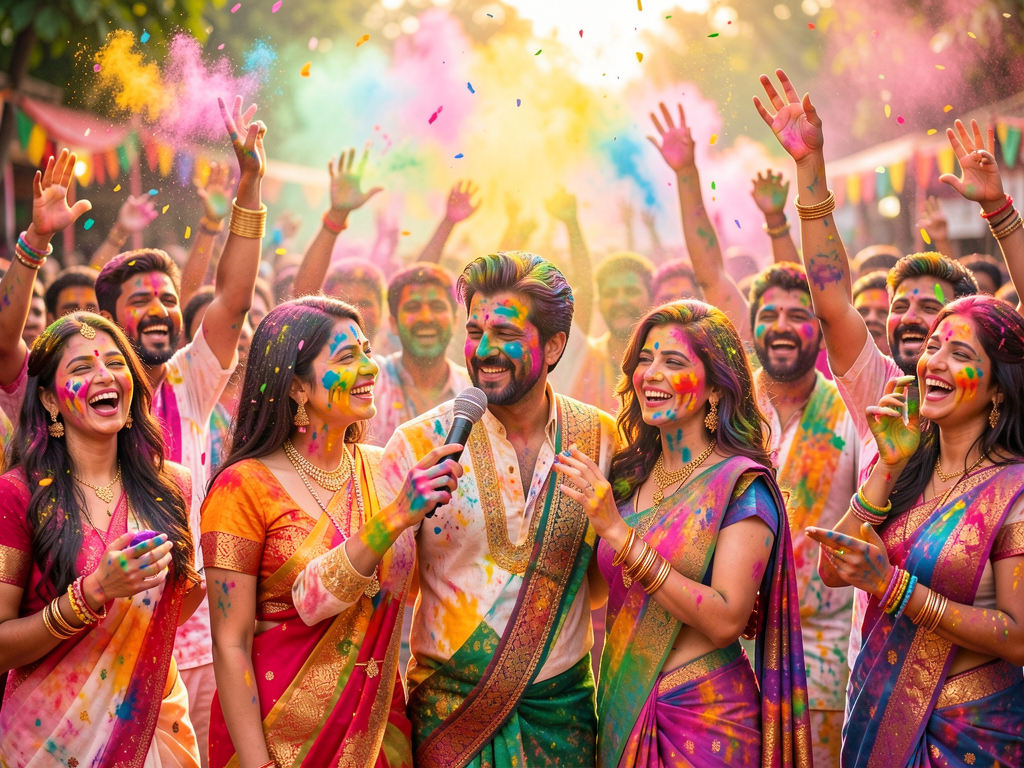
There’s also the visual poetry. Bollywood thrives on spectacle, and Holi offers ready-made drama: slow-motion gulal clouds, drenched white outfits turning into kaleidoscopic canvases, water splashes catching sunlight. Directors often use these visuals to heighten intimacy — a touch of colour on the cheek becomes a silent confession.
Culturally, Holi suspends hierarchies. Social norms soften; boundaries blur. In films, this temporary liberation allows characters to express feelings they might otherwise suppress. A shy heroine can retaliate with colour; a reserved hero can declare affection through song.
Music, Lyrics, and the Language of Desire
Holi songs often weave folk traditions with contemporary beats. Lyrics flirt between innocence and innuendo, cloaked in poetic metaphors. The rhythmic dhol beats mirror racing heartbeats, while call-and-response patterns echo playful banter between lovers.
Even choreography contributes to the romance. Circular dance formations, swirling dupattas, and synchronized splashes visually mimic emotional closeness. The festival’s communal nature ensures that romance unfolds not in isolation but amid a cheering, dancing crowd — love as part of a larger social tapestry.
Off-Screen Romance and Cultural Impact
Bollywood’s Holi sequences have also shaped real-life celebrations. Iconic songs blast from speakers across India every March, with “Rang Barse” and “Balam Pichkari” becoming staples at gatherings. Fashion trends — white kurtas, colourful scarves — often draw inspiration from film costumes.
Actors’ off-screen Holi parties have historically been glamorous affairs, further blurring the line between reel and real. The Kapoor family’s legendary Holi gatherings, for instance, were once as celebrated as on-screen portrayals.
Holi as a Metaphor for Love Itself
At its heart, Holi in Bollywood represents transformation. White turns to colour, strangers become confidants, friendship blossoms into romance. Love, like gulal, spreads unexpectedly — staining hearts in ways that cannot be washed away.
In cinematic language, Holi is both chaos and clarity. Amid laughter and music, characters discover truths about themselves and each other. The festival’s spirit — playful, passionate, unpredictable — mirrors the very essence of romance.
As long as Bollywood continues to tell stories of love, Holi will remain one of its most cherished backdrops. Because in Hindi cinema, when colours fly, hearts follow — and somewhere between a splash of pink and a swirl of blue, another unforgettable love story begins.